BMW's Make-or-Break EV Moment
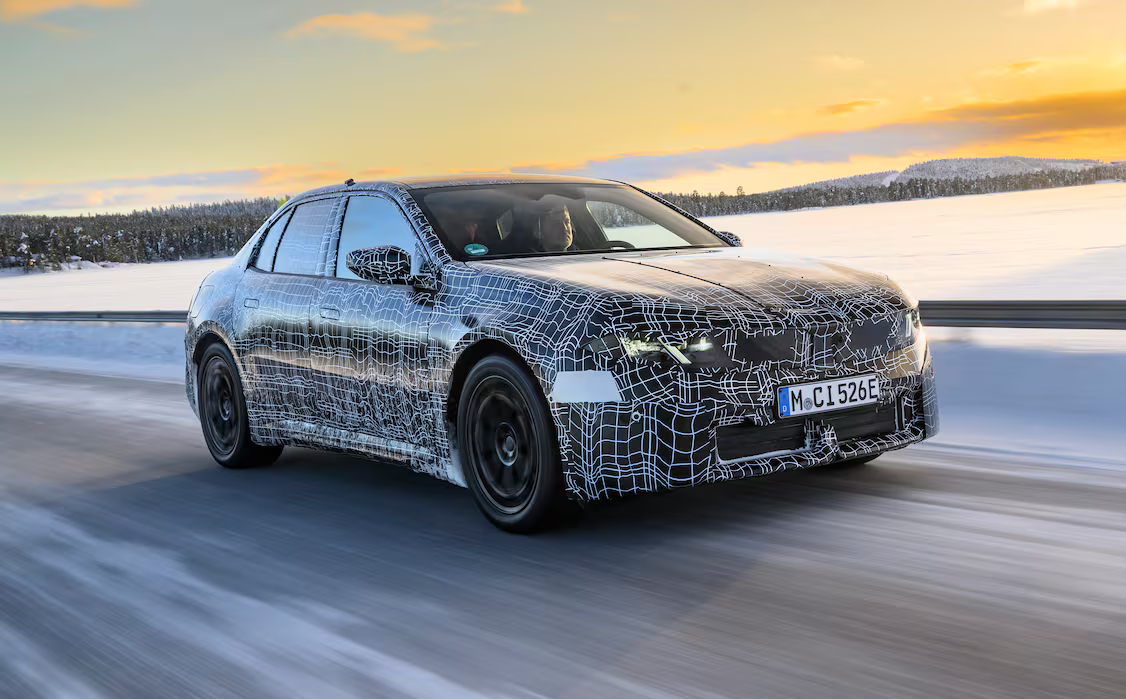
BMW is betting its long-term relevance in the electric vehicle market on a new platform it calls Neue Klasse — German for New Class — and the first production car built on that platform, the i3 sedan, has now made its debut. The reveal of the production-ready i3 marks the beginning of a rollout that will eventually see the Neue Klasse architecture underpin the majority of BMW's EV lineup, making this sedan far more than a single product launch. It is the foundation on which BMW intends to compete with Tesla, Hyundai, and Chinese EV manufacturers in the decade ahead.
The original Neue Klasse name carries enormous weight in BMW's history. It was the designation given to a line of sedans introduced in the 1960s that saved the company from bankruptcy and established its identity as a maker of driver-focused performance cars. The revival of the name for the new EV platform is a deliberate signal of the company's ambition — this is not an incremental product update but the beginning of a fundamental reinvention of what a BMW is in the electric era.
BMW has been preparing the market for Neue Klasse since announcing the initiative in 2021, but the production vehicle reveal puts specific, evaluable hardware in front of the media, investors, and consumers who have been watching the company's EV transition with varying degrees of confidence and skepticism. The i3 sedan will be the first test of whether the platform's promises translate into a product that can compete at the level BMW's premium positioning requires.
The i3 Sedan's Key Specifications
The production i3 sedan is built on Neue Klasse's dedicated EV architecture, which differs fundamentally from the adapted combustion-engine platforms that underpinned earlier BMW EVs including the iX3, i4, and iX. A clean-sheet EV architecture allows BMW to optimize the vehicle's proportions, structural design, and battery integration in ways that are impossible when an EV shares its fundamental structure with a combustion-engine model.
The battery system on the i3 uses BMW's sixth-generation battery cells, developed with new chemistry and cell geometry specifically for Neue Klasse. The cells achieve higher energy density than the cells used in current BMW EVs, enabling a longer range within the same packaging volume — a critical parameter for customer acceptance in the premium sedan segment. BMW has cited range figures exceeding 600 kilometers on the WLTP test cycle for the long-range configuration, placing the i3 among the leaders in its competitive class.
Charging performance has been a historical weakness for BMW's EV lineup, and Neue Klasse addresses this directly. The i3 supports 800-volt charging architecture, enabling peak charging rates that significantly reduce the time needed to add meaningful range during a long-distance journey. The step from 400-volt to 800-volt systems — which Hyundai's Ioniq platform and Porsche's Taycan pioneered in the mass market — has become a competitive requirement in the premium EV segment that BMW can no longer defer.

The Neue Klasse Platform Explained
What makes Neue Klasse more than just a new BMW is the breadth of the engineering investment it represents. The platform features a completely new electrical and electronic architecture — replacing the complex web of dozens of separate control units that characterize modern vehicles with a centralized computing architecture built around a small number of powerful domain controllers. This software-defined vehicle architecture is more aligned with how Tesla and Chinese EV manufacturers design their systems, and is a prerequisite for the kind of over-the-air software updates and AI-driven features that premium EV buyers increasingly expect.
The thermal management system, which governs how the battery, motors, and cabin heating and cooling interact, has been redesigned for efficiency and performance simultaneously. Neue Klasse vehicles use a heat pump system optimized for both cold-weather range preservation — a persistent weakness in battery EVs — and rapid battery preconditioning for fast charging, reducing the range penalties associated with extreme temperatures that have challenged earlier BMW EVs in northern European and North American winter markets.
Structural design improvements take advantage of the layout freedom that a dedicated EV platform provides. The flat battery pack integrated into the floor structure enables a lower center of gravity than any combustion-engine BMW — a benefit for both handling dynamics and rollover resistance. The i3's proportions, with a longer wheelbase relative to its overall length than combustion-engine models, produce more interior space for passengers despite the car's competitive exterior footprint.
Competing with Tesla and Beyond
The competitive landscape the i3 sedan enters is more crowded and more technically capable than any BMW has faced in the premium EV segment. Tesla's Model 3 refresh has strengthened an already dominant position in the global premium EV sedan market. Hyundai's Ioniq 6 has won engineering awards and customer accolades. Several Chinese manufacturers offer EVs with impressive specifications at prices below what BMW's cost structure can match in the European and North American markets.
BMW's competitive answer rests on its traditional strengths: driving dynamics, brand heritage, interior quality, and the dealer network and service infrastructure that Chinese entrants lack in Western markets. The Neue Klasse architecture is specifically designed to produce vehicles that BMW describes as the most driver-focused EVs on the market — preserving the steering feel, chassis balance, and engine response that have defined BMW's brand identity even as the powertrain transitions to electric motors.
Whether brand and driving dynamics can command the premium pricing that BMW requires against technically comparable or superior value propositions from competitors will be answered in the market over the next several years. The stakes are high: if Neue Klasse does not attract buyers in sufficient numbers at adequate margins, the investment in the platform will create a financial burden rather than a competitive advantage, and BMW's position in the transition to electric mobility will be significantly compromised.

Production Plans and Timeline
The i3 sedan will enter production at BMW's Debrecen, Hungary facility, which has been purpose-built for Neue Klasse production with manufacturing processes optimized for the new platform. Debrecen represents a significant capital commitment by BMW to EV production infrastructure, and its performance as a facility will be an important factor in the company's ability to achieve the cost targets necessary for competitive pricing.
The i3 is the first of multiple Neue Klasse models planned across BMW's sedan, SUV, and potentially Touring segments. The platform's rollout will accelerate through the late 2020s as Neue Klasse models replace current-generation EVs and eventually conventional vehicles in segments where BMW judges the electric transition to be sufficiently advanced. The speed and scope of that rollout will be calibrated to market demand — BMW has been explicit that it maintains flexibility to adjust EV production volumes based on what buyers actually want rather than committing to targets that might misalign production with demand.
This article is based on reporting by Automotive News. Read the original article.
Originally published on autonews.com


![Volkswagen's new electric hot hatch delivers more power than the Golf GTI [Images]](https://electrek.co/wp-content/uploads/sites/3/2026/09/Volkswagen-ID.3-GTI-EV-side.jpeg?quality=82&strip=all&resize=1200,628)