An ordinary SUV becomes an unusually watched auction lot
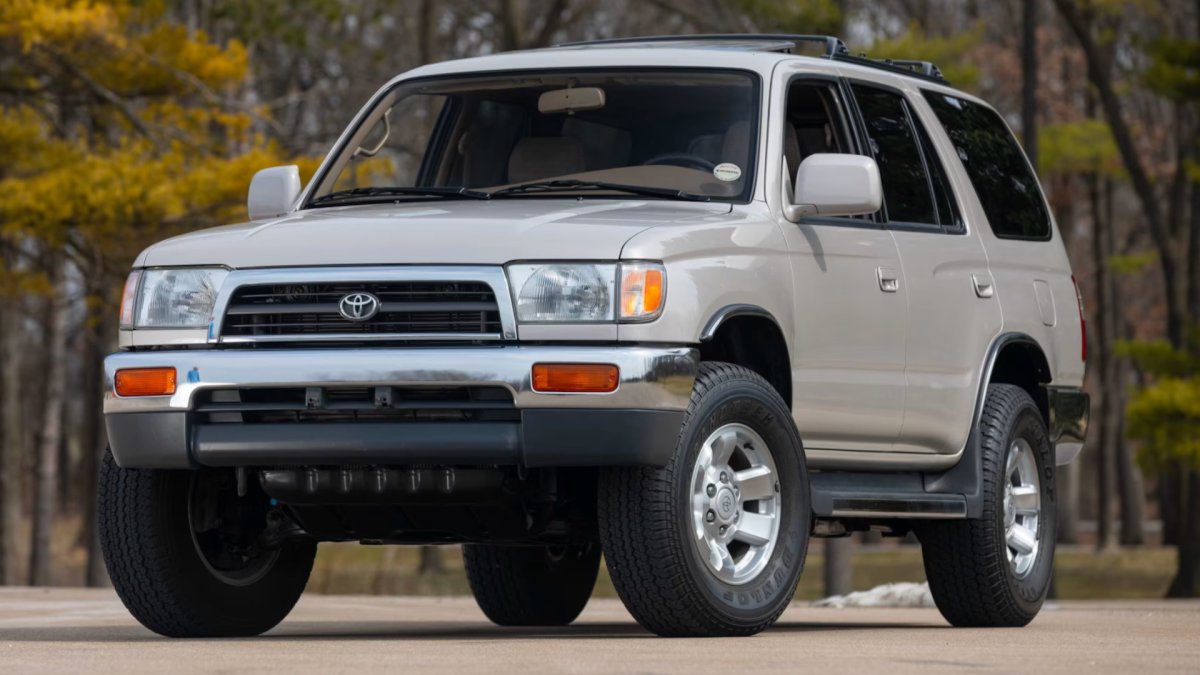
Mecum’s 2026 Indianapolis Auction is filled with high-value collector machinery, from rare performance cars to exotic prototypes. Yet one of the most closely watched lots is not an obvious halo vehicle. It is a 1996 Toyota 4Runner SR5. According to comments Mecum provided to The Drive, the SUV has been drawing among the highest click totals of any lot in the sale, which runs May 8 through May 16, with the 4Runner scheduled to cross the block on May 14.
That interest matters because it suggests something broader than enthusiasm for one clean truck. Mecum is openly speculating that the vehicle could be a "unicorn" capable of helping define another generation of collector cars. Even if that proves too ambitious, the attention around this single 4Runner shows that the collector market is still widening beyond traditional muscle, supercars, and homologation legends.
Why this 4Runner stands out
The fundamentals are straightforward. This third-generation 4Runner is remarkably original and has just 6,951 miles on the odometer. It retains its 3.4-liter V6, rated at 183 horsepower and 217 pound-feet of torque, along with a four-speed automatic transmission and two-speed transfer case. The Desert Dune Metallic paint, Oak Sport cloth interior, factory cassette/CD player, and period-correct 16-inch alloy wheels all reinforce the appeal of a vehicle preserved rather than restored into something more modern or more aggressive.
Originality carries its own weight in the auction world, but this example also benefits from scarcity in context. The Drive reports that this is only the eighth 1996 4Runner SR5 consigned by Mecum in more than 10 years. That does not mean pristine examples do not exist elsewhere, but it does mean one of the country’s most visible collector-car venues does not often see a specimen like this come through.
A sign of a changing collector market
Third-generation 4Runners occupy an interesting place in automotive history. Known internally as the N180, they arrived during a period when SUVs were moving from rough-edged utility vehicles toward mainstream family transport. The model still carried off-road credibility, but it also reflected the suburban normalization of the SUV. In hindsight, that makes it a useful snapshot of a transition point in American and global car culture.
Collector markets often reward exactly that sort of artifact once enough time has passed. Nostalgia is strongest when a vehicle captures a familiar world that has disappeared. The 1990s have already become fertile territory for performance cars, with highly desirable examples commanding major sums. What is newer here is the suggestion that mainstream-era sport-utility vehicles may be moving onto the same cultural runway.
The argument is not difficult to understand. Children of the 1990s are now old enough to shape enthusiast demand, and many of the vehicles embedded in that memory are not supercars. They are family SUVs, Japanese sport compacts, and durable daily drivers that once seemed too common to become collectible. If auction attention is any guide, the 4Runner may now be crossing that line.
The durability factor still matters
The 4Runner’s reputation also adds something many nostalgia plays lack: utilitarian credibility. Toyota’s 1990s-era durability is part of the vehicle’s appeal, and The Drive explicitly frames the truck as coming from a period when Toyota reliability "really meant something." That reputation has given the model a life beyond ordinary used-car depreciation, helping clean examples stay desirable among enthusiasts long before auction houses began paying closer attention.
There is also a simplicity premium in play. Compared with current SUVs, this generation of 4Runner is mechanically basic and visually unembellished. That can make it more appealing, not less. In a market saturated with software-heavy vehicles and oversized designs, a preserved 1990s SUV can read as refreshingly direct.
Will one sale reset expectations?
Probably not on its own. A single lot rarely reorders an entire category unless the result is dramatic and repeatable. But that is not the only thing worth watching. Pre-sale attention, bidder behavior, and post-sale discussion all help establish whether a vehicle is becoming culturally important in collector circles. Mecum’s own emphasis on this 4Runner indicates the auction house sees a possibility of category expansion, even if the sale price ends up being only part of the story.
That possibility is what makes this lot notable. If the market has room for vintage Broncos, Land Cruisers, and other nostalgic off-roaders, then a low-mile third-generation 4Runner does not look out of place. Instead, it may look early.
For Developments Today, the significance is not just about one Toyota. It is about how value forms around technology and mobility history. Yesterday’s everyday machine can become tomorrow’s cultural object when rarity, memory, condition, and identity all converge. This 4Runner appears to be reaching that point in public view.
This article is based on reporting by The Drive. Read the original article.
Originally published on thedrive.com