More Than a Moving Part
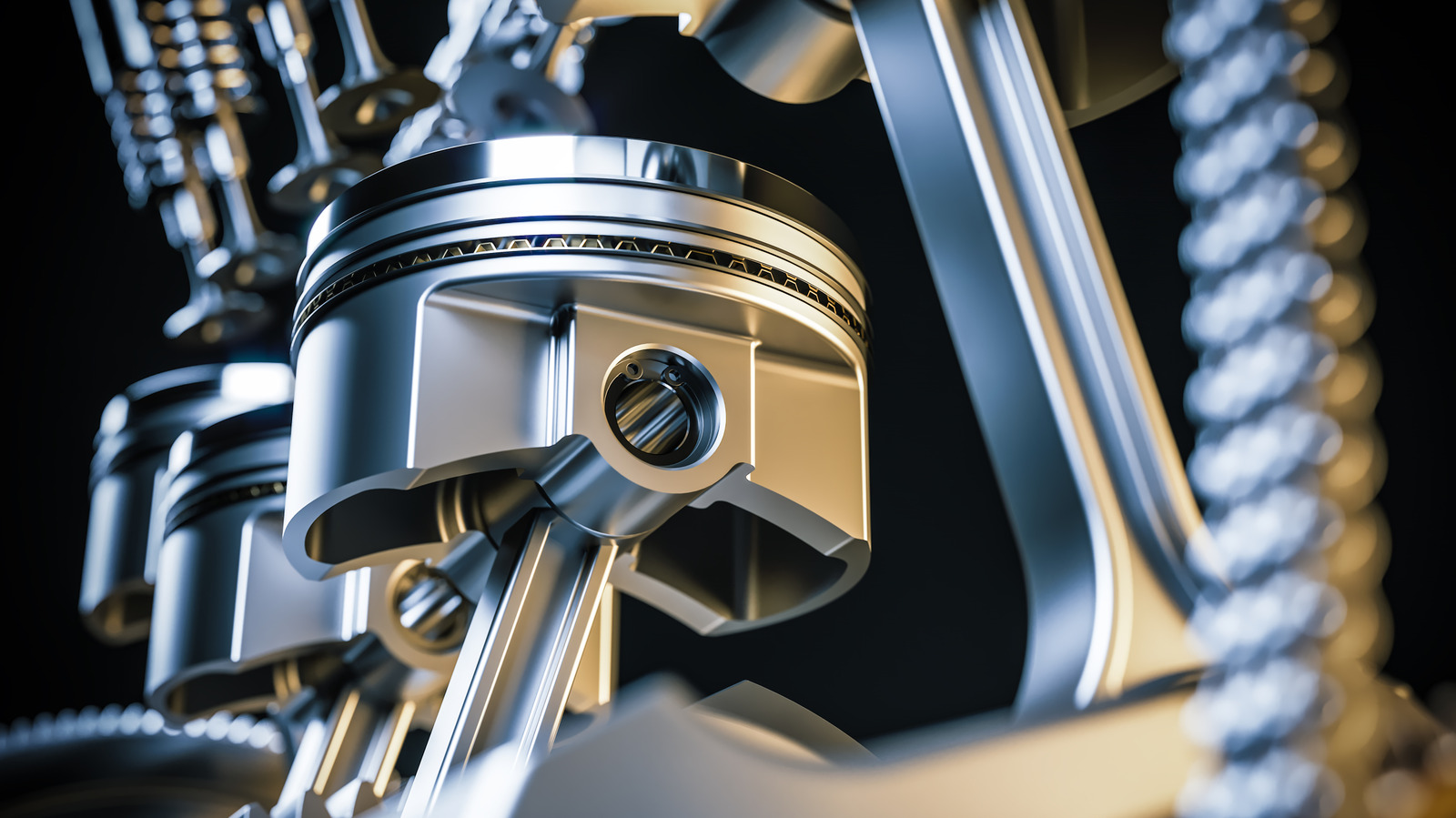
The piston is perhaps the most iconic component of an internal combustion engine — the part that converts explosive force into the rotational motion that ultimately drives the wheels. Yet despite their apparent simplicity, pistons are highly engineered components whose geometry profoundly influences every aspect of engine performance, from power output and fuel efficiency to emissions and mechanical durability.
The shape of the piston crown — the top surface that faces the combustion chamber — is one of the most critical design decisions engine engineers make. Three basic geometries dominate: flat-top, dished, and domed. Each produces distinctly different combustion characteristics and is suited to different engine architectures and performance targets.
Flat-Top Pistons
Flat-top pistons have a level crown surface with no concavity or convexity. They produce the smallest possible combustion chamber volume at top dead center — the point where the piston reaches its highest position in the cylinder — which creates the highest compression ratio for a given engine geometry. Higher compression ratios generally improve thermal efficiency, extracting more useful work from each combustion event.
This geometry is the most common in modern naturally aspirated engines. The flat surface promotes predictable flame propagation during combustion, as the air-fuel mixture ignites at the spark plug and the flame front spreads relatively uniformly across the combustion chamber. The consistent flame behavior contributes to smooth engine operation and predictable power delivery.
However, flat-top pistons are not universally optimal. In engines with very high compression ratios, the flat crown can create excessive pressure peaks that cause knocking — uncontrolled detonation of the air-fuel mixture that produces destructive pressure waves within the cylinder. Engineers must balance the efficiency benefits of high compression against the knock limitations of the fuel being used.

Dished Pistons
Dished pistons feature a concave depression in the crown, creating a bowl-shaped combustion chamber within the piston itself. This additional volume reduces the effective compression ratio compared to a flat-top piston in the same engine, which is precisely the point — dished pistons are most commonly used in forced-induction engines where turbochargers or superchargers push additional air into the cylinder.
When a turbocharger compresses the intake air, it effectively increases the amount of air-fuel mixture in the cylinder before the piston begins its compression stroke. If this pre-compressed charge were then compressed by a high compression ratio piston, the resulting pressure and temperature would exceed the fuel's ability to resist detonation. Dished pistons lower the geometric compression ratio to a level that accommodates the additional pressure from forced induction without triggering destructive knock.
The dish shape also serves a secondary function in some engine designs: it can direct the air-fuel mixture toward the spark plug, promoting reliable ignition and complete combustion even under conditions where the charge distribution within the cylinder is not perfectly uniform. This swirl-directing function is particularly important in direct-injection engines, where fuel is sprayed directly into the combustion chamber and must mix rapidly with air before ignition.
Domed Pistons
Domed pistons have a convex protrusion on the crown that extends into the combustion chamber, further reducing the clearance volume at top dead center and increasing the compression ratio beyond what a flat-top piston achieves. This geometry is found primarily in high-performance naturally aspirated engines designed to extract maximum power from each combustion cycle.
The elevated compression ratio produced by domed pistons improves the thermodynamic efficiency of the engine cycle, but the dome shape introduces complications for combustion quality. The protruding dome can interfere with flame propagation, creating shadow zones where the flame front arrives later and burns less completely. Engine designers must carefully coordinate the dome geometry with the combustion chamber shape, spark plug placement, and valve positioning to minimize these effects.
Many modern domed pistons include valve relief pockets — machined cutouts that prevent the piston from contacting the intake and exhaust valves at top dead center. These reliefs are necessary because the dome raises the piston crown to a height where valve clearance becomes critical, especially in engines with aggressive camshaft timing that keeps valves open longer during each cycle.

Beyond the Basic Shapes
Real-world piston designs often combine elements of multiple basic geometries. A piston might have a generally flat top with a shallow dish in one area and raised features around the periphery, creating a complex combustion chamber shape optimized through computational fluid dynamics simulation. Modern engine development uses CFD extensively to model flame propagation, heat transfer, and emissions formation within the combustion chamber, with piston crown geometry as a primary variable.
The piston's thermal characteristics are equally important. The crown must withstand temperatures exceeding 300 degrees Celsius during combustion while maintaining dimensional stability. Thermal expansion that distorts the piston's circular cross-section into an oval can cause increased friction, oil consumption, and cylinder wall wear. Engineers address this through asymmetric piston designs that anticipate thermal expansion — the piston is manufactured slightly oval so that it becomes circular when heated to operating temperature.
Piston rings — the spring-loaded metal bands that seal the gap between the piston and cylinder wall — must be coordinated with the crown geometry to ensure proper sealing and oil control. The ring pack design affects both the engine's power output, by controlling blow-by losses past the piston, and its emissions, by managing the thin oil film on the cylinder wall that can be drawn into the combustion chamber and burned.
Material Evolution
Traditional pistons are cast from aluminum alloys chosen for their combination of light weight, thermal conductivity, and mechanical strength at elevated temperatures. Racing and high-performance applications often use forged pistons, which have a denser, more uniform grain structure that better resists the extreme mechanical and thermal loads of high-output engines.
Recent developments include steel pistons for heavy-duty diesel applications, where the higher strength-to-weight ratio of steel allows thinner, lighter designs despite the denser material. Some manufacturers have introduced thermal barrier coatings on piston crowns — ceramic layers that reduce heat transfer from the combustion gases into the piston, keeping more energy available to push the piston down and improving thermal efficiency.

The Future of Pistons
As internal combustion engines evolve to meet increasingly stringent emissions and efficiency standards, piston design continues to advance. Variable compression ratio engines — which can physically change the piston's effective position within the cylinder — represent the frontier of piston technology, allowing a single engine to operate at high compression for efficiency during light loads and low compression for knock avoidance under heavy loads.
Even as electric vehicles capture an increasing share of the market, internal combustion engines will remain in production for decades, particularly in heavy-duty, marine, and aviation applications. The humble piston — refined over more than a century of engineering — will continue evolving, shaped by the same fundamental trade-offs between compression, combustion quality, and mechanical durability that have defined its design since the earliest days of the internal combustion engine.
This article is based on reporting by Jalopnik. Read the original article.
Originally published on jalopnik.com