A New Wave of Defense AI Companies
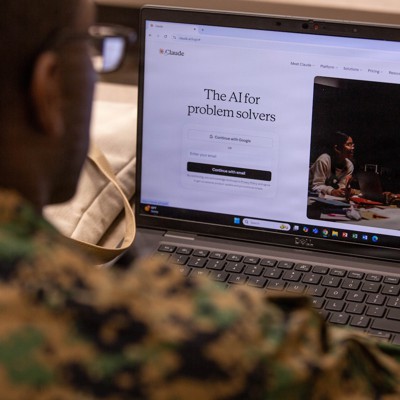
The intersection of artificial intelligence and military capability has historically produced two categories of company: large defense primes that bolt AI features onto existing systems, and commercial technology companies that license dual-use tools to military customers. A third category is now emerging with increasing prominence — startups that are building AI systems designed from their foundations specifically for military applications, with architectures, training data, and operational profiles that the commercial market neither requires nor tolerates.
Defense One's examination of this startup ecosystem reveals a cohort of companies that have concluded the military's AI needs are different enough from commercial applications to justify purpose-built solutions rather than adaptations of existing commercial technology. The argument these companies make is that the extreme reliability requirements, the classified data environments, the adversarial conditions, and the unique decision-making contexts of military operations require AI systems that were designed with those requirements as first principles rather than afterthoughts.
The timing of this cohort's emergence reflects a confluence of factors: the demonstrated capability of large AI models across complex domains, the increasing centrality of information processing and decision support in modern warfare, the availability of venture capital flowing toward defense technology, and a regulatory and procurement environment that has become more receptive to non-traditional defense contractors since the defense innovation initiatives of the early 2020s began bearing fruit.
Why Military AI Is Different
The demands placed on AI systems in military contexts differ from commercial applications in ways that are more than incremental. Commercial AI failure modes are measured in customer complaints, brand damage, and revenue loss. Military AI failures can cost lives, compromise missions, or in the worst cases create strategic crises with allies or adversaries. This asymmetry of consequences requires different approaches to reliability, validation, and operational safety than commercial deployment norms assume.
Data is a particularly significant differentiator. The most valuable training data for military AI — communications intercepts, surveillance imagery, operational logs, threat databases — is classified and cannot be used to train commercial models. Companies building military-specific AI must either build their own classified training pipelines, work within government data environments, or develop architectures that can be effectively trained on unclassified data and fine-tuned on classified data without compromising security boundaries in ways that oversight bodies would prohibit.
Adversarial robustness requirements also differ. Commercial AI is generally evaluated against the distribution of inputs that real users produce. Military AI must be robust against adversaries who will actively probe for exploits, attempt to deceive sensors and data feeds that provide model inputs, and invest resources in understanding and defeating AI systems that threaten their operations. This creates a fundamentally different evaluation and red-teaming requirement that commercial AI safety testing does not adequately address.
Key Startups and Their Approaches
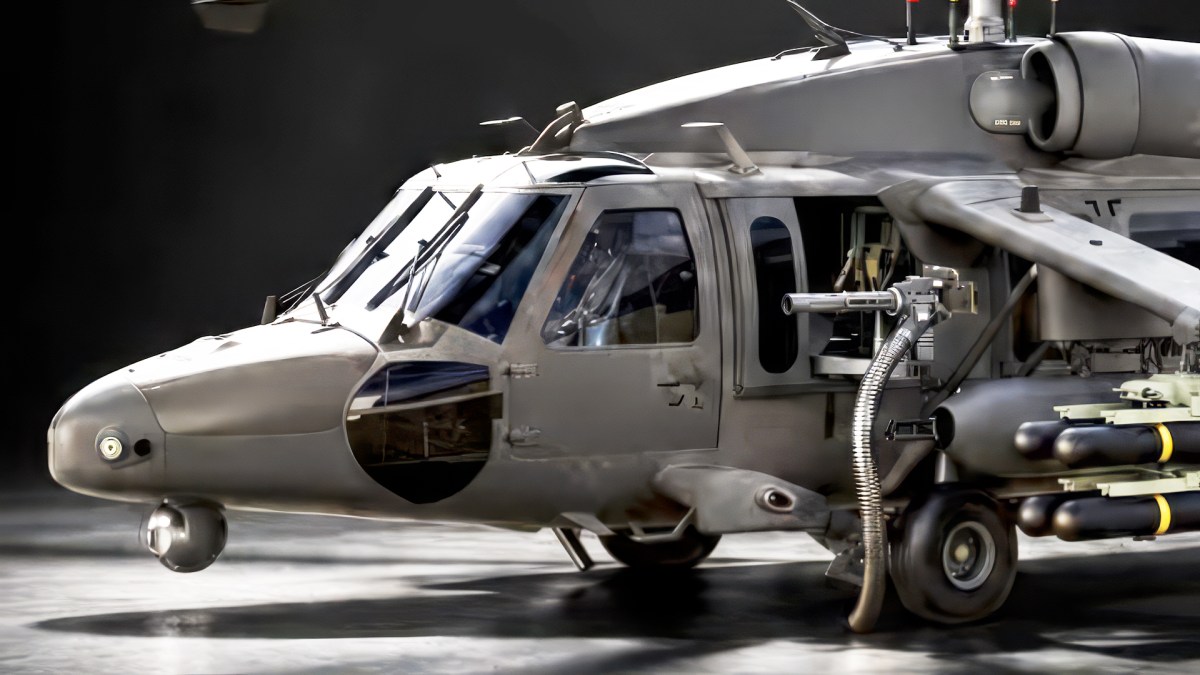
The emerging landscape includes companies focusing on different layers of the military AI stack. Some are building intelligence analysis platforms that help analysts process and synthesize vast quantities of imagery, signals, and open-source data to produce actionable intelligence assessments faster than human analysts working alone can achieve. Others are developing decision support systems for operational planning — tools that help commanders model courses of action, evaluate logistics constraints, and anticipate adversary responses.
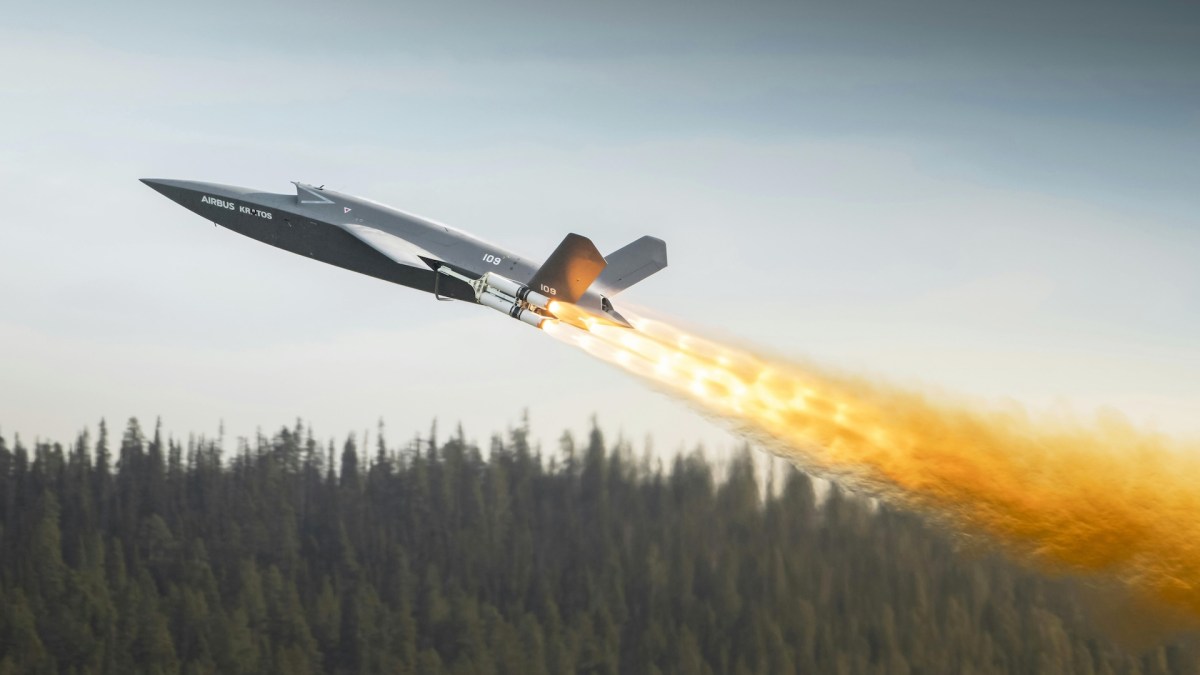
A particularly active area is autonomous systems coordination — AI platforms that manage swarms of unmanned aerial vehicles, ground robots, or maritime autonomous vehicles, enabling small teams to control large numbers of systems in contested environments where communications may be degraded or denied. These coordination systems require AI that is robust to partial information, communication disruptions, and adversarial electronic warfare, conditions that have no commercial analogue.
Logistics and supply chain optimization represents another priority domain. Military logistics is extraordinarily complex, managing the movement of personnel, equipment, ammunition, fuel, and maintenance parts across global networks in conditions ranging from peacetime garrison operations to active conflict. AI systems that can optimize these flows, anticipate shortfalls, and adapt to disruptions have substantial value that military customers are increasingly willing to pay for with procurement mechanisms designed to speed acquisition.
The Pentagon's AI Procurement Evolution
The Department of Defense has substantially evolved its AI acquisition approach over the past several years, moving from bespoke program-of-record approaches toward more agile procurement mechanisms better suited to software-intensive AI capabilities that iterate faster than traditional defense acquisition cycles accommodate. The Chief Digital and AI Office has played a central role in developing contracting vehicles and standards that allow non-traditional vendors to compete effectively for defense AI work.
The Joint Warfighting Cloud Capability, combined with the expanding availability of classified cloud computing environments, has lowered the infrastructure barrier for startups seeking to operate in classified settings. Companies no longer need to build their own classified computing environments to develop and deploy AI for military customers — they can leverage government cloud infrastructure that provides the security controls required while enabling the modern software development practices that AI development requires.
Venture capital flows to defense AI have increased substantially, driven partly by changed social attitudes toward defense investment following Russia's invasion of Ukraine and the broader recalibration of technology industry views toward national security missions. Investors who previously avoided defense technology on principle or commercial preference have reconsidered, and specialized defense-focused venture funds have emerged to provide not just capital but operational expertise in defense market navigation.
Ethical Dimensions and International Competition
Military-specific AI raises ethical questions that the commercial AI discourse, focused primarily on bias, privacy, and labor displacement, does not fully address. The appropriate role of AI in lethal decision-making — whether and under what conditions autonomous systems should be permitted to engage targets without human authorization — remains an active policy debate within the United States and in international forums that have not yet produced binding rules.
Meanwhile, adversary nations are investing heavily in military AI without the ethical deliberation that characterizes U.S. and allied debates. China's military AI programs are substantial and reportedly less constrained by the human-in-the-loop requirements that U.S. policy currently mandates for lethal autonomous weapons. This asymmetry creates competitive pressure to move faster that defense officials openly acknowledge even as they maintain commitments to responsible AI development.
The startups building military-specific AI are operating at the intersection of these pressures — needing to develop capable systems quickly enough to be relevant in the near-term competition while building in the safety, explainability, and human oversight features that responsible deployment requires. How they navigate this tension, and how their government customers evaluate it, will shape the trajectory of AI-enabled warfare for years to come.
This article is based on reporting by Defense One. Read the original article.
Originally published on defenseone.com