An Indian startup is trying to turn in-orbit computing from a demonstration into an infrastructure business
TakeMe2Space, a young space company founded by entrepreneur Ronak Kumar Samantray, is pitching a long-range plan to build orbital computing capacity in stages, beginning with small technology demonstrations and eventually aiming for a 50-kilowatt data center in space. According to comments Samantray gave to SpaceNews, the company is seeking to raise $55 million to pursue that goal after announcing a $5 million seed round in January.
The company’s thesis is that modest near-term computing nodes in orbit could become the basic building blocks for much larger future systems. Samantray framed the opportunity around a scale that investors and infrastructure planners may find familiar: 50 to 100 kilowatts of compute, which he described as a level of liquidity that could support the emergence of much larger orbital platforms over time.
That framing matters because many space ventures struggle to connect technical ambition with a believable deployment sequence. TakeMe2Space is trying to do that by laying out a tiered roadmap rather than promising a fully formed orbital data center all at once.
Early missions are designed to prove the hardware and customer workflow
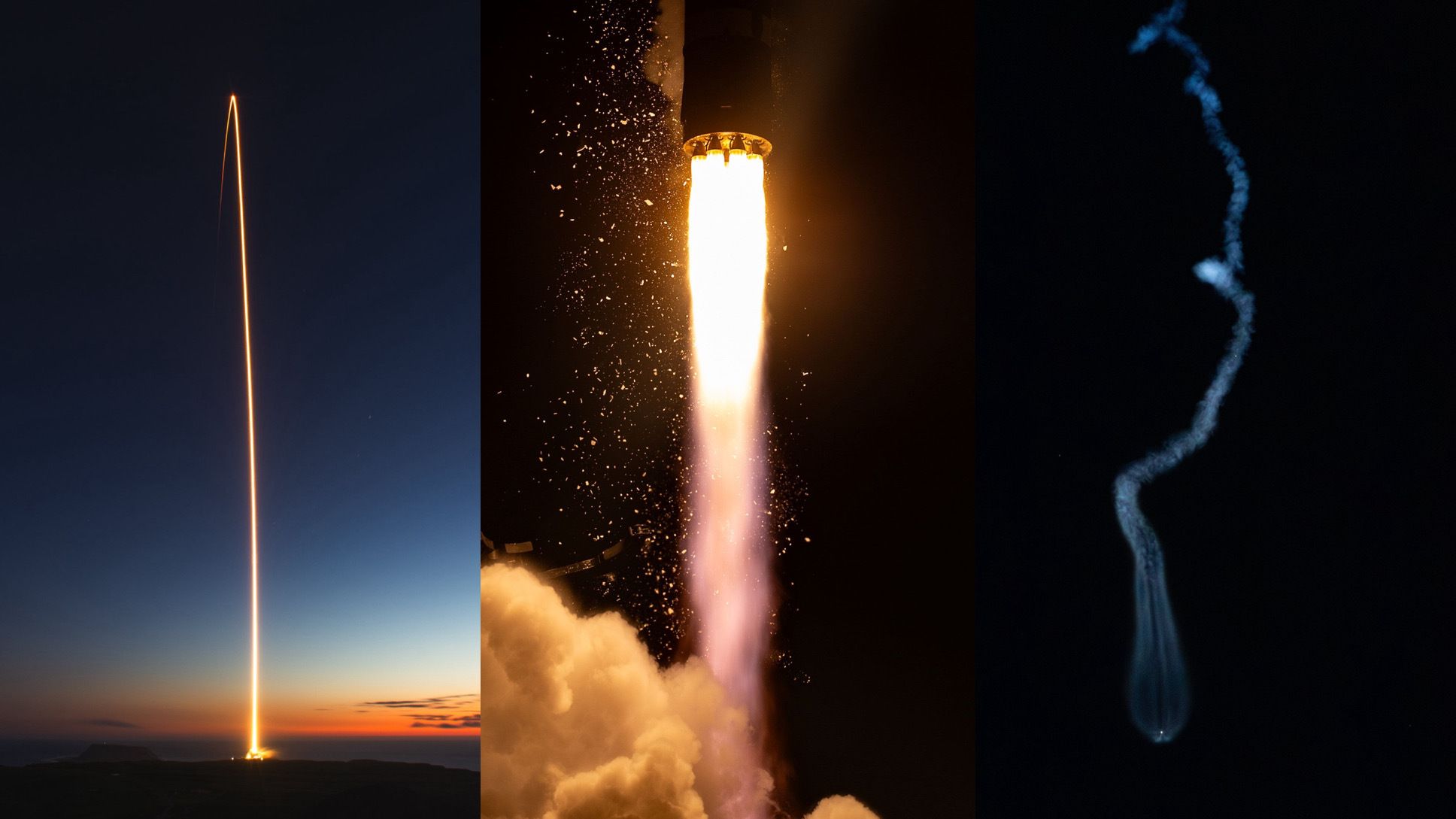
The startup already has one flight behind it. Its first satellite, launched in December 2024 on India’s Polar Satellite Launch Vehicle, was a one-unit cubesat called My Orbital Infrastructure-Tech Demonstration. The spacecraft remained attached to the rocket’s fourth stage, but it provided flight heritage for several core technologies, including the company’s onboard computer, an edge processor, and its attitude determination and control system.
Just as important, the mission was used to show that customers could upload artificial intelligence models, run inferencing tasks, and receive results back from the platform. Samantray said three customers uploaded models and completed that workflow. For a company trying to sell orbital compute rather than simply launch hardware, that operational loop may prove more important than the satellite’s size.
Before founding TakeMe2Space in late 2024, Samantray and his colleagues also carried out spaceflight testing on a proprietary material intended to shield GPUs from solar radiation. That detail points to one of the hard technical constraints behind any plan for in-space computing: processors powerful enough for AI and data-intensive tasks need protection if they are going to operate reliably in orbit.
The next step is a larger cubesat, followed by a linked constellation
TakeMe2Space’s near-term roadmap now moves to a more capable spacecraft. In October, the company plans to launch a six-unit cubesat equipped with an Nvidia Jetson module on a SpaceX Falcon 9 rideshare mission. That mission is expected to support Earth-imaging tasks, with customers already testing AI models on the satellite’s physical twin before launch.
If that mission works as planned, the company intends to move again in 2027, using funds from its recent investment round to deploy a constellation of four satellites weighing roughly 100 kilograms each. Those spacecraft would exchange data through optical inter-satellite links, a design choice that suggests TakeMe2Space is thinking beyond isolated satellites and toward distributed processing architecture.
Samantray said the goal for that phase is to reach $15 million in annual revenue with five kilowatts of compute in orbit. That is still far short of the company’s 50-kilowatt aspiration, but it introduces a measurable business milestone rather than a purely conceptual one. In practice, the progression from a one-unit demonstration to a six-unit mission, then to a four-satellite constellation, gives the company a narrative that investors can evaluate against technical execution and customer uptake.
The commercial case rests on speed, resilience, and demand for orbital storage
TakeMe2Space has also been studying where early demand might come from. Samantray identified agriculture and insurance as promising first markets because those sectors need fast access to inference tools that can process Earth observation data and generate decisions quickly. That suggests the company is not only targeting storage or generic cloud capacity, but also workloads where acting on data close to where it is collected could create commercial value.
He also said the startup has seen growing interest in data storage in orbit, particularly from customers that want mission-critical information backed up off Earth. The logic is blunt: terrestrial data centers have increasingly been viewed as potential military targets, and that has elevated interest in resilience as well as performance.
If that demand proves real, it could give orbital computing ventures a more immediate entry point than grand claims about moving large-scale cloud infrastructure into space. Backup storage, time-sensitive Earth observation processing, and specialized inference workloads may be narrower markets, but they are easier to imagine as first use cases than a wholesale migration of data center capacity off the planet.

A crowded idea still needs proof, capital, and execution
Even so, the company’s plan remains ambitious. Building computing infrastructure in orbit means solving for radiation, power, thermal management, networking, spacecraft reliability, launch cadence, and customer economics all at once. The business case also depends on whether users will pay enough for in-space processing to offset the cost and complexity of running hardware beyond Earth.
TakeMe2Space is attempting to answer those questions incrementally. Its message is that a credible orbital data center industry will not begin at gigawatt scale, but with smaller, financeable units that can demonstrate demand and operational stability. That is a more grounded argument than many futuristic space infrastructure pitches, though it is still far from proven.
What makes the company worth watching is not that it has already solved orbital computing, but that it is trying to define a practical ladder toward it. A successful October cubesat mission would be another step in that direction. A functioning multi-satellite compute constellation in 2027 would be a more consequential one. Until then, TakeMe2Space remains part of a broader contest to determine whether space can become a serious location for computation and storage, or whether the idea will stay confined to demonstrations and investor decks.
This article is based on reporting by SpaceNews. Read the original article.
Originally published on spacenews.com