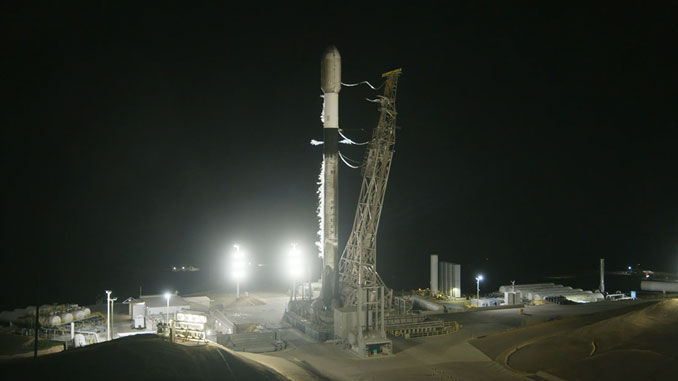
Another Starlink mission lines up from California
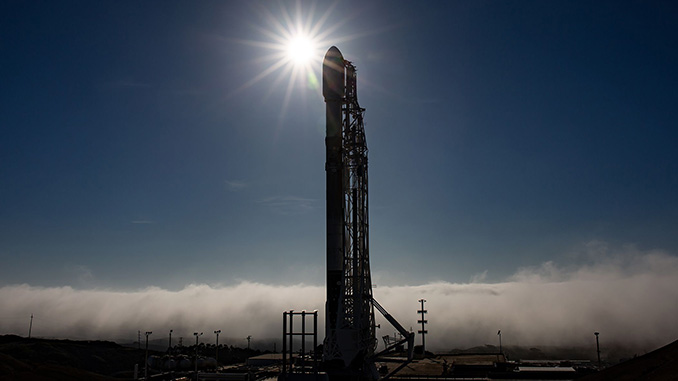
SpaceX is preparing to launch 25 Starlink V2 Mini satellites from Vandenberg Space Force Base in California in another high-tempo deployment for its broadband constellation. According to Spaceflight Now, liftoff of the Starlink 17-27 mission is scheduled for 9:29:49 p.m. PDT on April 14, which corresponds to 12:29:49 a.m. EDT and 04:29:49 UTC on April 15.
The mission will fly from Space Launch Complex 4 East on a southerly track down the California coast, targeting an orbit of 258 by 246 kilometers at a 97-degree inclination. That profile places the payload into the kind of high-inclination orbit commonly used for Starlink deployments intended to expand coverage and refresh network capacity.
On paper, another Starlink launch can look routine. In practice, each mission continues to illustrate the industrial cadence SpaceX has built around reusable rockets, standardized operations, and constellation-scale deployment. This flight is described as the company’s 46th Falcon 9 launch of the year, an unusually high pace by historical launch industry standards and a sign of how far commercial orbital logistics have shifted from occasional events to sustained operations.
Reuse remains central to the launch system
The first-stage booster assigned to the mission, B1082, is set for its 21st flight. That figure alone captures one of the most consequential changes in modern launch: hardware once treated as expendable is now expected to fly repeatedly, including on operational network-building missions.
Spaceflight Now reports that B1082 joined the SpaceX fleet in January 2024 and has already supported a mix of missions, including 17 previous Starlink deliveries as well as USSF-62, OneWeb Launch 20, and NROL-145. The reuse record matters not only as an engineering milestone but also as a business signal. SpaceX is showing that boosters can move across commercial, government, and national security workloads while continuing to support a dense flight schedule.
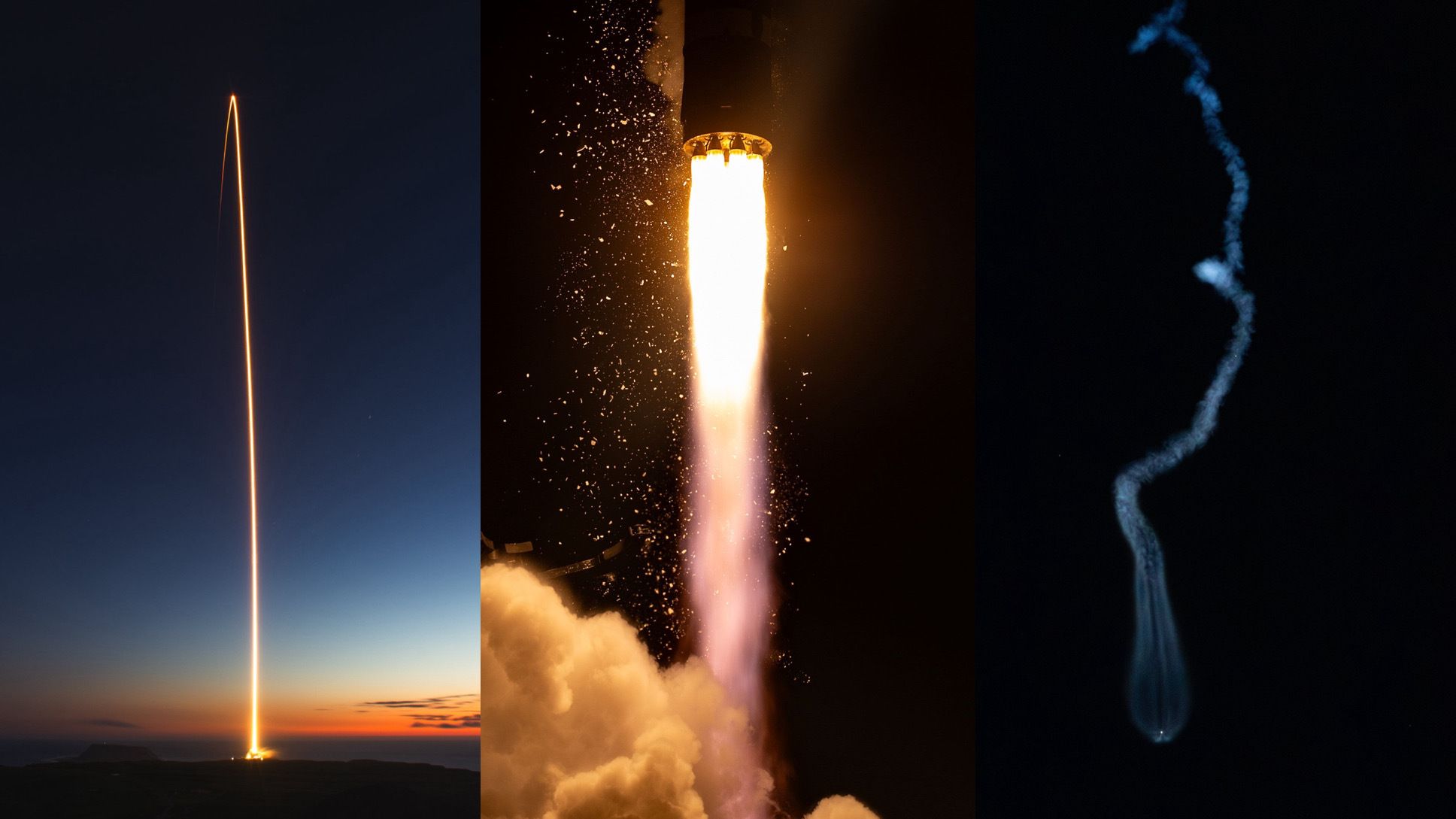
About eight minutes after liftoff, the booster is expected to attempt a landing aboard the drone ship Of Course I Still Love You in the Pacific Ocean. That recovery step has become familiar to frequent launch watchers, but it remains essential to the company’s economics. Every successful landing supports the broader strategy of flying boosters often enough to keep launch costs down and mission availability high.
For Starlink in particular, that model enables SpaceX to act as both launch provider and constellation operator. The company is not waiting for outside manifest demand to justify a rocket. It is using its own launch capacity to rapidly expand an in-house communications network.

Why this mission still matters beyond the launch stream
Starlink flights have become so common that they risk blending together, but the scale itself is the story. Building a global internet constellation requires not one dramatic launch but a constant sequence of deployments. Each batch of satellites adds resilience, replenishes the network, and supports geographic or capacity growth.
The 25 payloads on this mission are identified as Starlink V2 Mini satellites. Those spacecraft represent a more capable generation than earlier versions while remaining compatible with Falcon 9 deployment constraints. Continued launches of this class suggest SpaceX is still actively iterating the network through incremental but frequent upgrades rather than waiting for rare, oversized deployment windows.
The mission also underscores the geographic flexibility of the Falcon 9 system. Florida launches often dominate public attention, but Vandenberg remains a critical site for missions requiring polar or near-polar inclinations. By sustaining operations from both coasts, SpaceX can match orbital needs to launch infrastructure while keeping overall cadence high.
Mission profile at a glance
- Launch site: Space Launch Complex 4 East, Vandenberg Space Force Base.
- Payload: 25 Starlink V2 Mini satellites.
- Target orbit: 258 x 246 kilometers at 97 degrees inclination.
- Booster: Falcon 9 first stage B1082 on its 21st flight.
- Recovery plan: Landing on the drone ship Of Course I Still Love You.
The normalization of high-frequency orbital operations
What stands out most about this mission is not a single experimental payload or headline-grabbing first. It is the normalization of repetition at scale. A company launching its 46th Falcon 9 mission by mid-April would once have seemed implausible. Now that pace is being used to support an active communications network whose growth depends on relentless deployment.
That has implications beyond SpaceX. Reusability, rapid turnaround, and vertically integrated network building are increasingly setting expectations for what commercial space operations can look like. Competitors, satellite operators, regulators, and military planners all have to assess a world in which orbital access is becoming more frequent and more operationally routine.
There is also a strategic dimension to the Starlink program’s continuity. A communications constellation is only as useful as its maintained coverage and refreshed capacity. Regular launches allow SpaceX to keep adding satellites while replacing or augmenting earlier spacecraft, making the network more than a one-time infrastructure project. It becomes a living system, sustained through constant logistics.
This mission fits squarely into that pattern. It may not carry a unique science payload or a brand-new spacecraft design, but it reinforces a model that is reshaping launch economics and satellite operations. The regularity is itself significant.
If the flight proceeds as planned, the mission will add another 25 satellites to the Starlink constellation roughly an hour after liftoff, following the drone-ship recovery attempt of the first stage. That sequence, once extraordinary, is now part of a production rhythm. The bigger story is that orbital deployment at this tempo is no longer the exception. It is becoming infrastructure.
This article is based on reporting by Spaceflight Now. Read the original article.
Originally published on spaceflightnow.com