Another Day, Another Starlink Launch
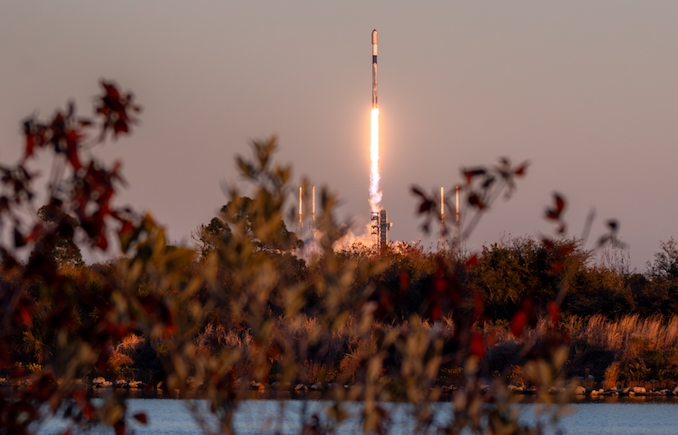
SpaceX continued its relentless launch cadence Tuesday evening with a Falcon 9 rocket lifting off from Cape Canaveral Space Force Station carrying 29 Starlink V2 Mini satellites. The Starlink 6-110 mission, which launched at 6:04 p.m. EST, was the company's 18th launch of 2026 — maintaining a pace of roughly two launches per week that has become almost routine in the space industry.
The 29 new satellites join a constellation that now exceeds 9,700 active units in low Earth orbit, according to orbital tracking data maintained by astronomer Jonathan McDowell. That number represents the largest satellite constellation ever assembled, and SpaceX shows no signs of slowing down. The company has regulatory approval to deploy up to 12,000 first-generation satellites and has filed applications for a next-generation constellation of up to 30,000 additional units.
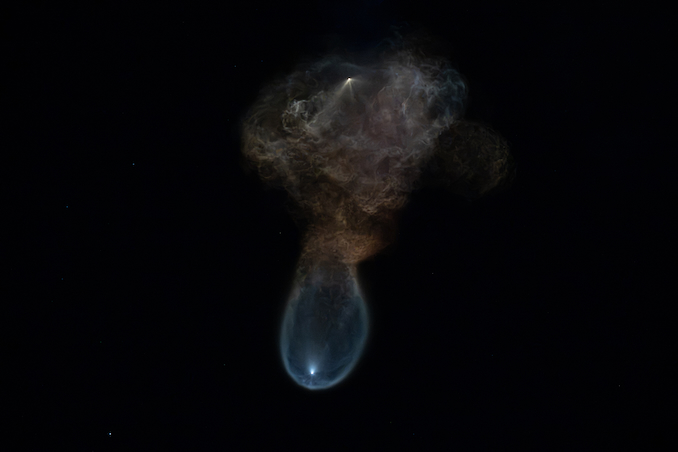
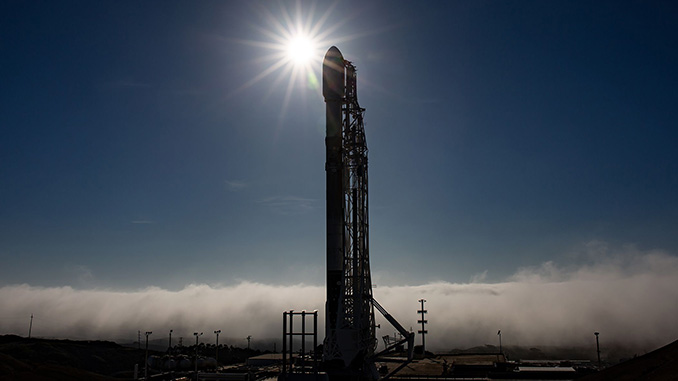
The twilight launch from Space Launch Complex 40 followed a south-easterly trajectory over the Atlantic. Weather conditions were nearly ideal, with the 45th Weather Squadron forecasting a greater than 95 percent chance of favorable conditions and noting that "high pressure will continue to build across the peninsula, bringing ideal conditions for the launch window."
Booster B1092's Tenth Flight
The mission flew on Falcon 9 first stage booster B1092, making its tenth flight — a milestone that has become commonplace in SpaceX's operations but still represents an engineering achievement that seemed impossible a decade ago. The booster's previous missions included CRS-32 (a cargo resupply flight to the International Space Station), NROL-69 (a classified National Reconnaissance Office payload), and USSF-36 (a U.S. Space Force mission).
Approximately eight minutes after liftoff, B1092 landed successfully on the drone ship "Just Read the Instructions," positioned in the Atlantic northeast of The Bahamas. The landing was the 151st on that particular vessel and the 576th booster landing in SpaceX's history. The casual regularity of these recoveries belies the technical sophistication involved — each landing requires the booster to re-enter the atmosphere, perform a series of engine burns, and touch down on a platform roughly the size of a football field floating in the open ocean.
A Quiet Price Increase
While the launch itself was unremarkable by SpaceX's current standards, a concurrent update to the company's pricing drew attention from industry observers. SpaceX revised its Falcon 9 Capabilities and Services page to reflect a new standard price of $74 million for launches delivering up to 5.5 metric tons to geostationary transfer orbit, up from $70 million in 2025.
The $4 million increase — roughly 5.7 percent — is the latest in a series of price adjustments that have seen Falcon 9 costs rise from $67 million in 2022. At the time, SpaceX noted that future increases were possible due to inflation. The cumulative increase of roughly 10 percent over four years is modest by aerospace standards, but it contradicts the narrative that reusability would continuously drive launch costs downward.
The gap between SpaceX's internal costs and its commercial pricing is significant. According to Ars Technica reporting, SpaceX's internal cost for launching a reusable Falcon 9 is approximately $15 million — meaning the company earns roughly $59 million in gross margin on each commercial launch at current pricing. That margin helps fund Starship development, Starlink constellation expansion, and the company's other ambitious programs.
The Competitive Landscape
SpaceX's pricing power exists because meaningful competition remains limited. Rocket Lab's Neutron rocket, designed to compete in the medium-lift market, is expected to price dedicated flights at around $55 million — still well above SpaceX's internal costs but potentially attractive to customers who want alternatives. Blue Origin's New Glenn, which can carry significantly more mass (13 metric tons to GTO), is estimated to cost around $68 million per flight, though the rocket has only flown twice.
The pricing dynamics reveal an interesting market structure. SpaceX has achieved the cost reductions that reusability promised but has chosen to capture much of that savings as profit rather than passing it to customers. This is rational business behavior — the company has a near-monopoly in the reliable, high-cadence launch market — but it means the revolutionary cost savings of reusable rockets have primarily benefited SpaceX's own programs rather than the broader space economy.
Starlink's Expanding Footprint
Each Starlink launch adds capacity to a network that now serves customers in more than 70 countries. The V2 Mini satellites being launched on this and recent missions represent a significant upgrade over earlier Starlink hardware, with increased bandwidth capacity and improved inter-satellite laser links that allow the constellation to route traffic through space rather than relying entirely on ground stations.
The constellation's growth comes as regulatory scrutiny intensifies. Astronomers continue to raise concerns about the impact of tens of thousands of satellites on ground-based observations, and orbital debris experts worry about the collision risks inherent in such a large constellation. SpaceX has responded with improved satellite designs that are less reflective and with operational procedures to reduce collision risk, but the fundamental tension between commercial satellite deployment and the space environment remains unresolved.
For SpaceX, the Starlink business model is becoming clearer with each launch. The company is simultaneously building a global telecommunications network and creating the demand that justifies its own launch manifest. It's a vertically integrated strategy that no other space company can replicate at scale — and at $74 million per external launch, it's paying for itself handsomely.
This article is based on reporting by Spaceflight Now. Read the original article.
Originally published on spaceflightnow.com