Another routine Starlink mission carries a milestone for reusability
SpaceX’s planned Starlink launch from California on April 18 is the sort of mission the company now flies with striking regularity. Yet this one carries a symbolic milestone inside the routine: if all goes to plan, it will mark the 600th Falcon booster landing.
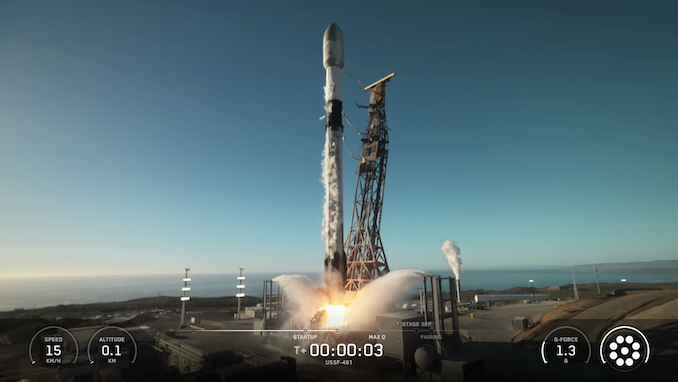
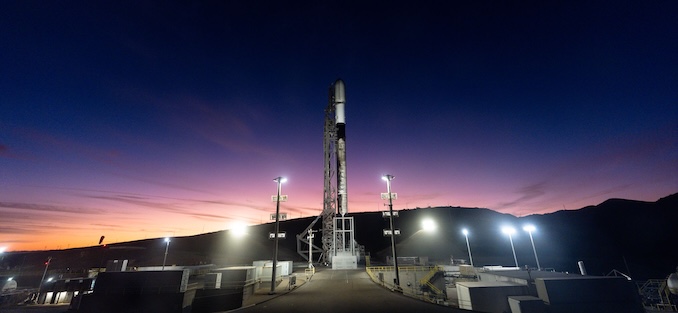
According to the supplied report from Spaceflight Now, the mission is scheduled to lift off from Space Launch Complex 4 East at Vandenberg Space Force Base at 7:33:40 a.m. PDT on April 18, 2026. The payload is a batch of 25 Starlink broadband satellites headed to low Earth orbit. The first stage assigned to the mission is booster B1097, which is set to fly for a seventh time.
That combination says a great deal about the current state of orbital launch. A mission profile that once would have been framed mainly around access to space is now also measured in turnaround cadence, fleet utilization, and landing statistics. The headline number, 600, matters because it represents how thoroughly SpaceX has normalized the recovery of orbital-class boosters as an operational metric rather than an experimental bonus.
The specifics of the launch attempt
The source text states that the Falcon 9 will depart Vandenberg on a south-southwesterly trajectory. A little more than eight minutes after liftoff, B1097 is expected to land on the drone ship Of Course I Still Love You. If successful, the report says, it would be the 191st landing on that vessel.
The mission will also expand a constellation that the report describes as already consisting of more than 10,200 spacecraft. That figure underscores the scale at which Starlink now operates. Individual launches still matter, but each additional batch increasingly looks like an increment inside a larger industrial system rather than a standalone event.
The assigned booster’s history reinforces the point. Spaceflight Now notes that B1097 previously launched Sentinel-6B, Twilight, and five earlier Starlink batches. Reuse is no longer notable simply because a booster flies again; it is notable because specific hardware is becoming part of a recurring logistics network in which flight heritage is expected.

Why the 600th landing matters
Round numbers can be superficial, but this one captures a structural shift in launch economics and operations. Recovering a booster once proved that the concept was possible. Recovering hundreds of boosters turns that proof into industrial practice. The milestone is therefore less about spectacle than about accumulated evidence that rapid, repeated first-stage recovery has become foundational to SpaceX’s model.
It also highlights how the company’s operational identity has changed. Falcon missions still deliver payloads, but the program is now inseparable from the architecture of return, refurbishment, and relaunch. When a launch story leads with a landing count, it signals that launch and recovery are no longer separate achievements. They are two halves of the same system.
That matters beyond SpaceX. Reusability has become one of the central benchmarks by which other launch providers are now judged, whether they pursue similar landing architectures or different approaches. The Falcon program’s repeated recoveries do not settle every economic or technical debate, but they have raised the burden of proof for expendable models in much of the commercial market.
Starlink as the engine behind cadence
The mission also illustrates how Starlink itself has become the demand engine that supports this pace. Launch providers traditionally depended on a mix of government, commercial, and science payloads from outside customers. SpaceX still serves those markets, but Starlink gives it a large internal manifest that can keep vehicles, ground systems, and recovery assets operating at high tempo.
That creates feedback. Frequent Starlink launches provide more opportunities to fly reused hardware, which in turn strengthens the operational base for future flights. Each additional launch is both a service mission and a data point in a continuously refined transportation system.
The supplied source does not claim what the broader business impact of this specific launch will be, nor does it offer a comparison with rival constellations. But it clearly shows the scale at which SpaceX is now able to use its own broadband network as a recurring launch customer. That is one reason milestones that might once have been rare are now reached amid ordinary constellation expansion.
A milestone wrapped in routine
There is a paradox in the way Falcon milestones now arrive. The larger the number gets, the less dramatic the surrounding mission may look. This launch is not described as a one-off test or a demonstration flight. It is a scheduled Starlink deployment using a booster with prior missions behind it and a planned droneship landing ahead of it. The milestone is embedded in repetition.
That may be the clearest sign of what has changed in orbital launch over the past decade. The achievement is not simply that SpaceX can attempt a 600th landing. It is that such an attempt is woven into a standard operational morning at Vandenberg, with a known pad, a known booster, a known recovery vessel, and another stack of satellites heading into an already vast network.
If B1097 lands as planned, the number will stand as a visible marker of how far reusable launch has moved from experiment to infrastructure. If it does not, the mission will still reflect the same broader reality: modern orbital launch is increasingly judged not only by what reaches space, but by what comes back ready to fly again.
This article is based on reporting by Spaceflight Now. Read the original article.
Originally published on spaceflightnow.com