SpaceX hits a launch milestone that few rivals can match
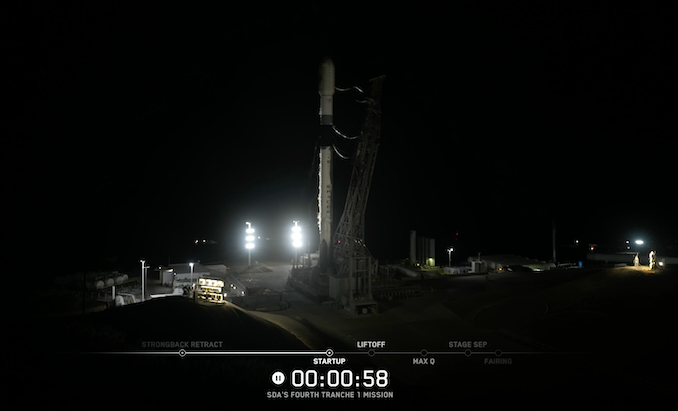
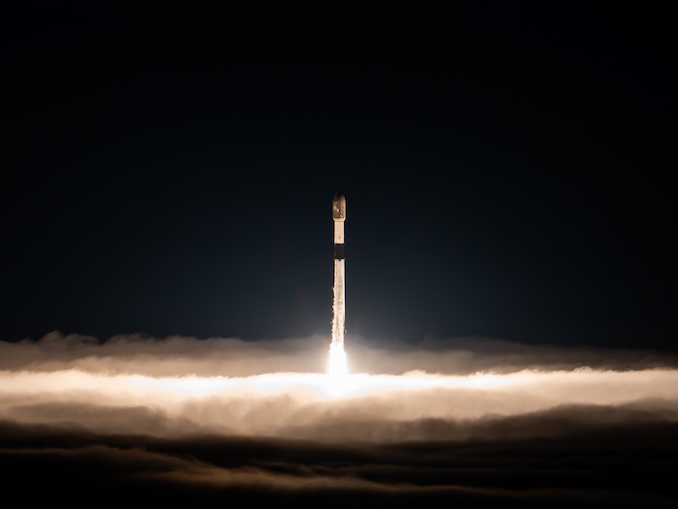
SpaceX recorded its 100th orbital mission of 2026 with a Falcon 9 launch from California, another marker in a year defined by relentless cadence and continued reuse of hardware. The mission, a Starlink deployment designated Starlink 15-20, lifted off from Space Launch Complex 4 East at Vandenberg Space Force Base at 12:25 a.m. PDT on August 22, 2026, carrying 29 broadband satellites to low Earth orbit.
Milestones of this kind are easy to reduce to numerology, but the underlying fact is more important than the round number. Reaching 100 orbital missions before the final third of the year signals a level of operational tempo that has become central to SpaceX’s competitive position. It is not simply launching often. It is repeatedly turning that frequency into deployed satellites, recovered boosters and a denser orbital communications network.
The mission itself was straightforward, the pace is not
According to the supplied source text, the rocket flew a southeasterly trajectory after leaving the pad and used Falcon 9 first-stage booster B1100 on its ninth flight. Roughly 8.5 minutes after liftoff, the booster landed on the droneship Of Course I Still Love You in the Pacific Ocean. That landing was the 220th on that vessel and the 653rd Falcon booster landing overall.
On paper, the sequence was familiar. Launch, stage separation, payload delivery and first-stage recovery have become standard elements of a Falcon 9 mission profile. But that familiarity is itself the story. What once counted as an exceptional demonstration of reusability now functions as routine infrastructure. A ninth flight for a booster is no longer headline material on its own. Instead, it fits into a broader production system designed to squeeze more missions out of each core while holding the launch schedule together.
The satellite cargo also reflects how SpaceX is using that system. The Starlink 15-20 mission added another 29 satellites to the company’s low Earth orbit broadband constellation. The supplied source text says Elon Musk confirmed that Starlink now has more than 11,000 satellites in orbit. Whatever debates continue around spectrum, orbital congestion or competitive impacts, the industrial fact is clear: the network is still expanding at a scale enabled by SpaceX’s launch machinery.
Why 100 missions matters beyond branding
Orbital launch counts matter because they reveal how mature a company’s operations have become. A one-off demonstration can prove technical feasibility. A hundred missions in less than eight months of a calendar year points to something else: manufacturing depth, supply chain resilience, pad operations discipline, mission planning throughput and confidence in reused hardware.
That matters commercially. Satellite operators, government agencies and defense customers pay attention not just to whether a provider can launch, but how often, how predictably and with what margin for schedule disruption. Every successful, routine Falcon 9 mission reinforces the idea that SpaceX is no longer merely a launch company with reusable rockets. It is a transportation system with a cadence that competitors still struggle to approach.
The 100th orbital mission milestone also highlights the degree to which Starlink and Falcon 9 reinforce one another. Starlink gives SpaceX an internal customer capable of filling missions at scale. Falcon 9, in turn, gives Starlink an in-house launch pipeline that can absorb production and deployment goals more flexibly than companies dependent on outside providers. Each side of the business helps sustain the other’s tempo.
Reusability has shifted from experiment to operating model
Booster B1100’s ninth flight is a small but telling detail. In earlier phases of the reusable launch era, each additional reuse cycle served primarily as proof that a recovered stage could fly again safely. The argument today is less about possibility and more about repeatability. The real test is whether reused stages can support a demanding schedule without turning refurbishment into a hidden bottleneck.
The running landing totals in the supplied text suggest SpaceX continues to treat recovery not as an add-on but as the backbone of its economics and operations. A 653rd Falcon booster landing indicates a level of repetition that generates data, confidence and process control. It also gives SpaceX room to keep pushing launch volume without having to build an entirely new first stage for every mission.
This does not eliminate strategic questions for the sector. A launch market dominated by one provider’s cadence can create pressure on rivals, on customers seeking assured access and on governments thinking about industrial base resilience. But from a pure execution standpoint, the milestone reinforces that reusable medium-lift launch is now a scaled business, not an emerging concept.
Starlink remains the visible engine of cadence
It is telling that the 100th mission was another Starlink flight. SpaceX’s broadband constellation continues to be both a product and a launch-rate driver. Each batch adds network capacity and coverage while also sustaining manufacturing and flight operations. That cycle has let SpaceX normalize a frequency of launch that would have looked extraordinary only a few years ago.
The result is a different competitive baseline for the industry. Launch providers are no longer judged only by whether they can place payloads in orbit. They are judged by whether they can do so repeatedly, recover hardware, manage pad turnaround and support integrated satellite businesses at scale. SpaceX’s latest milestone does not settle the long-term balance of the market, but it does show how far the baseline has moved.
For 2026, the implication is straightforward. SpaceX is still accelerating through a year in which high launch volume is not an exception requiring special explanation. It is the norm. The 100th orbital mission therefore matters less as a commemorative statistic than as evidence that the company has made rapid, reusable orbital transport look operationally ordinary, even while most of the industry is still trying to make it commonplace.
- SpaceX’s 100th orbital mission of 2026 launched on August 22, 2026 from Vandenberg Space Force Base.
- The Starlink 15-20 mission carried 29 satellites to low Earth orbit.
- First-stage booster B1100 flew its ninth mission and landed on the droneship Of Course I Still Love You.
- The landing was the 653rd Falcon booster landing, according to the supplied source text.
This article is based on reporting by Spaceflight Now. Read the original article.
Originally published on spaceflightnow.com