An Interplanetary Weather Event
The European Space Agency's fleet of Mars orbiters captured unprecedented scientific data as a massive solar superstorm struck the Red Planet, causing spacecraft electronics to glitch and dramatically altering Mars's upper atmosphere. The observations provide the most detailed picture yet of how extreme space weather affects a planet with minimal magnetic field protection.
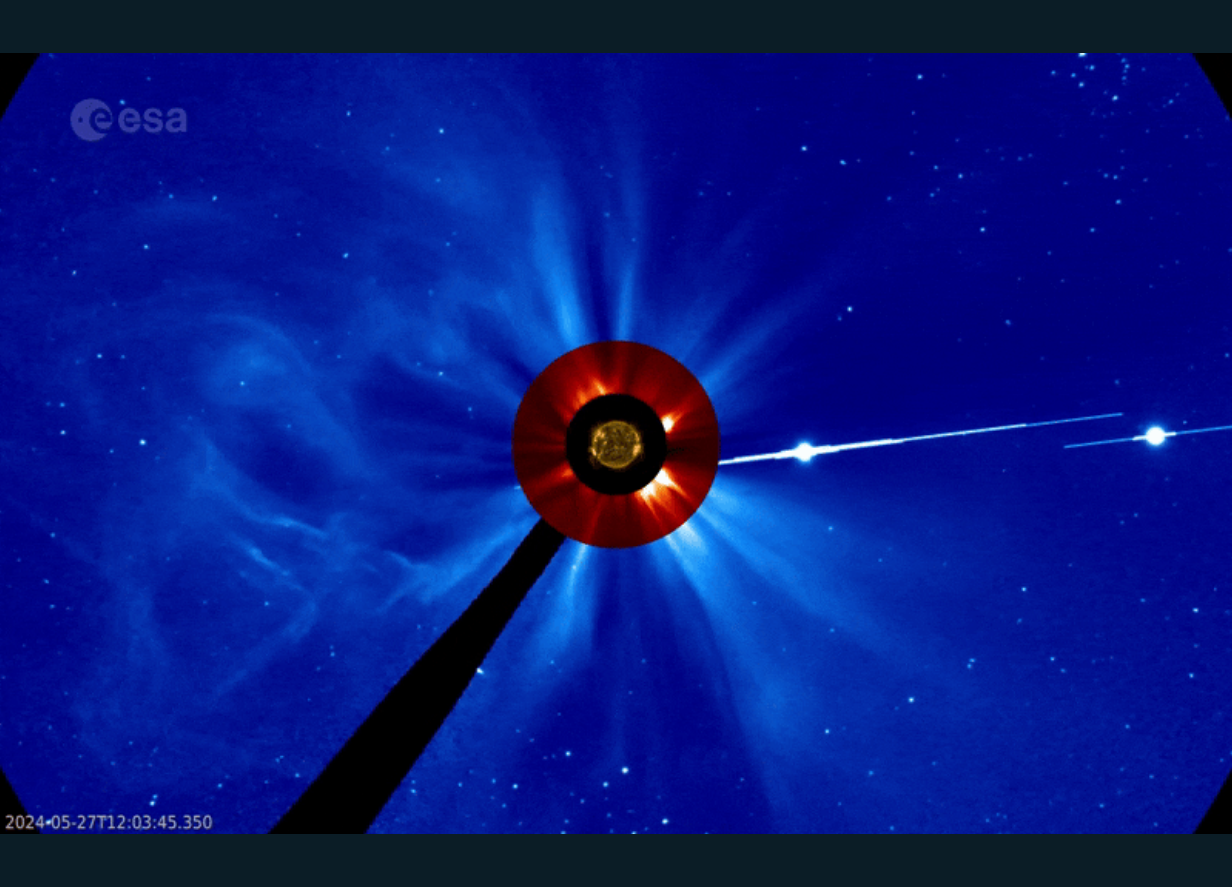
The superstorm, classified as an extreme solar energetic particle event, originated from a series of powerful solar flares and coronal mass ejections directed toward Mars. Unlike Earth, which is shielded by a robust global magnetic field that deflects most solar particles, Mars lost its global magnetic field billions of years ago and relies only on localized crustal magnetic fields for partial protection.
Spacecraft Under Bombardment
As the storm's energetic particles reached Mars, ESA's Mars Express and Trace Gas Orbiter both experienced operational anomalies. The spacecraft's electronic systems registered increased error rates as high-energy protons penetrated shielding and caused single-event upsets in sensitive electronics, temporary bit flips in computer memory caused by radiation impacts.
These glitches, while not dangerous to the spacecraft, provided valuable data about the radiation environment that future crewed missions to Mars will need to withstand. The intensity of the particle bombardment exceeded the design parameters used for some spacecraft components, highlighting the importance of robust radiation hardening for Mars-bound hardware.
Mission controllers at ESA's European Space Operations Centre monitored the spacecraft throughout the event and reported that all instruments continued to function within acceptable parameters despite the elevated radiation levels. The storms did trigger several automated safe-mode entries in individual instruments, which were resolved through ground-commanded restarts.
Atmospheric Transformation
The most dramatic effects were observed in Mars's upper atmosphere. The orbiting instruments detected a rapid and substantial expansion of the Martian ionosphere as solar particles deposited energy into atmospheric gases. The ionosphere, the electrically charged upper layer of the atmosphere, heated and expanded dramatically, with its upper boundary rising by tens of kilometers within hours of the storm's arrival.
The increased ionization also altered the atmospheric chemistry, with the breakdown of molecules in the upper atmosphere producing secondary particles and emissions that the orbiters' spectrometers were able to detect and characterize. These observations help scientists understand the long-term process by which solar activity strips away Mars's atmosphere, a mechanism that has been operating for billions of years and is believed to be a primary reason Mars evolved from a warm, wet world to the cold, dry planet we see today.
Implications for Human Missions
The data collected during the superstorm has direct relevance to planning for human Mars missions. Astronauts on the Martian surface or in transit between Earth and Mars would be exposed to dangerous radiation levels during such events. The measurements from ESA's orbiters will help refine radiation exposure models and inform the design of spacecraft and surface habitat shielding systems.
During the same solar storm, the event also impacted Earth, where it was associated with spectacular aurora displays at unusually low latitudes. However, Earth's magnetic field deflected the most dangerous particles, providing protection that Mars cannot offer. This contrast underscores the fundamental challenge of operating on a planet without magnetic field protection.
Current mission architectures for crewed Mars missions typically include radiation storm shelters, heavily shielded compartments where crew members can retreat during solar particle events. The ESA observations will help determine whether the shielding specifications in these designs are adequate for the most extreme events.

Scientific Harvest
Beyond the practical implications for exploration, the storm observations yielded a wealth of fundamental scientific data. The simultaneous measurements from multiple orbiting platforms allowed researchers to construct a three-dimensional picture of how the storm interacted with Mars's atmosphere and remnant crustal magnetic fields.
Areas of Mars's surface where crustal magnetic fields are strongest showed measurably different atmospheric responses compared to unmagnetized regions, confirming theoretical predictions about the protective role of even localized magnetic fields. These findings have implications for understanding the habitability of exoplanets orbiting active stars, where magnetic field strength may be a critical factor in atmospheric retention.
The ESA team has begun publishing their findings and has made the raw data available to the broader scientific community, enabling researchers worldwide to analyze the most comprehensive dataset ever collected of a major solar storm's interaction with Mars.
This article is based on reporting by Universe Today. Read the original article.
Originally published on universetoday.com