Rubin delivers a major asteroid haul ahead of full operations
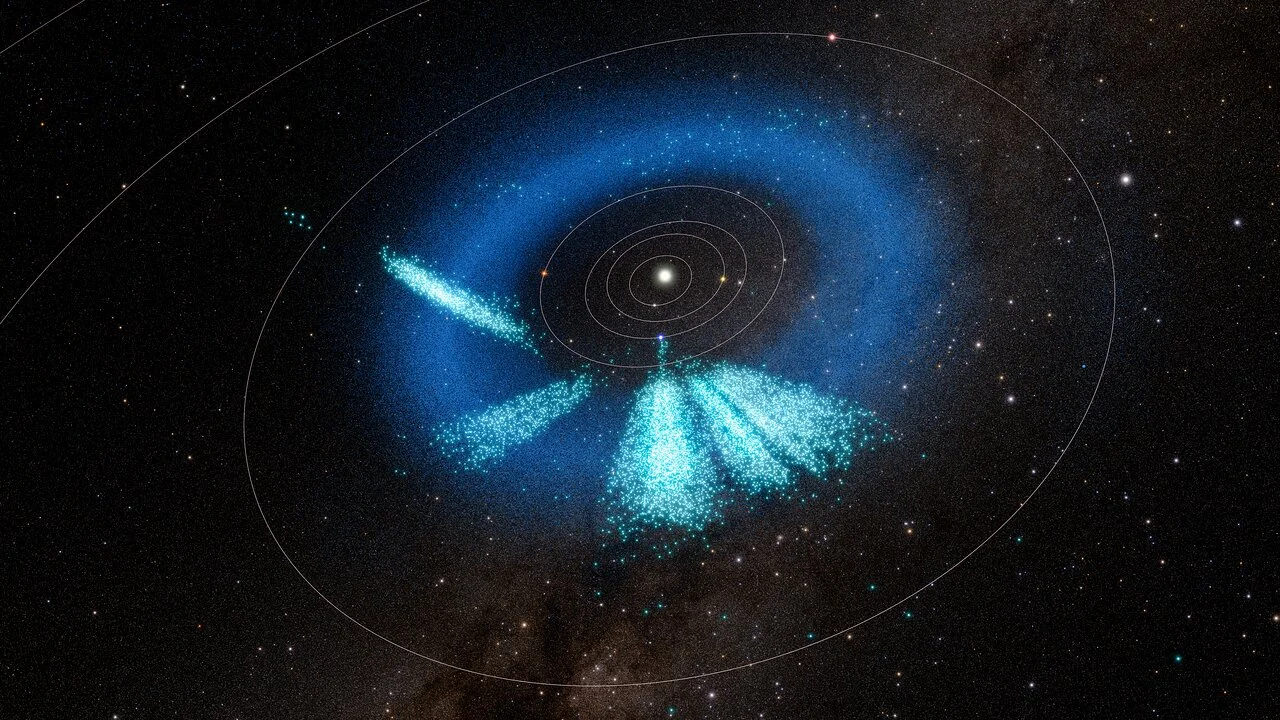
The Vera C. Rubin Observatory has identified 11,000 previously unknown asteroids using preliminary survey data, offering an early demonstration of how dramatically it could accelerate Solar System discovery once its primary observing campaign begins. According to the supplied report, the results have been confirmed by the International Astronomical Union’s Minor Planet Center and represent the largest single batch of asteroid discoveries in the past year.
That result is notable not only because of the raw number, but because Rubin has not yet started its 10-year Legacy Survey of Space and Time, or LSST. The observatory gathered the asteroid haul during early optimization surveys, effectively a warm-up phase. Even in that limited mode, the facility produced around 1 million observations over roughly a month and a half, covering the 11,000 new asteroids along with more than 80,000 already known objects.
The message is clear: Rubin’s discovery engine is already operating at a scale that used to require far more time.
Why the result matters before LSST starts
Rubin was built for breadth, speed, and repeated coverage of the sky. Its planned decade-long survey is expected to generate roughly 30 petabytes of data while addressing a wide range of scientific questions, from transient events such as supernovae to the structure of the Milky Way and the inventory of small bodies in the Solar System. The asteroid announcement matters because it provides one of the first concrete demonstrations of that capability in action.
Mario Juric, identified in the supplied text as the Rubin Solar System Lead Scientist and a faculty member at the University of Washington, described the submission as only the “tip of the iceberg.” In context, that assessment is not hard to understand. If a pre-survey phase can produce 11,000 new asteroids in a short stretch, then the observatory’s full science campaign could reshape the baseline expectations for discovery rates.
The report says what once took years or even decades to find could be uncovered in months with Rubin. That is a powerful claim because asteroid surveys depend on repeated imaging, accurate motion tracking, and the ability to distinguish unknown objects from a vast background of already cataloged bodies. Rubin appears built to do that at industrial scale.
Near-Earth objects and planetary defense
The early dataset also included 33 previously unknown near-Earth objects, or NEOs. The largest is reported to measure about 500 meters across. None of the newly discovered objects poses a threat to Earth, according to the supplied text, but their identification still matters for planetary defense.
Near-Earth objects attract particular scrutiny because some are classified as potentially hazardous objects if their orbits bring them close enough to Earth to warrant long-term monitoring. A major survey system that can rapidly expand the catalog of known NEOs provides practical value beyond astronomy. It improves the completeness of the sky inventory and reduces the number of sizable objects that remain effectively invisible until they are found by chance or by less capable surveys.
The report says Rubin is expected to reveal nearly 90,000 new NEOs once fully operational. It also says that this would nearly double the number of known NEOs larger than 140 meters, bringing detection coverage in that size range to around 70 percent. If achieved, that would make Rubin a central asset in the global effort to understand which objects deserve closer tracking.
What early performance says about the observatory
Big astronomy projects are often judged by whether they deliver on headline technical promises after years of development. Rubin’s early asteroid submission gives the project a strong proof point. It suggests the observatory’s instruments, processing pipeline, and survey design are already capable of translating enormous image streams into cataloged discoveries that outside institutions can confirm.
That distinction matters. Discovery is not just about taking images; it is about turning those observations into validated objects with enough confidence for formal recognition. The Minor Planet Center confirmation mentioned in the report indicates that Rubin’s early workflow is already contributing usable scientific output.
The observatory’s growing role could extend well beyond simple counting. A richer asteroid inventory helps researchers study the structure and evolution of the Solar System, including how populations of small bodies are distributed and how they move. But even without going beyond the supplied source, the current submission already shows that Rubin can change the pace at which that inventory is assembled.

A preview of a much larger data era
The most striking aspect of this announcement may be its timing. The discoveries arrived before the main LSST campaign begins next year, making them more of a preview than a culmination. That shifts how the result should be interpreted. Rather than seeing 11,000 new asteroids as an isolated milestone, it makes more sense to treat the number as an early calibration point for what Rubin may do routinely once it enters full science operations.
For planetary scientists, that prospect is exciting because it promises scale. For planetary defense planners, it offers a path to a more complete map of nearby objects. For the public, it is a reminder that major observatories do not only generate distant cosmological insights; they can also improve our understanding of the small bodies orbiting in our own celestial neighborhood.
Rubin’s first large asteroid submission does not finish the job of mapping the Solar System. It shows that the observatory is ready to accelerate it. If the early optimization surveys are any guide, the next decade could bring a substantial expansion in the known population of asteroids and near-Earth objects, with implications for both basic science and practical risk awareness. Before the marquee survey has even started, Rubin has already made it clear that discovery at scale is not a future promise. It has begun.
This article is based on reporting by Universe Today. Read the original article.
Originally published on universetoday.com