A Rare Kind Of Planet May Be Less Rare Than It Looks
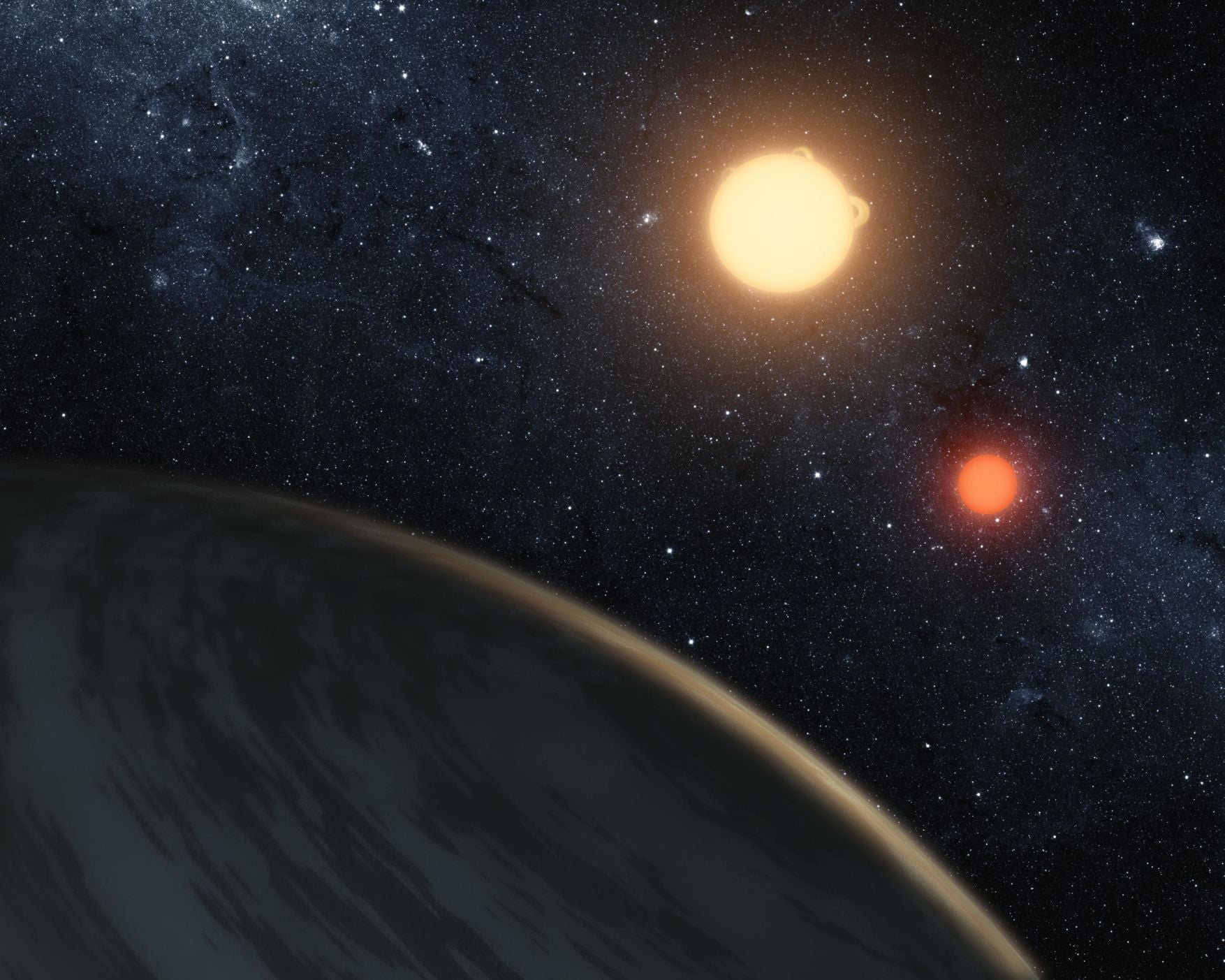
Astronomers at the University of New South Wales in Sydney say they have identified 27 new candidate circumbinary planets, worlds that orbit two stars instead of one. If confirmed, the findings would dramatically enlarge one of the smallest known categories in exoplanet science. Until now, only about 18 such planets had been found among the more than 6,000 known exoplanets and candidates described in the source material.
The team credits the result to a search method centered on apsidal precession, an orbital effect that tracks subtle changes in how binary stars move and eclipse one another. The work used data from NASA’s Transiting Exoplanet Survey Satellite, or TESS, which has been surveying the sky for planets since its 2018 launch.
The significance of the announcement is not just in the number 27. It is in what that number suggests about observational bias. Exoplanet catalogs are shaped by the tools used to build them. If one method favors certain orbital alignments, astronomers may be seeing only the easiest systems rather than the true underlying population of worlds in the galaxy.
Why Circumbinary Planets Are Hard To Find
Most exoplanets have been discovered with the transit method. Telescopes monitor a star’s brightness and look for regular dips caused when a planet crosses in front of the star from our point of view. It is a powerful approach, but it depends heavily on geometry. If the orbit does not line up with Earth well enough, the signal may never appear.
That limitation is particularly important for circumbinary systems, where the dynamics are more complex than in a single-star system. The stars orbit each other, the planet orbits both stars, and the resulting geometry can make transits irregular or impossible to see from Earth. A planet might still be there, but the standard detection pipeline may miss it.
The UNSW team’s use of apsidal precession is aimed at those hidden systems. Rather than waiting for a planet to cross a star, the method looks for changes in the timing and character of binary-star eclipses. If the eclipses vary in specific ways, that can point to a third body in the system, potentially a planet.

A Different Lens On Planet Populations
The source report frames the method as a new way to probe an old problem. Apsidal precession has already been used to study binary stars themselves, but applying it to planet hunting opens a different search window. That matters because more than half the stars in the galaxy are in binary or multiple-star systems, according to the account. Planet science built mainly around single-star detections therefore risks undercounting a large fraction of possible worlds.
Team leader Margo Thornton, an astronomer and PhD candidate at UNSW, argued in the source that astronomers have mostly found the easiest planets to detect. In that reading, today’s exoplanet census reflects instrumentation and viewing angles at least as much as it reflects cosmic reality.
If that is correct, circumbinary planets may not be exotic exceptions at all. They may simply be underdetected. A catalog expanded by techniques such as apsidal precession would force a reassessment of how planetary systems form, how stable they remain over long timescales and how common complex orbital architectures really are.
What TESS Adds To The Search
TESS was designed to watch wide fields of stars and record small changes in brightness, making it ideal for transit science. But the mission’s data archive is valuable beyond straightforward transit detections. In this case, the same observations can be repurposed to study how eclipsing binaries behave over time.
That kind of reanalysis is becoming one of the defining strengths of modern astronomy. Large space surveys generate datasets rich enough to support new questions years after launch. Instead of building a new observatory for every search technique, astronomers increasingly return to existing data with improved models and more targeted methods.
The 27 objects announced here are still candidates, not confirmed planets. That distinction matters. Follow-up work will be needed to determine whether each signal is truly planetary and not another type of third body or dynamical effect. Even so, a candidate list of this size is an important result because it gives observers a concrete set of systems to test.
Why The Discovery Matters Beyond Science Fiction Appeal
Circumbinary worlds often attract public attention because they evoke the fictional image of a planet with two suns. But their scientific value is more substantial than their pop-culture resonance. These systems provide natural laboratories for understanding how planets assemble and survive in environments shaped by two gravitational masters rather than one.
They can also sharpen broader questions about habitability and system evolution. A planet orbiting two stars experiences a different radiative and orbital environment than Earth does. That does not automatically make such worlds hostile, but it does complicate the assumptions that underlie many habitability discussions.
The larger point is methodological. Exoplanet science is entering a phase in which the biggest breakthroughs may come not only from new telescopes, but from better ways of interpreting the data already in hand. If apsidal precession can reliably expose worlds the transit method misses, the field’s inventory could grow in directions that are currently invisible.
For now, the UNSW team’s 27 candidates stand as a strong reminder that absence of evidence is often evidence of observational limits. In a galaxy where binary stars are common, two-star planets may be waiting in far greater numbers than the current catalog suggests.
This article is based on reporting by Universe Today. Read the original article.
Originally published on universetoday.com