A space telescope built for a planetary blind spot
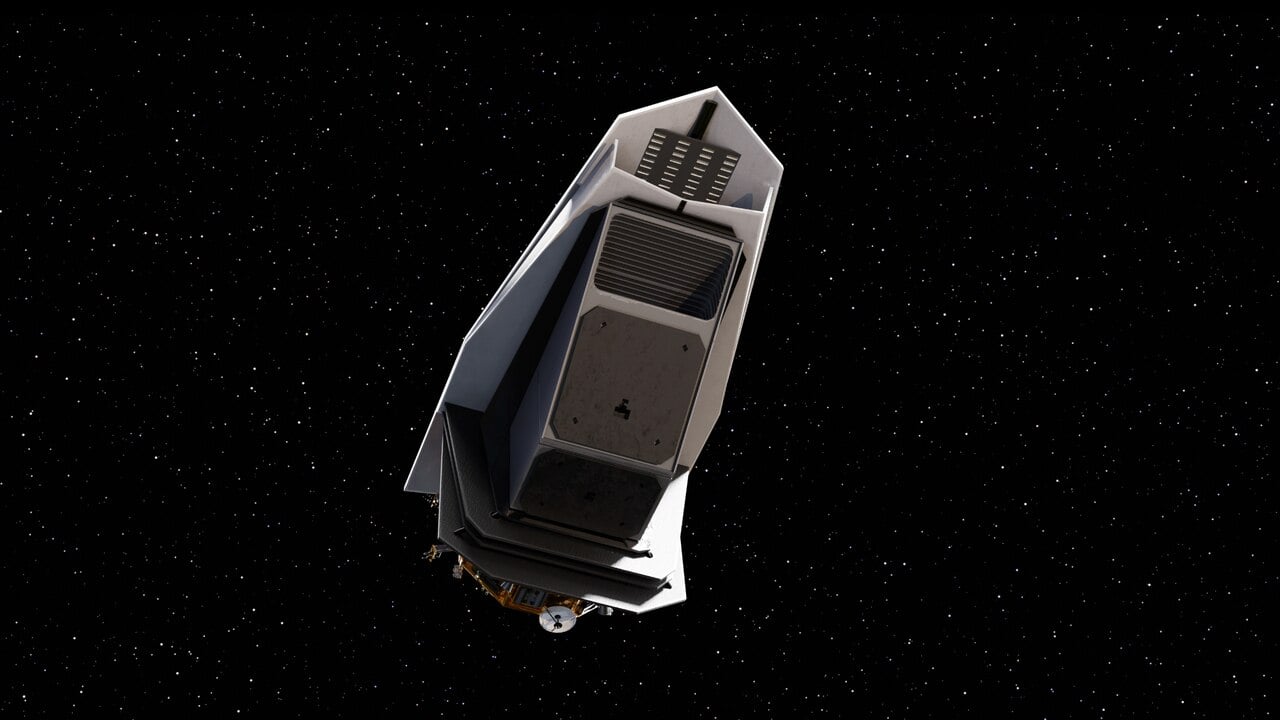
NASA is assembling a spacecraft with an unusually direct mission: find the dangerous near-Earth objects that current detection systems still struggle to see. Known as NEO Surveyor, the observatory is being built specifically to detect asteroids and comets that could threaten Earth, including objects that are too dark, too small, or positioned too close to the Sun for conventional ground-based telescopes to spot effectively.
The urgency behind the mission is clear in the numbers cited by Universe Today. Scientists estimate there are roughly 25,000 near-Earth asteroids larger than 140 meters across, a size capable of devastating an entire region on impact. Fewer than half have been found so far. The catalog of objects more than a kilometer wide is more complete, but not finished. Comets are an added complication because they can move faster, be harder to detect, and arrive from the outer Solar System with limited warning.
That leaves Earth in an uncomfortable position: we know the threat exists, but we do not yet have a complete inventory of the most consequential objects.
Why current surveys are not enough
Ground-based telescopes have found many near-Earth objects by detecting reflected sunlight. But that method has built-in weaknesses. Dark asteroids reflect little light. Objects near the glare of the Sun are effectively hidden. Some smaller bodies can pass through existing survey gaps entirely. NEO Surveyor is meant to address those limitations by switching the detection strategy from visible light to heat.
Instead of looking for sunlight bouncing off an asteroid’s surface, the mission will detect the infrared radiation that asteroids emit after being warmed by the Sun. That is a crucial advantage because even very dark objects still radiate heat. Infrared observations also improve NASA’s ability to search closer to the Sun, where some hazardous objects are hardest to find from Earth.
This is not just a better telescope. It is a telescope built around the specific failure modes of the current planetary defense network.
Where the spacecraft will operate
NEO Surveyor is planned to launch in September 2027 and travel about 1.5 million kilometers from Earth to the Sun-Earth L1 Lagrange point. That location is a gravitationally stable region between Earth and the Sun, allowing the spacecraft to maintain a favorable vantage point for continuous sky scanning.
From L1, NASA expects the observatory to conduct at least five years of survey work. The goal is not a one-time search but a sustained campaign to build a far more complete catalog of previously missed near-Earth objects. By repeatedly scanning the sky, the mission can detect, track, and characterize bodies that have eluded earlier surveys.
The strategy reflects how planetary defense really works. The key is not heroic last-minute interception. It is lead time. The earlier a hazardous object is found, the more options governments and space agencies have to refine its orbit, assess the danger, and if necessary plan a deflection response.
A mission shaped by a long policy lag
Congress first tasked NASA in 2005 with tracking these threats, according to the source text. Yet it has taken nearly two decades for a dedicated space-based solution to take shape. During that time, the agency relied largely on ground-based surveys. Those surveys have been productive, but they were never a complete answer to the problem.
The long gap between mandate and mission highlights a recurring reality in space policy: the threat from near-Earth objects is low-frequency but high-consequence, making it easy to defer specialized investment. NEO Surveyor represents a shift away from partial coverage toward infrastructure designed expressly for the hazard itself.
That change is especially important because NASA’s recent planetary defense work has already shown that the field is moving from theory to operational capability. Detection, however, remains the foundation. A deflection test is useful only if the threatening object is found in time.
Why infrared detection changes the picture
Infrared sensing offers two advantages at once. First, it broadens the pool of detectable targets by making dark, low-reflectivity asteroids easier to find. Second, it reduces the Sun-angle problem that constrains many ground observatories. Together, those improvements should help close one of the most serious gaps in current sky-monitoring efforts.
The mission is also likely to improve size estimates. Because visible-light observations can be misleading when albedo varies, a dark large asteroid and a bright smaller one can look deceptively similar. Thermal measurements help scientists infer physical properties more reliably, improving risk assessment as well as detection rates.
Planetary defense is becoming a real operating system
NEO Surveyor may sound like a specialized observatory, but its significance is broader. It is part of the gradual construction of a true planetary defense architecture: search, catalog, characterize, and eventually, if needed, respond. That architecture has long existed in fragments. A telescope built specifically to hunt hazardous objects makes it more coherent.
The public often experiences asteroid risk as abstract spectacle, something between science fiction and disaster cinema. NASA’s approach is more sober. The agency is treating the Solar System as an environment that contains measurable and manageable hazards, provided those hazards are detected early enough.
That is why NEO Surveyor matters. It does not eliminate the asteroid threat. It reduces ignorance about it. And in planetary defense, ignorance is the part most within human control. By moving the search into infrared and placing a dedicated observatory at L1, NASA is trying to make sure that the next dangerous object is discovered as a data point first, not as a surprise.
This article is based on reporting by Universe Today. Read the original article.
Originally published on universetoday.com