NASA packs multiple technology bets onto a single commercial rideshare
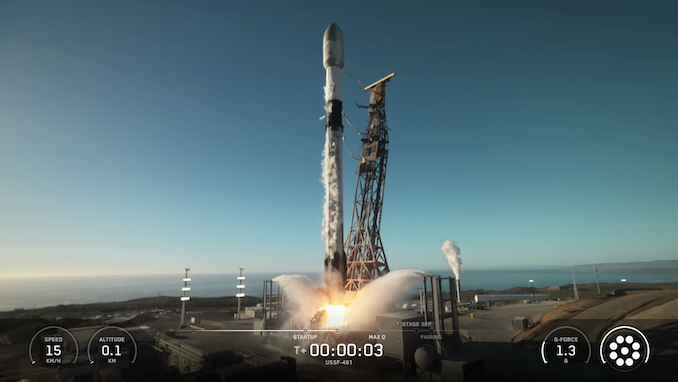
NASA is preparing to send a cluster of science and technology demonstrations to low Earth orbit aboard SpaceX’s Transporter-16 commercial rideshare mission, using a single launch to advance work across communications, logistics, atmospheric science, and spacecraft protection. According to the agency, the payload set will launch on a Falcon 9 from Space Launch Complex 4 East at Vandenberg Space Force Base in California, with a 57-minute launch window opening at 6:20 a.m. EDT on Monday, March 30.
The mission reflects a broader NASA strategy: use comparatively small, lower-cost flights to test specialized capabilities that can feed into future exploration and operational systems. Rather than centering on one flagship spacecraft, this launch distributes attention across several smaller demonstrations, each aimed at a specific technical problem. Taken together, they show how the agency is using commercial launch capacity to move multiple research threads forward at once.
NASA said the demonstrations on this mission will test thermal protection systems, advance in-space communications, improve understanding of Earth’s atmosphere, and support the agency’s broader exploration and innovation goals. The range matters. These are not abstract technology studies detached from operations; several are tied to practical needs, including space weather forecasting, navigation, and data connectivity.
Small satellites take on large operational questions
A major theme of the payload mix is the use of small spacecraft to tackle problems that once demanded larger, more expensive missions. NASA highlighted several demonstrations that rely on compact satellite platforms to expand flexibility while lowering cost.
One of the clearest examples is AEPEX, short for Atmosphere Effects of Precipitation through Energetic X-rays. NASA said the CubeSat will investigate how high-energy particles from Earth’s radiation belts transfer energy into the upper atmosphere through energetic particle precipitation. The agency described current monitoring limits as a bottleneck, noting that the phenomenon is difficult to observe across large regions of the planet.
AEPEX is intended to address that gap by imaging X-rays generated during precipitation events. If successful, the mission could help scientists better study and map how this energy transfer works. NASA linked that research directly to space weather forecasting, which in turn affects radio communications, satellites, and other critical technologies. That makes the experiment notable beyond pure science: better observations of upper-atmosphere interactions can inform services that modern infrastructure depends on.
The mission also carries CubeSats tied to MagQuest, a challenge created to spur new methods of measuring Earth’s magnetic field. NASA said the work is meant to inform the World Magnetic Model, which underpins uses ranging from national security and commercial aviation to everyday mobile devices. The agency launched the MagQuest challenge in 2019 through its Center of Excellence for Collaborative Innovation while supporting the National Geospatial-Intelligence Agency.
Three finalist teams developed CubeSats that will now demonstrate their approaches in orbit. NASA said testing was performed at Goddard Space Flight Center, with additional support from other federal partners. The significance here is straightforward: magnetic-field measurement is a foundational capability, but it is also an area where lower-cost satellite architectures may now be mature enough to contribute meaningfully.

Communications and logistics experiments push toward more capable spacecraft operations
Beyond scientific sensing, the launch includes demonstrations aimed at the infrastructure spacecraft need to work together more effectively. NASA specifically said the mission will help advance in-space communications and logistics, two areas that become more important as orbital systems grow more distributed and more commercially active.
The agency framed part of the mission as enabling Wi-Fi in space, pointing to efforts that can improve how spacecraft connect and exchange data. While NASA’s source text does not provide every technical specification, it makes the objective clear: improve communications architectures in orbit using partnerships between NASA and industry. That aligns with a wider shift in space operations, where connectivity is becoming an enabling layer for everything from remote sensing constellations to future exploration vehicles.
NASA also said the launch will support work on in-space logistics. That phrasing is important because it signals interest not just in spacecraft performance, but in the systems needed to sustain and coordinate operations once vehicles are already in orbit. Logistics has become a central concept in the current space sector, especially as agencies and companies look toward more persistent orbital activity.
In the near term, such demonstrations can appear incremental. But they represent the groundwork for more resilient architectures, where satellites can share information more effectively and support more complex mission profiles without requiring entirely bespoke infrastructure each time.
Thermal protection remains a core engineering challenge
Another element of the payload slate focuses on thermal protection technology. That may sound less visible than communications or CubeSat science, but it remains one of the most consequential engineering domains in spaceflight. Vehicles moving through atmosphere or operating in extreme environments depend on materials and designs that can manage intense heating while preserving structural integrity and mission performance.
NASA said the mission will test thermal protection systems as part of its effort to advance capabilities for exploration, innovation, and research. In practical terms, that means using orbital flight opportunities to retire risk on technologies that could later support more demanding missions.
Flight-testing matters because thermal protection is difficult to validate fully through simulation or ground testing alone. Real mission environments introduce combinations of heat, stress, and exposure that can reveal how materials and systems behave under operational conditions. By assigning room on a commercial rideshare mission to these experiments, NASA is effectively turning a shared launch into an engineering proving ground.
A commercial launch with agency-wide implications
The March 30 mission also illustrates how NASA is using commercial launch services as a routine part of its development pipeline. Transporter missions have become a way to fly diverse payloads without waiting for a dedicated launch, and NASA’s participation shows how deeply that model is now embedded in the agency’s approach.
Instead of treating commercial launch as a narrow procurement mechanism, NASA is using it as a multiplier. A single Falcon 9 flight can host atmospheric science, navigation-enabling measurements, communications development, logistics experiments, and materials testing. That creates a different tempo for innovation: smaller payloads can fly sooner, teams can gather operational data faster, and multiple programs can share one launch opportunity.
NASA said SpaceX would provide live coverage beginning about 15 minutes before liftoff. For viewers, the visible event will be another rideshare launch from Vandenberg. For the agency, the more important outcome will come afterward, when these experiments begin returning data about atmospheric processes, magnetic sensing, connectivity, and spacecraft resilience.
The immediate mission does not promise a single headline-grabbing breakthrough. Its importance lies in aggregation. NASA is sending several targeted demonstrations into orbit at once, each addressing a practical challenge in future space operations. If even a subset performs as intended, the launch could help improve how space weather is monitored, how the magnetic field is measured, how spacecraft communicate, and how exploration systems are designed for harsher conditions.
That makes the mission less about one payload than about a method. NASA is increasingly advancing capability through compact demonstrations, commercial launches, and focused risk-reduction steps. Transporter-16 is the latest example of that model moving from theory to routine practice.
This article is based on reporting by NASA. Read the original article.
Originally published on nasa.gov