NASA puts Artemis II on the clock
NASA has set a new public target for Artemis II, the mission that will send astronauts around the Moon for the first time under the Artemis program. In an update published March 25, 2026, the agency said it is aiming to launch no earlier than Wednesday, April 1, during a two-hour window that opens at 6:24 p.m. EDT. NASA also said additional launch opportunities extend through Monday, April 6.
The announcement matters because Artemis II is not just another schedule update. It is the first crewed mission in NASA’s Artemis campaign, and it will be the first time the agency tests Orion’s life-support systems with people on board. That makes the mission a major systems check for the hardware, procedures, and crew operations NASA intends to use as it pushes deeper into lunar exploration.
A 10-day mission around the Moon
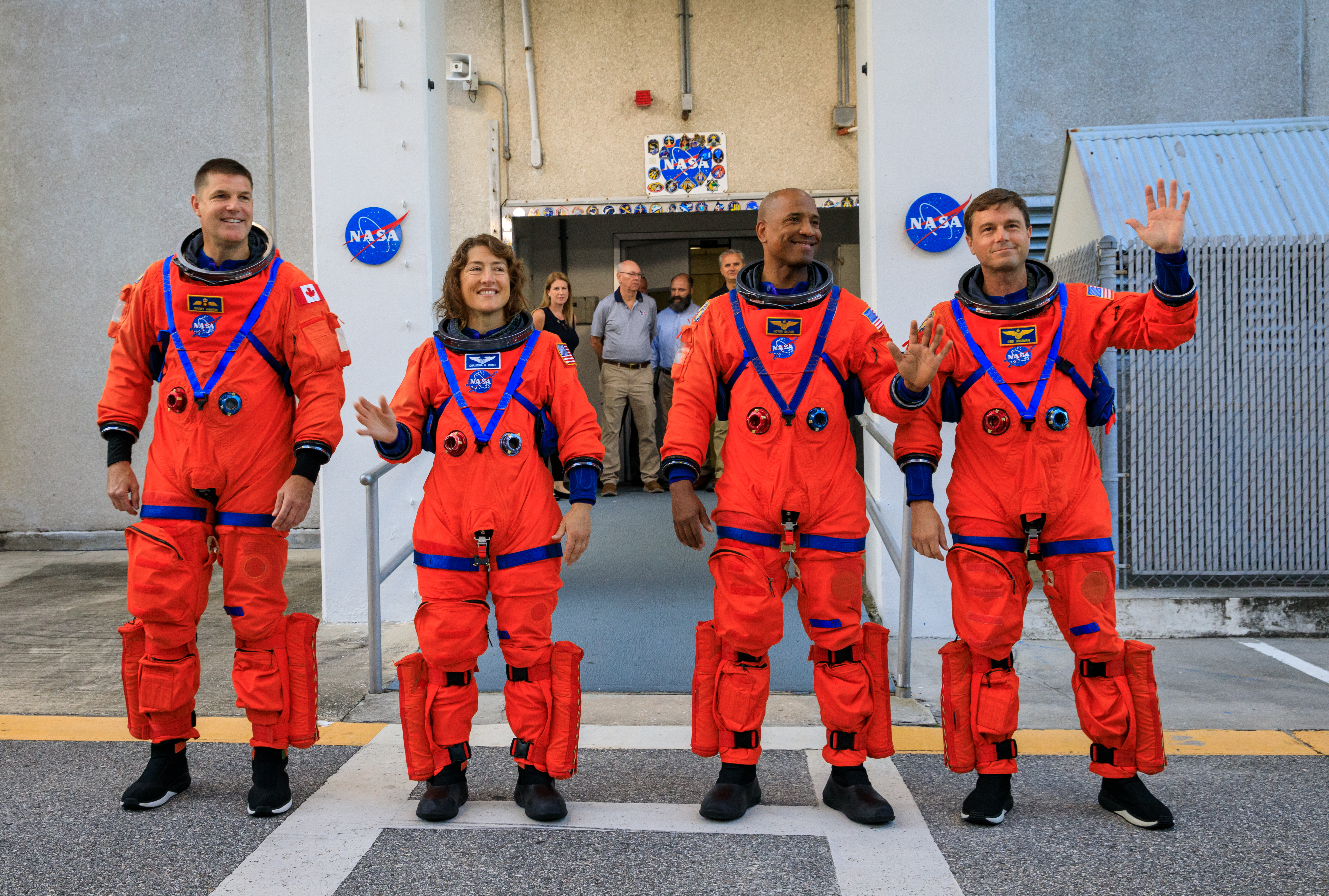
NASA says Artemis II will carry four astronauts on an approximately 10-day journey around the Moon. The crew includes NASA astronauts Reid Wiseman, Victor Glover, and Christina Koch, along with Canadian Space Agency astronaut Jeremy Hansen. The mission will launch from NASA’s Kennedy Space Center in Florida aboard the Space Launch System rocket.
By design, Artemis II is a test flight. NASA’s description makes clear that the mission is intended to prove spacecraft performance with humans aboard rather than deliver a landing. Orion’s life-support systems will face their first operational trial in a crewed environment, and the mission is intended to help establish the foundation for later Artemis flights.
That is why the launch date carries weight beyond the calendar. Artemis II sits at the point where planning gives way to execution. Once the rocket leaves pad 39B, NASA will be moving from years of integration, ground testing, and rehearsal into a live demonstration of whether the transportation stack can support the next phase of the Moon program.
What NASA is emphasizing now
The agency’s update is framed as a rolling hub for mission briefings, events, launch coverage, and operations. NASA said it will continue updating the page through prelaunch activities, liftoff, and mission operations. That emphasis suggests the program has reached a stage where public communications and operational cadence begin to converge: milestone briefings, crew activities, launch procedures, and then around-the-clock mission tracking.
NASA said live coverage will include prelaunch events, the launch itself, and mission activities. The agency plans to stream those events on its YouTube channel, while broader mission coverage, including launch, lunar flyby, and splashdown, will be available through NASA+ and Amazon Prime. The agency also highlighted that each event will have its own dedicated stream as start times approach.
That distribution plan is notable because Artemis II is one of NASA’s most visible missions in years. The agency is treating it as a public event as well as a technical one, with multiple viewing paths intended to keep audiences connected from prelaunch through recovery. In practical terms, NASA is signaling that Artemis II is entering a phase where the mission is not only being flown, but also actively staged for global attention.
The crew and the symbolism of Artemis II
The four-person crew reflects both continuity and expansion in NASA’s lunar plans. Artemis II includes three NASA astronauts and one astronaut from the Canadian Space Agency, underscoring the international character NASA has attached to Artemis. The mission is also expected to provide the first human validation of the Orion spacecraft in the exact area that matters most for future deep-space operations: keeping astronauts alive and functioning during a multiday lunar flight.
NASA’s own framing points to the broader role of the mission. Artemis II is described as the first crewed flight in a program intended to support future missions of increasing difficulty. Even within the agency’s relatively concise announcement, the goal is clear. This is the bridge flight between earlier hardware proving and later operational ambitions closer to the lunar surface.
The launch target therefore marks more than a schedule placeholder. It identifies when NASA believes its integrated systems, mission planning, and crew readiness could come together for a full-up test in lunar space. The fact that the agency has also laid out several backup opportunities through April 6 shows both seriousness of intent and the operational flexibility usually required for a mission of this scale.
Why this date matters
A mission billed as “no earlier than” April 1 is not a guarantee, but it is a concrete marker. It gives the public, media, and the space sector a specific date to watch, and it gives the Artemis campaign a near-term focal point after a long buildup. NASA’s language also places the mission squarely in the final run-up phase, with coverage plans, event scheduling, and mission communications now moving into public view.
If the launch proceeds inside the announced window, Artemis II will become one of the most consequential crewed test flights in recent NASA history. The agency will be flying astronauts around the Moon, validating Orion’s life-support systems with humans aboard, and gathering the operational experience needed to support later Artemis missions.
For now, the key fact is simple and concrete: as of March 25, 2026, NASA says Artemis II is targeting launch no earlier than April 1 at 6:24 p.m. EDT, with more opportunities available through April 6. After years of preparation, the mission has moved from distant objective to an imminent flight campaign.
This article is based on reporting by NASA. Read the original article.