NASA opens the countdown to Artemis II
NASA has laid out its public coverage plans for Artemis II, the mission set to become the first crewed flight of the Artemis program and the agency’s first mission to send astronauts around the Moon in this new era of lunar exploration. In a media advisory published March 26, the agency said it is targeting launch no earlier than Wednesday, April 1, with a two-hour launch window opening at 6:24 p.m. EDT. Additional launch opportunities are available through Monday, April 6.
The announcement is not a hardware update or a new change to the mission profile. Instead, it is a scheduling marker that signals NASA is moving into the final public phase before launch, with livestreams, briefings, and rolling mission coverage planned across the agency’s online platforms. For a program that has faced years of scrutiny over schedule and execution, that matters. It turns a long-prepared test flight into an event with concrete dates, named participants, and a defined public timetable.
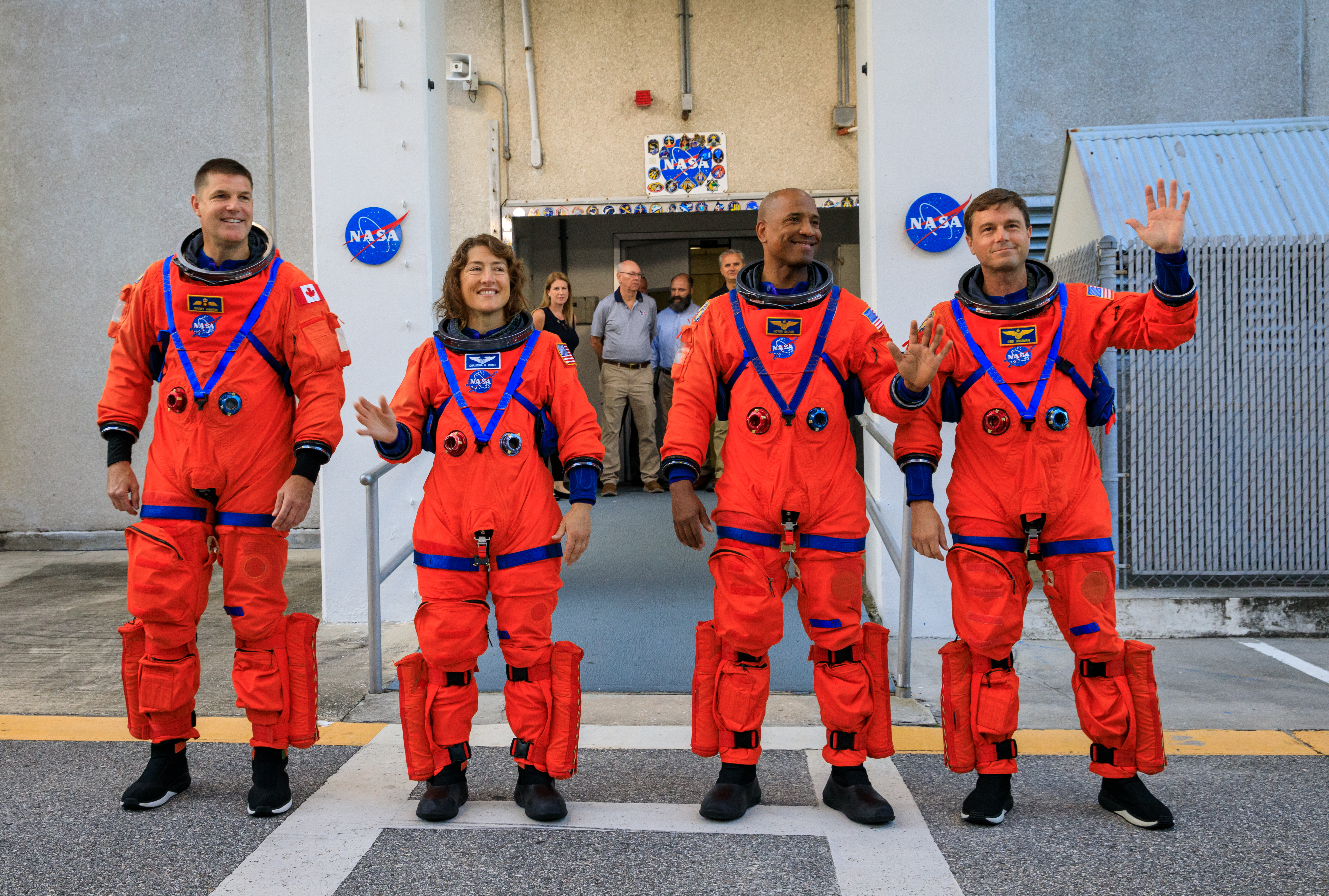
Artemis II will launch from NASA’s Kennedy Space Center in Florida and carry four astronauts on an approximately 10-day journey around the Moon. The crew consists of NASA astronauts Reid Wiseman, Victor Glover, and Christina Koch, along with Canadian Space Agency astronaut Jeremy Hansen. NASA says one of the mission’s core objectives is to test the Orion spacecraft’s life-support systems for the first time with people aboard, a milestone that directly supports later crewed Artemis missions.
A crewed mission built to validate the next phase
The Artemis II flight is not described as a landing mission. It is a crewed test flight designed to exercise the systems and procedures needed before NASA attempts future human lunar surface missions. That makes it both symbolic and highly practical. The agency is using this mission to prove that Orion can safely support astronauts on a deep-space voyage around the Moon and back.
NASA’s advisory frames the flight as foundational. The mission is intended to establish confidence in crew operations, spacecraft habitability, and mission support processes under real conditions. It also serves as a demonstration of international partnership, with Hansen representing Canada on a mission that NASA is presenting as part of a broader multinational effort in lunar exploration.
The agency’s emphasis on life-support validation is especially important. Uncrewed test missions can confirm a great deal about propulsion, navigation, and reentry, but they cannot fully test the systems that keep astronauts alive and functioning over the course of a mission. Artemis II is the point where NASA begins testing those human-rated systems in the environment they were built for.
NASA is turning the mission into a live public event
According to the advisory, NASA will stream prelaunch events, launch coverage, and mission programming online, including on the agency’s YouTube channel. The agency said it will also provide around-the-clock mission coverage, with separate streams for individual events as their start times approach. NASA added that all dates and times remain subject to change.
The public schedule described in the advisory includes events before launch as well as day-of-launch activities. NASA highlighted a Friday, March 27 appearance by agency leaders, including Administrator Jared Isaacman, joined by Canadian Space Agency President Lisa Campbell and other officials. That event is part of a broader set of briefings and mission-related programming meant to guide audiences through the final days before liftoff.
This kind of coverage plan is standard for major NASA missions, but Artemis II carries unusual weight. It is the first time the agency will send astronauts around the Moon since the Apollo era, and the first crewed flight in the Artemis architecture. The scope of the live coverage reflects the mission’s status as both a technical test and a public benchmark for the entire program.
The mission crew gives Artemis II broad significance
The crew itself underscores the importance NASA is placing on Artemis II. Wiseman, Glover, Koch, and Hansen bring together veteran spaceflight experience and historic firsts. NASA’s advisory does not dwell on biography, but by naming the crew so prominently it reinforces that Artemis II is as much about restoring human operations beyond low Earth orbit as it is about validating spacecraft systems.
The mission will be watched for what it says about NASA’s ability to execute on the Artemis roadmap. If the flight launches in the announced window and completes its roughly 10-day lunar flyby as planned, it will strengthen the technical and operational case for future crewed missions. If the date shifts, NASA has already signaled that the window extends over several days, giving the agency flexibility while keeping the public mission timeline visible.
That balance between ambition and realism is evident throughout the advisory. NASA is promoting a major crewed milestone, but it is also explicit that schedules can change. In practical terms, the agency is preparing audiences for a high-profile test campaign rather than a guaranteed single-day spectacle.

Why this announcement matters now
For observers of the Artemis program, the importance of NASA’s latest notice is simple: the mission is no longer being discussed in abstract future terms. The agency has attached a no-earlier-than launch date, a defined launch window, a crewed lunar flight profile, and a public viewing plan. That turns Artemis II from a long-anticipated objective into an imminent operational event.
The advisory also makes clear what NASA wants the public to understand about the mission. Artemis II is not only a symbolic return to deep-space human flight. It is a systems test, a crew training mission, and a programmatic bridge to future lunar expeditions. NASA is positioning it as the mission that begins proving whether the Artemis architecture can work with astronauts on board.
If the timeline holds, early April will mark one of the most significant moments in modern human spaceflight. NASA’s coverage announcement does not answer every question about the mission, but it does establish the near-term framework: a crew of four, a lunar loop lasting about 10 days, a launch target of no earlier than April 1, and a week of public-facing activity leading into a test flight designed to carry Artemis from planning into execution.
This article is based on reporting by NASA. Read the original article.
Originally published on nasa.gov