Roman begins its mission with a launch that opens a wider cosmic survey
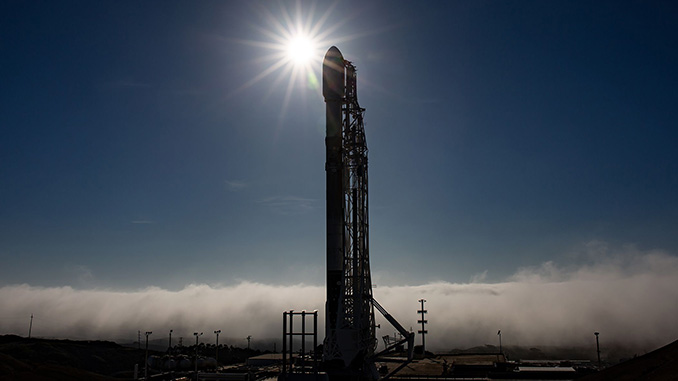
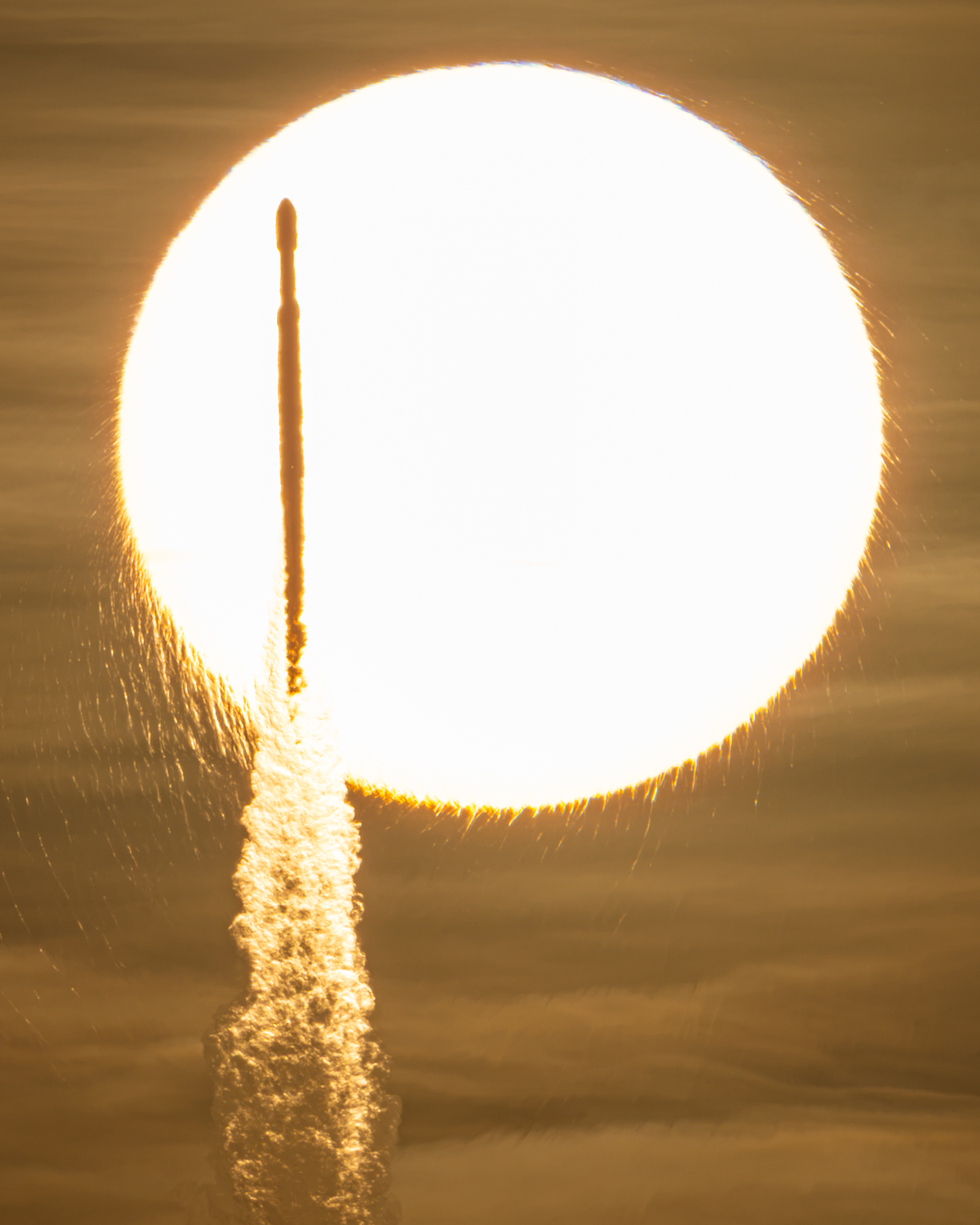
NASA’s Nancy Grace Roman Space Telescope has launched, sending one of the agency’s most closely watched astronomy missions on its way after years of anticipation. According to NASA, Roman lifted off aboard a SpaceX Falcon Heavy rocket from Kennedy Space Center in Florida on August 30, 2026. The agency published the launch image article on August 31, 2026, describing the observatory as a mission that will survey billions of stars and galaxies with a field of view far larger than Hubble’s.
That short description captures why the launch matters. Roman is not framed as a replacement for Hubble, but as a telescope built to look outward with a much broader view, enabling surveys at a scale that can change how scientists map the universe. NASA says the mission will help researchers study dark energy, exoplanets, and the evolution of the universe, placing it at the intersection of cosmology and planetary science.
Even in a brief official statement, the mission’s ambition is clear. Roman is designed not just to look at individual targets but to gather sweeping observations across enormous populations of stars and galaxies. In practical terms, that means it is built for pattern-finding on a grand scale. Where narrower instruments can reveal exquisite detail in chosen objects, a wide-field survey telescope can expose the structure of much larger cosmic questions: how galaxies are distributed, how the universe has changed over time, and where potential planetary systems may be waiting to be studied further.
A launch that turns a long project into an active observatory mission
Space missions often spend years as plans, hardware, tests, and schedules before a single moment turns them into live scientific enterprises. Roman has now crossed that line. The launch itself is the decisive transition from development and ground preparation to flight operations and eventual science return.
NASA’s published description emphasizes both the name and the purpose of the observatory. The telescope is named after Nancy Grace Roman, identified by the agency as NASA’s first chief astronomer. That naming choice carries symbolic weight. Roman’s legacy has long been associated with the rise of modern space astronomy, and the mission that bears her name is aimed at one of the field’s most expansive observational tasks: using a powerful space-based platform to gather the kind of large-scale data needed to answer fundamental questions about the universe.
The fact that the observatory launched on a Falcon Heavy also underscores the scale and seriousness of the effort. While NASA’s image article is concise, the choice of launch vehicle aligns with the importance of delivering a flagship-class science mission into space with the precision and reliability required for a major observatory.
Why Roman’s wide field matters
The most notable detail in NASA’s launch description is Roman’s field of view. The agency says the telescope will observe with a field far larger than Hubble’s. That distinction points to Roman’s core scientific identity. Astronomers do not only need sharper or deeper views; they also need broader ones. A wide-field telescope can survey immense regions of sky efficiently, gathering data across huge samples rather than isolated scenes.
That capability is essential for the mission areas NASA highlighted. Dark energy research depends on observing the universe across very large scales, because the phenomenon is tied to how cosmic expansion behaves over time. Exoplanet investigations benefit from broad and sustained surveys that can identify candidate systems or track subtle signatures across many stars. And any effort to understand the evolution of the universe improves when scientists can compare vast numbers of galaxies rather than relying on a limited handful of examples.
Roman’s value, then, lies in the combination of space-based observation and expansive coverage. From above Earth’s atmosphere, it can gather stable observations without the same interference terrestrial telescopes must manage. By pairing that vantage point with a wide view, the mission is positioned to deliver datasets that are useful not only for singular discoveries but also for statistical science, where the power comes from the scale of the sample.
A mission aimed at three of astronomy’s biggest questions
NASA’s launch note names three headline science targets: dark energy, exoplanets, and the evolution of the universe. Each of those areas stands on its own as a major research frontier, and together they show why Roman has drawn so much attention. The mission is meant to operate across some of the biggest open questions in astrophysics.
Dark energy remains one of the most consequential unresolved ideas in modern science because it is tied to the behavior of cosmic expansion. A mission that surveys billions of stars and galaxies can help scientists build a richer observational record for testing how the universe has changed over time. That is not a small extension of existing work; it is part of the long effort to understand the large-scale dynamics of the cosmos.
Exoplanet science, meanwhile, has transformed from a niche hunt into a central branch of astronomy. Roman’s role, as NASA frames it, is to contribute to that search from a platform capable of observing broad stellar populations. The telescope’s survey strength suggests it could help expand the catalog of targets and conditions that shape future planetary research.
The mission’s third stated goal, studying the evolution of the universe, ties the other themes together. Galaxy populations, cosmic structure, and the history of change across deep time all require data gathered at both depth and scale. Roman’s design, at least as NASA summarizes it, is built around that need.
The significance of liftoff
Every major observatory launch carries two timelines. One is the countdown that ends with ascent from the pad. The other is the longer scientific clock that begins only after launch succeeds. Roman’s liftoff on August 30, 2026 starts that second timeline. From this point forward, the mission shifts into the journey and operations phase that will determine how fully it can deliver on its wide-field promise.
NASA’s message after launch is concise but pointed: follow along with Roman’s journey. That phrasing reflects the reality that launch is a beginning, not an endpoint. The scientific significance of Roman will ultimately depend on the quality and volume of the observations it returns. But the launch itself is a landmark because it places a major next-generation survey observatory into the active fleet of space science missions.
For NASA, for astronomers, and for the broader space sector, Roman’s departure from Florida marks the opening of a mission intended to widen humanity’s view of the sky. Its assignment is unusually large even by space-telescope standards: map enormous populations of stars and galaxies, probe the forces shaping cosmic history, and push exoplanet research forward. With launch complete, those ambitions move from promise to program.
This article is based on reporting by NASA. Read the original article.
Originally published on nasa.gov