Opening the Artemis Journey to All
NASA is taking a significant step toward making space exploration inclusive by hosting a virtual webinar tailored for the blind and low-vision community. Scheduled for Friday, Oct. 2, at 2 p.m. EDT, the event is titled “The RS-25 Engine and the Future of Artemis Missions: An Accessible Webinar for the Blind and Low-Vision Community.” It is open to the public, though the content and format are specifically designed to serve a blind and low-vision audience. This two-hour session will give participants a detailed, sensory-rich look at the technology powering NASA’s deep space ambitions while also addressing broader questions about accessibility in space and science.
A Window Into the RS-25 Engine
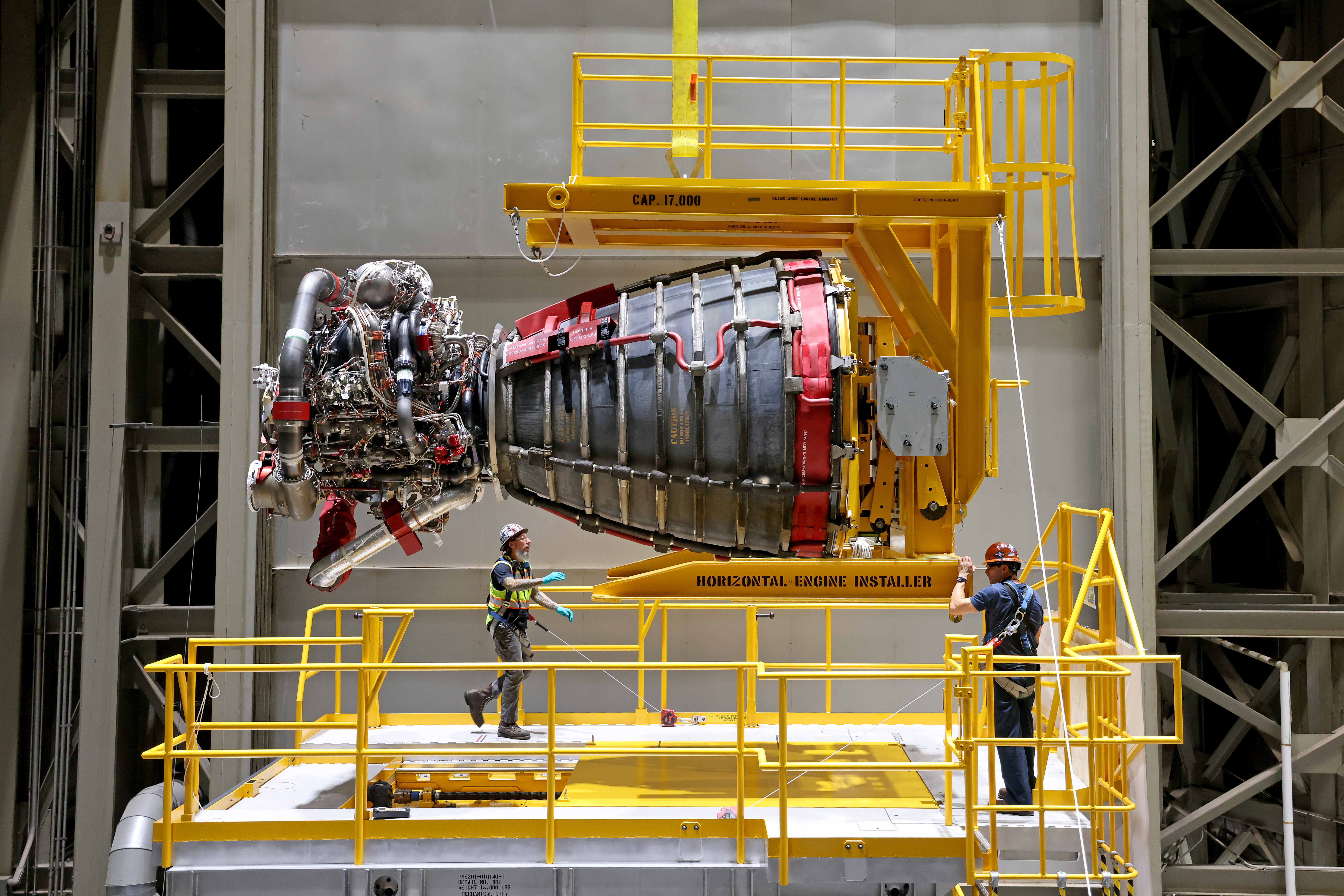
Central to the webinar is the RS-25 engine, a powerhouse that will help propel NASA’s Space Launch System (SLS) rocket on Artemis missions to the Moon and beyond. The event will feature an audio-described video of an RS-25 engine test, allowing attendees who cannot see the imagery to fully understand the dramatic firing of the engine. Audio description provides a narrated explanation of visual details, making the experience meaningful for those who rely on sound and language to build mental pictures. The RS-25 is described in the announcement as a bell-shaped nozzle attached to a network of pipes, roughly the size of a large pickup truck. During the test footage, viewers will hear the roar of ignition, the force of the exhaust, and the intricate sequences of a trial that validates the engine for flight. For blind and low-vision participants, the audio-described video is designed to transform a normally visual spectacle into an equally powerful auditory and descriptive event.
The webinar will be hosted on the Zoom platform, making it accessible from anywhere with an internet connection. Alongside the engine test video, the agenda includes a live question-and-answer session with an Artemis engineer. During this portion, attendees can ask about the technical challenges of engine development, the overall Artemis program, or what it is like to work on a project that will return humans to the lunar surface. This direct interaction with an engineer adds a personal and interactive layer to the experience, allowing curiosity to drive the conversation.

An Expert Panel on Accessibility in Space and Science
One of the most compelling segments will be a panel focused on accessibility in space and science. This discussion will bring together experts from different corners of NASA and the broader science community to talk about how space exploration can be made more inclusive for people with disabilities. The panel includes Dr. Kimberly Arcand, a visualization scientist at NASA’s Chandra X-ray Observatory; Josh Greiner, a test director at NASA’s Stennis Space Center in Bay St. Louis, Mississippi; Dr. Craig Moore, a materials engineer at NASA’s Marshall Space Flight Center in Huntsville, Alabama; Dr. Robert Shelton, a lead simulation engineer at NASA’s Johnson Space Center in Houston; and Christine Malec, a freelance writer and consultant. These diverse voices represent both the engineering and scientific sides of spaceflight, as well as an outside perspective from someone who consults on accessibility and inclusion. Their conversation is expected to touch on how instruments, data visualization, and other forms of science communication can be designed so that nothing is lost for researchers or enthusiasts with visual impairments. The panel also represents a broader institutional push by NASA to consider accessibility at every stage of mission development and public engagement.
Artemis: Pushing Boundaries
The Artemis program is NASA’s bold initiative to send astronauts on increasingly difficult missions to explore the Moon and establish a lunar base. The RS-25 engine is a foundational element of this effort, providing the thrust needed to lift the massive SLS rocket off Earth. The engine has a long heritage, originally developed for the Space Shuttle program, and it has been upgraded for the demands of deep space missions. In the context of Artemis, the RS-25 represents not only technological power but also the spirit of perseverance and innovation that defines NASA’s push beyond low-Earth orbit. Having an audio-described test of this engine is particularly fitting, as the sound and vibration of the engine are just as dramatic as its visual plume.
The event’s focus on accessibility mirrors a growing recognition across the scientific community that citizens of all abilities should have the opportunity to connect with exploration efforts. By tailoring the webinar to blind and low-vision participants, NASA is recognizing that the fundamental wonder of space is not limited to sight. A person who cannot see a rocket launch can still experience the rumble, the narrative of the countdown, and the elation of a successful liftoff through well-crafted description and sound. The webinar expands on this concept by addressing the technical details of the RS-25 engine, the plans for future Artemis missions, and the ways in which institutions can remove barriers to participation.

How to Participate
Those interested in attending the webinar must register using a provided RSVP form by Friday, Sept. 25. The details for joining the webinar will be emailed to registered attendees in the days leading up to the event. This advance registration ensures that participants receive the necessary login information and any preparatory materials. For any questions about the event, NASA has designated [email protected] as the contact address. The organizer’s outreach signals that NASA is eager to hear from the community and is committed to delivering a positive experience.
The webinar is scheduled to last approximately two hours, offering plenty of time for the engine test video, the Q&A with the engineer, and the panel discussion. Participants should expect a rich, informative session that provides both technical insight and a celebration of how space science can be shared inclusively. The Zoom platform will also include features that support screen readers and other assistive technologies, making the entire event more navigable for attendees who rely on non-visual interfaces.
Looking Forward
This event is part of a larger conversation about who gets to participate in, benefit from, and feel represented by space exploration. When a boy who is blind can hear the deep, powerful ignition of an RS-25 and ask an engineer what it feels like to be in mission control, the boundaries of possibility expand. Similarly, when a materials engineer like Craig Moore talks about developing new alloys for lunar landers, or when a visualization scientist like Kimberly Arcand explains how to render X-ray data into sound, the audience gains an understanding that goes beyond conventional imagery. The inclusion of a consultant like Christine Malec underscores the value of lived experience in shaping accessible programming. By deliberately designing events for blind and low-vision participants, NASA is not simply modifying existing content; it is creating an original, thoughtful experience that honors diverse ways of knowing.
As the Artemis program moves forward from engine tests to uncrewed flights and eventually crewed lunar landings, outreach efforts such as this webinar remind us that the journey is not just for astronauts and engineers. It is for every member of the public who looks up at the Moon and wonders what it might be like to walk its surface — and for every person who listens carefully, imagines vividly, and takes part in the great adventure of exploration. The Oct. 2 webinar is a chance to engage deeply with the machinery of spaceflight and to become part of an ongoing effort to make the cosmos a place for everyone.
Registration closes on Sept. 25, so interested participants are encouraged to sign up early. With an informative engine test, direct interaction with an Artemis engineer, and a thoughtful panel on accessibility, the event promises to be both educational and inspiring. It is a clear demonstration that, as NASA journeys to the Moon and beyond, it intends to bring the public along — not just as spectators, but as fully included members of the mission.
This article is based on reporting by NASA. Read the original article.

Originally published on nasa.gov