Artemis II moves from launch to lunar transit
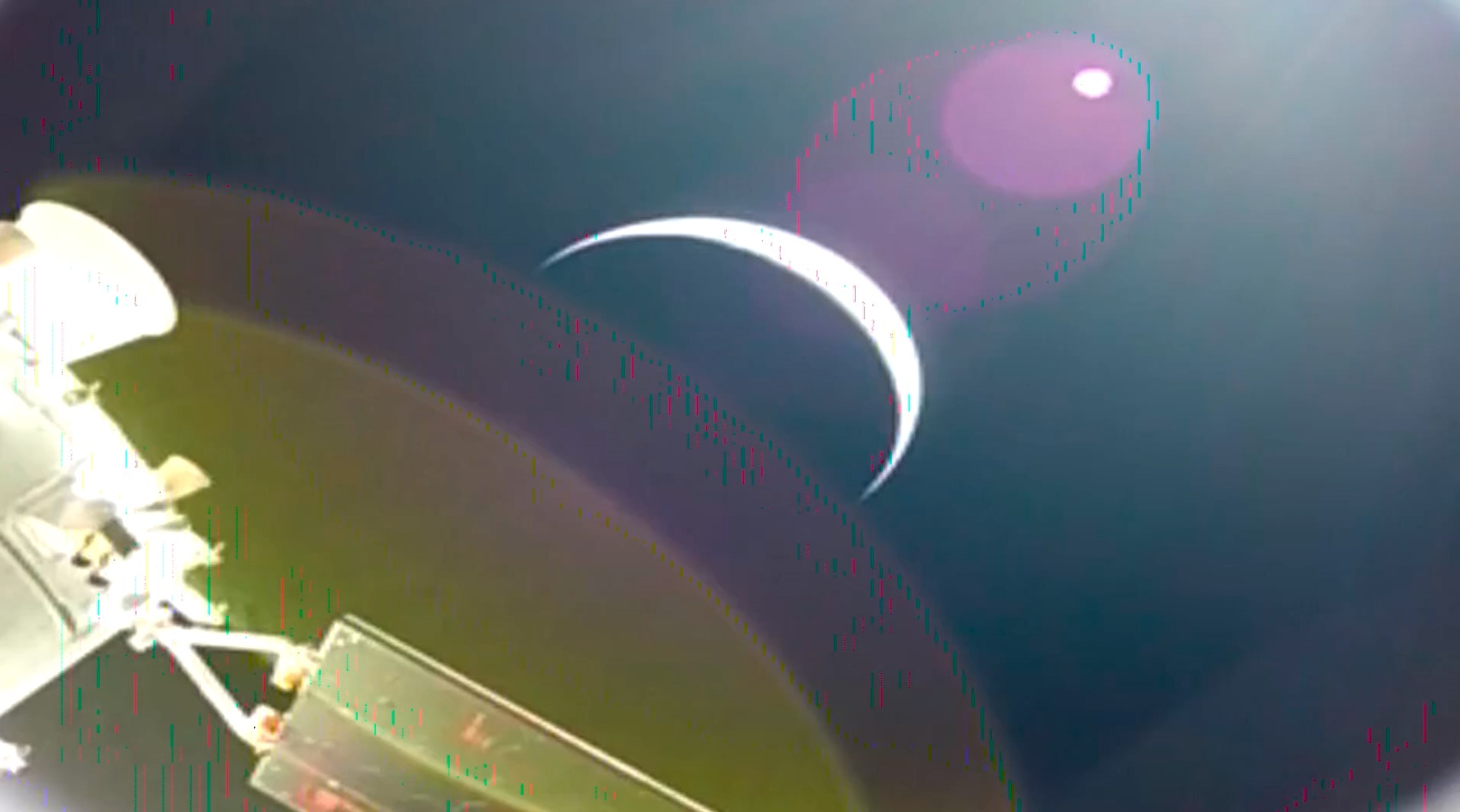
NASA says Artemis II has crossed one of the defining thresholds of the mission: the Orion spacecraft has completed its translunar injection burn and departed Earth orbit for a flight around the Moon. The agency described the maneuver as a roughly six-minute firing of Orion’s service module engine, a burn that accelerated the spacecraft enough to break free of Earth’s orbit and begin the outbound leg of its trajectory. That makes this mission the first time since Apollo 17 in 1972 that humans have left Earth orbit for the Moon.
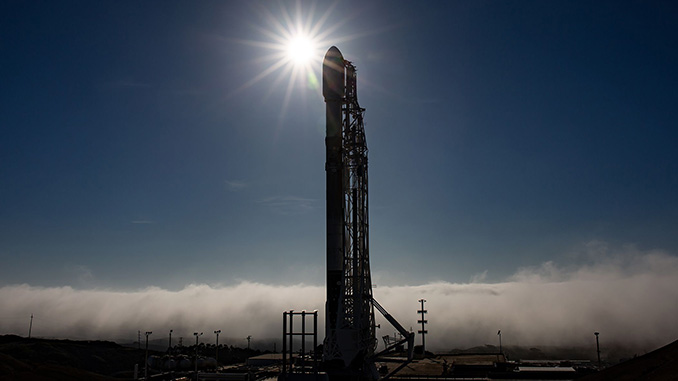
The milestone matters because Artemis II is not only a test of launch performance or spacecraft endurance. It is the first crewed end-to-end demonstration of the modern Artemis architecture in deep space. NASA says the four-person crew consists of Reid Wiseman, Victor Glover, Christina Koch, and Canadian Space Agency astronaut Jeremy Hansen. Their spacecraft, Orion, lifted off aboard the Space Launch System from Kennedy Space Center in Florida at 6:35 p.m. EDT on April 1 for what NASA describes as a planned 10-day test flight around the Moon and back.
Why this burn is a decisive step
In any lunar mission profile, getting to orbit is only the opening act. The deeper technical and operational challenge is proving that the spacecraft can safely transition from launch and early checkout into a precise translunar trajectory. NASA says Orion first entered an elliptical orbit around Earth after a burn by the rocket’s upper stage, and then was sent into a high Earth orbit extending about 46,000 miles above the planet for roughly 24 hours of system checkouts. Only after those steps did the mission proceed to the burn that committed the crew to the Moon-bound phase.
That sequence shows why this event is more than symbolic. It demonstrates staged mission execution: launch, power-up, vehicle configuration, initial orbital operations, crewed spacecraft handling, separation from the upper stage, and then the main burn toward the Moon. NASA also says the crew carried out a manual piloting demonstration using the interim cryogenic propulsion stage as a docking target before Orion executed an automated departure burn. In practical terms, Artemis II is collecting data not just on propulsion and navigation, but on how the spacecraft behaves with crew aboard during real mission operations.
Human spaceflight returns beyond low Earth orbit
NASA’s framing of the moment is explicit. The agency says this is the first human departure from Earth orbit since the Apollo era. That statement gives the mission its real weight. Artemis II is not a landing mission, but it is a visible return of human deep-space flight, and a test of whether NASA’s new-generation systems can support astronauts on a path that extends well beyond the environments that have defined most human missions since Apollo ended.
NASA says Orion deployed its four solar array wings soon after reaching space, allowing the spacecraft to receive energy from the Sun while the crew and ground teams transitioned it from launch mode to flight operations. That detail may sound routine, but it underscores what the agency is trying to prove: a crewed spacecraft must operate as an integrated system over multiple phases, with propulsion, power, control, and human procedures all working together. Artemis II is therefore as much a systems validation mission as it is a public milestone.
What the next several days are expected to prove
NASA says the crew now has eight intensive days of work ahead as Orion continues on its outbound trajectory. The agency’s wording suggests a mission built around incremental learning, with each milestone intended to reduce uncertainty for later Artemis flights. Because this is the first time Orion has flown with crew in space, the value of the mission lies in the data gathered during normal operations as much as in the headline events. Every phase, from navigation to handling qualities to crew procedures, becomes part of the evidence base for what comes next.
That is the broader strategic importance of Artemis II. A successful lunar flyby does not by itself resolve every challenge in returning humans to the Moon, but it does remove doubt around some of the most visible and fundamental ones. It shows whether the spacecraft can sustain a crew, whether the mission timeline holds in practice, and whether the organization can execute a complex crewed deep-space profile in real conditions instead of simulation. NASA’s own language reflects that step-by-step logic: each milestone is framed as meaningful progress for the Artemis program.

A mission designed to be both test and signal
The mission is also significant in how it presents the future of human space exploration. Artemis II combines a U.S.-led program with international participation through Hansen’s inclusion from the Canadian Space Agency. It also puts Christina Koch and Victor Glover on a crew that reflects a broader human spaceflight era than the one Apollo represented. NASA’s announcement is operational in tone, but the mission’s public meaning is larger: deep-space exploration is returning as a multinational and more visibly contemporary project.
For now, the key fact is straightforward. NASA says Orion and its crew have left Earth orbit and are on a precise trajectory toward the Moon. If the spacecraft performs as intended through the rest of the flight, Artemis II will stand as the program’s clearest proof yet that the post-Apollo return to lunar exploration is no longer an abstract roadmap. It is an active crewed mission, underway in real time, carrying people beyond Earth orbit once again.
Key points
- NASA says Orion completed the burn that sent Artemis II out of Earth orbit and toward the Moon.
- The four-person crew launched on April 1 for a planned 10-day lunar flyby test mission.
- NASA describes Artemis II as the first human departure from Earth orbit since Apollo 17 in 1972.
- The mission is gathering operational data on Orion’s first crewed flight in space.
This article is based on reporting by NASA. Read the original article.
Originally published on nasa.gov