NASA wants better tools for making sense of a rare deep-space human dataset
NASA has opened the Artemis II Human Research Data Methodology Challenge, a competition designed to help researchers analyze what the agency describes as a uniquely valuable set of human health data from the first crewed mission to the vicinity of the Moon since Apollo 17. The challenge offers $25,000 in total prizes, opened on March 30, 2026, and closes for submissions on June 5, 2026.
The immediate goal is methodological rather than operational. NASA’s Human Research Program is asking participants to think through how to extract the most insight from a dataset that is scientifically important but structurally difficult: only four astronauts, multiple physiological systems, multiple data modalities, and measurements across different time points.
Artemis II created a research opportunity NASA cannot replicate on the ground
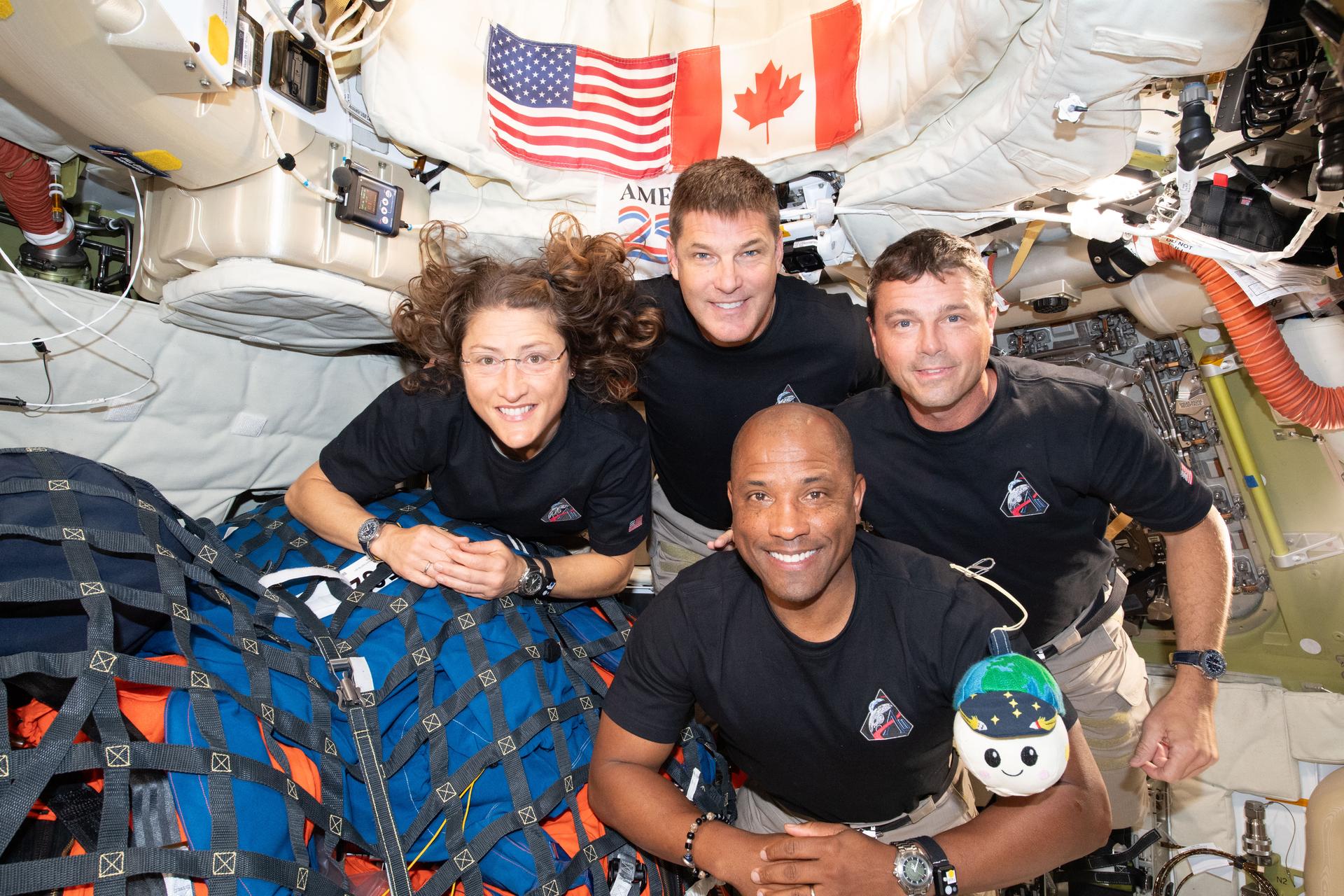
According to NASA, Artemis II marked the first time in more than half a century that humans experienced the full physiological and psychological conditions of space travel beyond low Earth orbit. The mission carried Commander Reid Wiseman, Pilot Victor Glover, Mission Specialist Christina Koch, and Mission Specialist Jeremy Hansen aboard Orion on a trajectory into deep space, farther than any humans had gone before.
The agency says the mission exposed the crew to conditions that ground-based simulations cannot fully reproduce, including space radiation, the isolation and confinement of a new spacecraft, and the operational demands of a test mission profile. Those factors make the resulting dataset unusually important for planning long-duration missions on the Moon and eventually Mars.
NASA’s Human Research Program already uses ground research facilities, the International Space Station, and analog environments to study astronaut health and performance. But Artemis II expands that evidence base into the deep-space environment. That shift matters because low Earth orbit research, while extensive, does not capture every stressor relevant to missions farther from Earth.

The analytical problem is as important as the data itself
The challenge NASA describes is not simply collecting information. It is deciding how to interpret a dataset that is exceptionally limited in sample size while also being rich in complexity. Four subjects are not enough for conventional population-level conclusions in the way biomedical researchers might prefer. Yet those four subjects participated in a mission that generated conditions not otherwise available for direct human study.
That tension is exactly why NASA is framing the effort as a methodology challenge. The agency is effectively asking the research community to treat the problem as one of inference, integration, and signal extraction. How should data be analyzed when every observation is unusually valuable but the sample remains extremely small? How can multiple physiological systems be interpreted together without overclaiming? What analytical approaches best respect the limitations of the data while still generating usable knowledge?
These are not minor technical questions. Future deep-space missions will depend on the ability to predict and mitigate health risks ranging from radiation effects to behavioral and performance changes under isolation and confinement. If researchers cannot build robust methods for interpreting sparse but high-value datasets, the science of human spaceflight will remain constrained by the rarity of the missions themselves.
Why Artemis II matters for lunar and Mars planning
NASA explicitly links the work to its long-term goals for lunar surface missions and human exploration of Mars. That connection is straightforward. The farther astronauts travel from Earth and the longer they remain in deep space, the more important it becomes to understand how the body responds outside the comparatively protected environment of low Earth orbit.
The Artemis II dataset gives researchers direct measurements from a crew operating in deep space. NASA says those measurements will expand knowledge built primarily from lower-orbit missions. In practical terms, that means the mission may help refine models of risk, support countermeasure development, and improve mission planning for future crews.
What stands out is NASA’s emphasis on the irreplaceable nature of the opportunity. Deep-space human missions are still rare. Every flight therefore carries both operational significance and scientific weight. Artemis II was not just a symbolic return of crewed travel toward the Moon. For NASA’s health researchers, it was also a rare chance to observe what the human body does in a setting that is central to the agency’s exploration ambitions.
The challenge reflects a broader pattern in space research
NASA’s decision to crowdsource methodology reflects a broader recognition that progress in space science increasingly depends on how well agencies can combine mission operations with outside analytical expertise. The problem is not always lack of data in the abstract. Sometimes it is the difficulty of extracting reliable conclusions from unusual datasets that do not fit standard research templates.
That is especially true in human spaceflight, where controlled repetition is hard and mission opportunities are infrequent. By turning Artemis II research data into a prize challenge, NASA is broadening the pool of people thinking about those analytical constraints. The contest format may also help surface techniques from adjacent fields that are well suited to sparse, multimodal, longitudinal data.
NASA’s announcement includes a concrete mission timeline detail as well: after swinging around the far side of the Moon on April 6, 2026, the Artemis II crew exited the lunar sphere of influence on April 7 and headed back to Earth for a Pacific splashdown on April 10. That places the challenge in immediate mission context. The data in question is not theoretical future material. It comes from a just-flown mission that has already become a milestone in post-Apollo exploration.
The real significance of the challenge is that it treats methodology as mission infrastructure. Rockets, spacecraft, and crews make exploration possible. But turning exploration into durable knowledge requires analytical tools equal to the rarity and complexity of the data. NASA is now asking the wider research community to help build those tools.
This article is based on reporting by NASA. Read the original article.
Originally published on nasa.gov