NASA wants a moon mission, not an April Fools' punchline
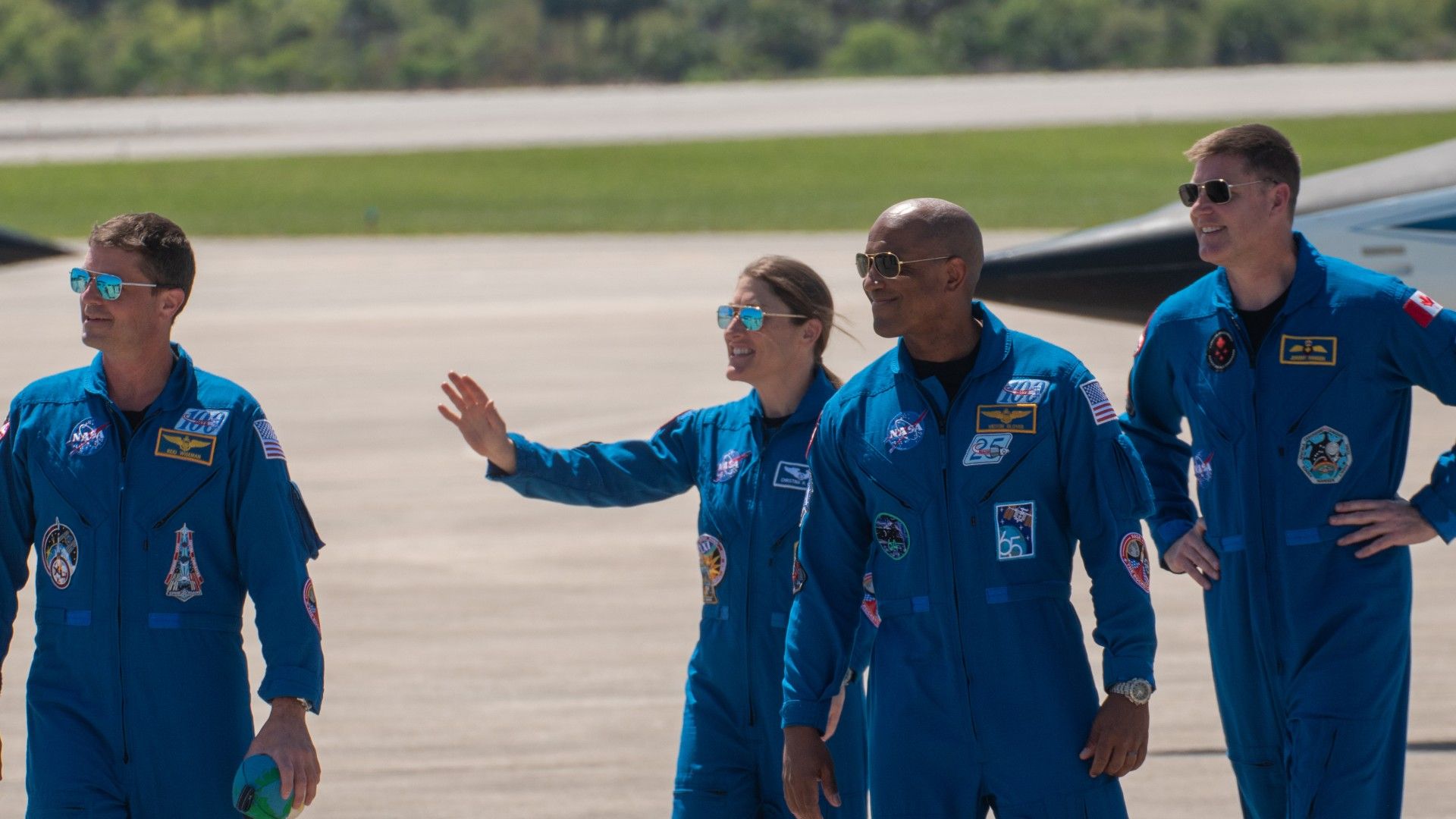
NASA is counting down to a historic Artemis 2 launch on April 1, 2026, and agency officials are trying to keep the focus exactly where they want it: on the mission, not on the calendar joke. Artemis 2 is scheduled to send four astronauts on a 10-day trip around the moon, a major step in the United States' effort to return humans to deep-space operations.
The timing has created an awkward bit of theater. April 1 is built for pranks, but NASA test director Jeff Spaulding made clear that no one working the mission is in the mood. His message to reporters was blunt: no pranks, no distractions, just launch discipline. That seriousness reflects the scale of the task. Artemis 2 is not a publicity stunt or a symbolic flyby. It is a crewed lunar mission intended to demonstrate systems, operations, and readiness for what comes next in NASA's broader moon program.
A consequential flight for Artemis
The supplied source text identifies Artemis 2 as a 10-day mission that will carry four astronauts around the moon. That alone makes it one of the most important human spaceflight events in years. NASA's Artemis architecture is designed to re-establish crewed lunar capability and use those missions to build operational experience beyond low Earth orbit. Artemis 2 is a proving mission in that sequence: if it succeeds, confidence rises not just in the spacecraft and launch system, but in the program's ability to move from testing to sustained execution.
That matters because moon missions are no longer framed purely as flags-and-footprints exercises. They sit at the intersection of national capability, industrial coordination, international partnerships, and longer-term ambitions that include more regular lunar operations. A crewed flight around the moon may look, on the surface, like a single dramatic event. In practice, it is also a systems test for everything around it.
The challenge of public attention
The April 1 launch date is a reminder that large technical projects now unfold in an environment shaped by instant reaction, memes, and social media framing. NASA clearly knows that. Spaulding's comments show an agency trying to keep the mission from being trivialized before it even leaves the pad. That may sound secondary to launch hardware and mission rules, but public framing matters for a program that depends on political support and public confidence.
It also says something about the maturity of Artemis as a national project. Earlier space milestones often benefited from a more unified attention economy. Today, even a lunar mission can compete with the cultural logic of a joke cycle. NASA's answer appears to be discipline: treat the date as irrelevant, the mission as consequential, and the work as nonnegotiable.
Why Artemis 2 matters now
Artemis 2 arrives at a moment when space activity is broadening rapidly across civil, commercial, and military domains. Yet crewed lunar flight remains a rare and highly visible benchmark. It demonstrates not only engineering capability, but institutional continuity. Sending astronauts around the moon requires confidence in training, mission planning, vehicle integration, and launch execution at a level few organizations can sustain.
That is why Artemis 2 carries meaning beyond NASA's internal schedule. A successful mission would strengthen the case that the United States can execute ambitious, multi-mission exploration programs instead of relying on one-off spectacles. It would also provide a tangible sign that the Artemis effort is moving from promise toward operational reality.
For now, the headline is simple: NASA plans to launch Artemis 2 on April 1, 2026, and the agency does not want the date mistaken for the story. The story is the mission itself: four astronauts, a 10-day trip around the moon, and a high-stakes test of the next phase of American human spaceflight.
This article is based on reporting by Space.com. Read the original article.

Originally published on space.com