The Pioneer the History Books Undersell
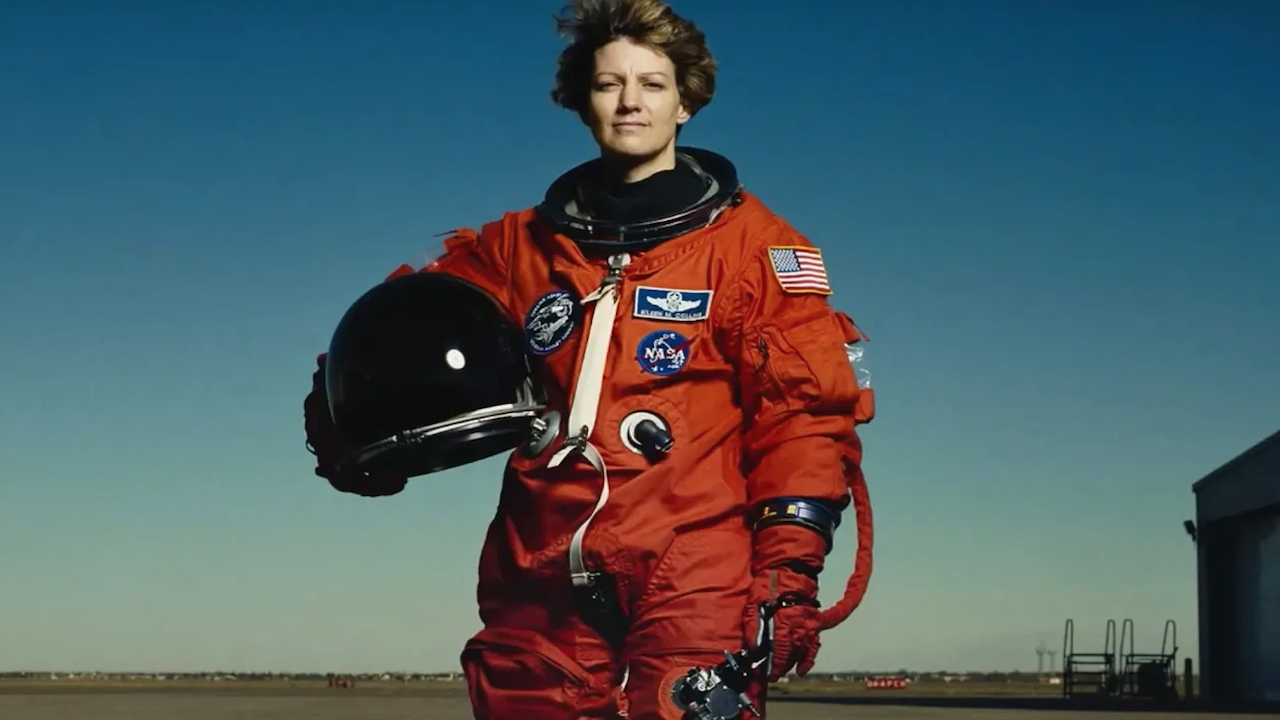
In the pantheon of American astronauts, Eileen Collins occupies a singular place: she was the first woman to pilot a Space Shuttle, in 1995 aboard Discovery, and four years later became the first woman to command one, leading the STS-93 mission that deployed the Chandra X-Ray Observatory. Yet outside dedicated space communities, her name is less recognized than many contemporaries.
A new documentary, Spacewoman, aims to change that. The feature-length film traces Collins's biography from her childhood in Elmira, New York — where she grew up in poverty, at times living in a housing project — through her military career as a U.S. Air Force test pilot, her selection as a NASA astronaut in 1990, and her four Shuttle missions spanning more than 537 hours in space.
Becoming a Pilot Against the Odds
The documentary opens with a striking detail: Collins became obsessed with aviation as a child, reading library books about flight and saving money from a paper route to pay for flying lessons at the local airport. This was the late 1960s, when women were effectively barred from military aviation. She entered the Air Force ROTC program at Syracuse University, became one of the first women to complete undergraduate pilot training, and eventually earned master's degrees from Stanford and Webster University. By the time NASA selected her, she had logged more than 4,000 hours in 30 aircraft types.
The Shuttle Missions
Spacewoman dedicates significant time to each of Collins's four missions. Her first, STS-63 in February 1995, was both her pilot debut and the first shuttle to rendezvous with the Russian Mir space station. The film uses archival footage and interviews to reconstruct the tension of approaching within 37 feet of Mir while managing thruster contamination concerns.
STS-93 in July 1999, the mission Collins commanded, was among the most technically demanding of the late Shuttle era. Shortly after liftoff, a faulty electrical connection caused two main engine controllers to fail, and a hydrogen leak reduced the fuel supply. The crew flew a truncated mission and achieved the minimum orbit needed to deploy Chandra before returning. The documentary treats this near-emergency with appropriate gravity, noting the mission came closer to disaster than NASA's public communications conveyed.
Legacy and the Pipeline Question
One of the documentary's central tensions is the contrast between Collins's individual achievement and the slow pace at which women advanced through NASA's senior mission ranks afterward. Of the more than 130 Space Shuttle missions, women commanded fewer than ten.
Interviews with fellow astronauts and executives reflect on what systemic changes — in selection culture, mentorship, and assignment processes — were needed beyond the symbolic milestone of Collins's command. The documentary does not offer easy conclusions but lets the data speak.
Eileen Collins appears throughout in reflective interviews that reveal a characteristically understated account of her own history. She speaks about her motivations in terms of mission accomplishment rather than barrier-breaking, a frame the documentary both presents and gently complicates by showing how her example influenced thousands of girls who sent her letters in the late 1990s and early 2000s.
This article is based on reporting by Space.com. Read the original article.

Originally published on space.com