Artemis 2’s mission is technical, historic, and highly symbolic
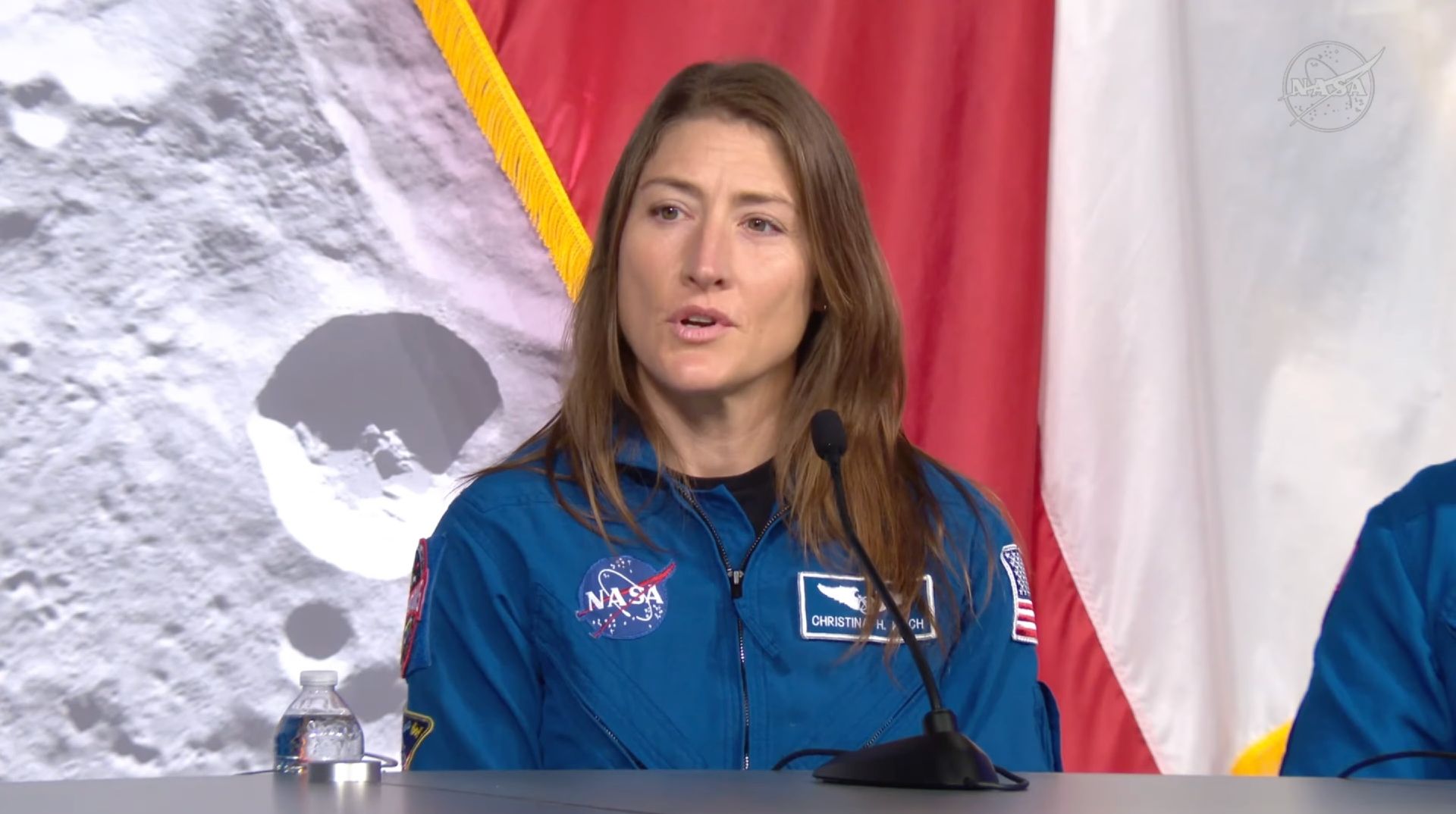
NASA astronaut Christina Koch says she is ready for Artemis 2, the mission scheduled to launch no earlier than April 1 on a round-the-moon flight. When it flies, Koch is set to become the first woman ever to travel beyond low Earth orbit, a milestone that will place the mission in both engineering and social history.
Koch is part of a four-person crew that also includes commander Reid Wiseman, pilot Victor Glover, and Canadian Space Agency mission specialist Jeremy Hansen. Space.com notes that the flight will also make Glover the first Black person to leave low Earth orbit and Hansen the first non-American to do so.
A veteran astronaut steps into a new frontier
Koch arrives at Artemis 2 with an unusually strong operational background. During her NASA career, she has spent more than 300 days aboard the International Space Station and took part in the first all-woman spacewalk with Jessica Meir. That record makes her one of the more experienced astronauts tasked with helping NASA restart deep-space human exploration through Artemis.
Her public comments in the source convey both readiness and scale. “We are firing on all cylinders,” she said, describing a program pushing toward launch while carrying the weight of firsts that extend well beyond the crew itself.

The return of crewed lunar flight
Artemis 2 is not a landing mission. Its immediate purpose is a crewed journey around the moon, but its significance is larger than that profile suggests. It is the mission intended to prove that NASA’s new lunar architecture can carry astronauts safely beyond the orbital regime that has defined human spaceflight for decades.
That is why Artemis 2 draws attention not only as a test flight, but as a threshold moment. If successful, it will establish the human operational base for later Artemis missions. The symbolism attached to Koch’s role is therefore inseparable from the technical meaning of the mission itself.
Representation and exploration are converging
Koch’s upcoming place in the record books matters because deep-space milestones have long been narrowly distributed. Artemis 2 changes that. The crew composition reflects a broader effort to ensure that the return to the moon is not framed as a repetition of the past, but as a different era of human exploration with a wider public claim on the achievement.
For NASA, Artemis 2 is about proving hardware, training, and mission design. For the public, it is also about who gets seen in history at the moment those systems begin carrying people outward again. Koch’s comments suggest she understands both dimensions. The mission is operationally demanding, but it is also carrying expectations built over decades.

A launch with consequences beyond the schedule
The current launch date in the source is “no earlier than April 1,” which underscores that spaceflight timelines remain conditional. Still, the mission now feels close enough that the conversation has shifted from abstract planning to crew readiness and public meaning.
If Artemis 2 launches on schedule, Koch’s flight will mark a genuine expansion in who gets to represent humanity beyond low Earth orbit. That alone would make the mission important. Combined with the larger Artemis program, it could become one of the defining spaceflight moments of the decade.
This article is based on reporting by Space.com. Read the original article.
Originally published on space.com