A small telescope with a very specific target
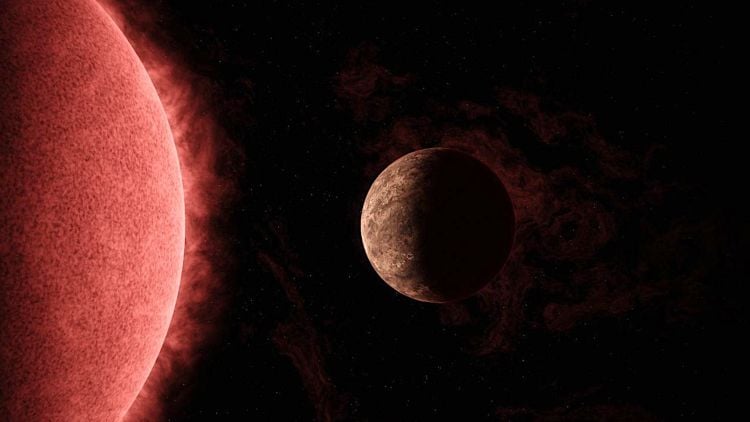
Canada is proposing a new microsatellite mission aimed at one of astronomy’s most compelling goals: finding small rocky planets around nearby cool stars. The concept, called POET, short for Photometric Observations of Exoplanet Transits, is designed to search for Earth-sized and super-Earth exoplanets orbiting ultracool dwarfs.
According to Universe Today, the mission is currently in development and described in a preprint available on arXiv that was previously submitted to the Proceedings of SPIE Volume 13627, Techniques and Instrumentation for Detection of Exoplanets XII. The project would focus on K-type stars, M-type stars and brown dwarfs, a class of objects often described as failed stars because they fall between giant planets and small stars in size and behavior.
The scientific logic is straightforward. POET would use the transit method, looking for the brief dimming that occurs when a planet passes in front of its host star. Because ultracool dwarfs are much smaller than the Sun, an Earth-sized planet blocks a larger fraction of the star’s light. Universe Today notes that these stars are estimated to be about 10% of the Sun’s diameter, making the planet-to-star size ratio much more favorable for detection.
Building on Canada’s small-spacecraft record
POET would not be starting from scratch. The mission builds on Canada’s earlier microsatellite heritage, particularly MOST and NEOSSat, launched in 2003 and 2013. Both previous missions used 15-centimeter telescopes and observed in visible wavelengths. MOST studied stars to probe properties such as age and composition, while NEOSSat focused on asteroids and space debris.
Universe Today points to a notable scientific legacy from MOST: it helped show that the hot Jupiter orbiting HD 209458 has very low reflectivity. That history matters because it shows how comparatively small spacecraft can still make specialized, high-impact contributions when they are matched to clear scientific questions.
POET would extend that approach with a 20-centimeter telescope and broader imaging capability. The report says the mission is planned to observe in near-ultraviolet, visible and near-infrared wavelengths. That combination would give the satellite more flexibility in characterizing transit signals and selecting the best observing bands for cool stars.

Why ultracool dwarfs matter
The search for Earth-like planets often runs into a basic observational problem: small planets are hard to spot around large, bright stars. Ultracool dwarfs change the geometry. When the star is small, the transit depth caused by a rocky planet is larger, and planets in close-in orbits can transit more frequently, making repeated detections easier to confirm.
That does not make the science simple, but it does make it efficient. A dedicated microsatellite tuned to these stars could help identify promising worlds for larger observatories to study later. In that sense, POET would serve as a finder mission as much as a discovery engine, delivering a refined target list for the next round of atmospheric and habitability studies.
With NASA’s confirmed exoplanet count approaching 6,300, and 223 of those identified by Universe Today as terrestrial rocky planets, the field is already moving quickly. POET’s pitch is that a relatively compact mission can still carve out an important role by going after the kinds of stars where the odds of spotting small planets are strongest. If it advances, Canada’s next exoplanet mission may prove that careful specialization still matters in a field increasingly defined by scale.
- POET would search for Earth-sized and super-Earth planets around ultracool dwarf stars.
- The mission would use transit photometry, where small stars make rocky-planet signals easier to detect.
- It builds on Canada’s earlier MOST and NEOSSat microsatellite programs.
This article is based on reporting by Universe Today. Read the original article.
Originally published on universetoday.com