A landmark lunar return reaches its final test
NASA’s Artemis II mission completed its journey with a successful splashdown, closing a flight that sent four astronauts to the moon and back and marking the first time in more than 53 years that astronauts returned to Earth from lunar space. The mission was also a major operational milestone for Orion, the spacecraft designed to carry crews beyond low Earth orbit in the Artemis era.
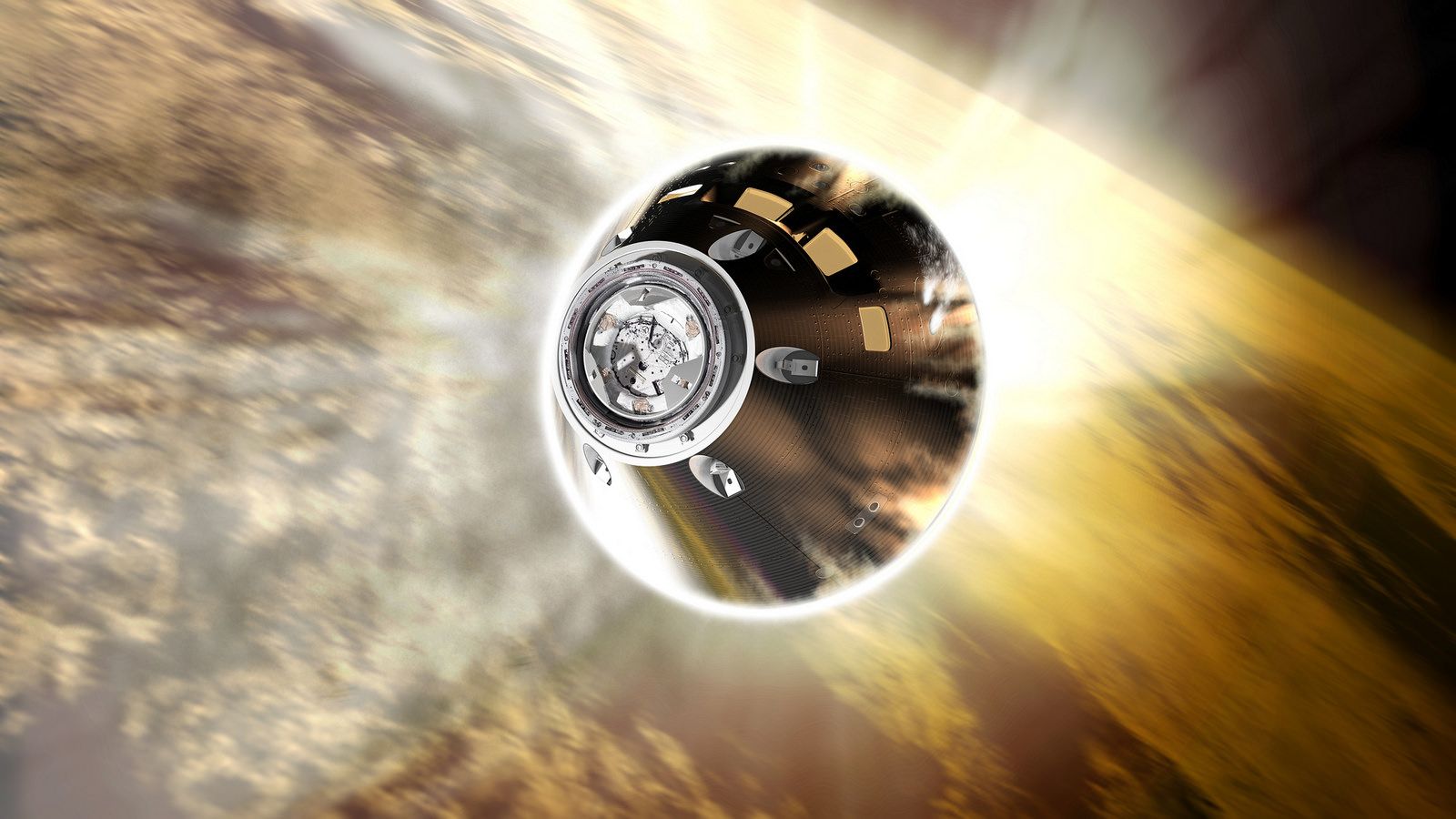
Space.com’s mission-day timeline underscored how demanding the final phase was. NASA described the descent as “13 minutes of things that have to go right,” a concise summary of the stakes involved in bringing a crew home from deep space. By the time Orion reached the atmosphere, the mission had already achieved its symbolic objective. The harder task was turning a historic flight into a safe landing.
Why splashdown mattered so much
Reentry was never just a ceremonial ending. Artemis II was the first crewed flight of Orion, which meant NASA was not only bringing astronauts back from the moon for the first time in decades, but also validating the spacecraft’s performance with people aboard during the most punishing phase of the trip.
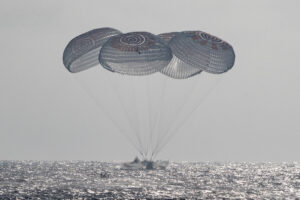
The crew of four traveled to the far side of the moon and returned after roughly 10 days in space, according to mission coverage. The return path demanded a chain of tightly timed operations: wake-up procedures, vehicle configuration for entry, burns to refine the trajectory, separation of the crew and service modules, atmospheric interface, a communications blackout, parachute deployment and final splashdown in the Pacific.
Each stage had to work in sequence. Failure in any one of them could jeopardize the mission. That is why the landing drew such close attention even after the spacecraft had already survived deep-space operations.

The shadow of Artemis I
Extra scrutiny also came from the memory of Artemis I, the uncrewed 2022 test flight. On that mission, Orion’s heat shield returned to Earth with damage that NASA had not expected. Coverage ahead of Artemis II’s landing noted that the protective AVCOAT shield had shown charring and cracking in places during Artemis I. NASA said astronauts would still have returned safely under those conditions, but the anomaly ensured the shield would remain a central point of concern for the first crewed return.
That context made Artemis II more than a demonstration of navigation and endurance. It was a test of whether NASA’s corrective work and analysis after Artemis I had adequately prepared Orion for a human-rated reentry from lunar velocity.
A mission built for future lunar campaigns
Artemis II was not a landing mission, but it was designed to collect the data and operational experience needed for later flights that will attempt one. During the mission, the astronauts tested Orion’s systems in deep space, including communications with Earth, trajectory adjustments and crewed operations in a constrained spacecraft environment.
That work was essential because Artemis is meant to be more than a one-off return to the moon. NASA is using each step to build confidence for subsequent missions, including future landings. Artemis II therefore functioned as both a historic flight and a systems qualification exercise conducted under real conditions.
The crew itself also carried symbolic weight. The mission included astronauts from the United States and Canada, reinforcing Artemis as an international program rather than a purely national effort. Their voyage extended human presence back into lunar space after a gap of more than half a century.

What the successful return changes
With splashdown complete, NASA has cleared one of the most visible and consequential hurdles in its current moon program. A safe return does not answer every technical question surrounding future Artemis missions, but it does strengthen the case that Orion can carry astronauts to lunar distances and bring them home again.
That matters strategically as much as operationally. Artemis has become the backbone of the United States’ long-term lunar ambition, and public confidence in the campaign depends heavily on whether early missions can execute their most dangerous phases without catastrophe.
Artemis II delivered that result. The mission’s final minutes were treated as a gauntlet for good reason, and Orion made it through. For NASA, the successful splashdown is both an ending and a handoff: proof that the first crewed deep-space test of Orion can close safely, and a foundation for the more demanding lunar missions that are meant to follow.
This article is based on reporting by Space.com. Read the original article.
Originally published on space.com