A historic moon pass is about to unfold in real time
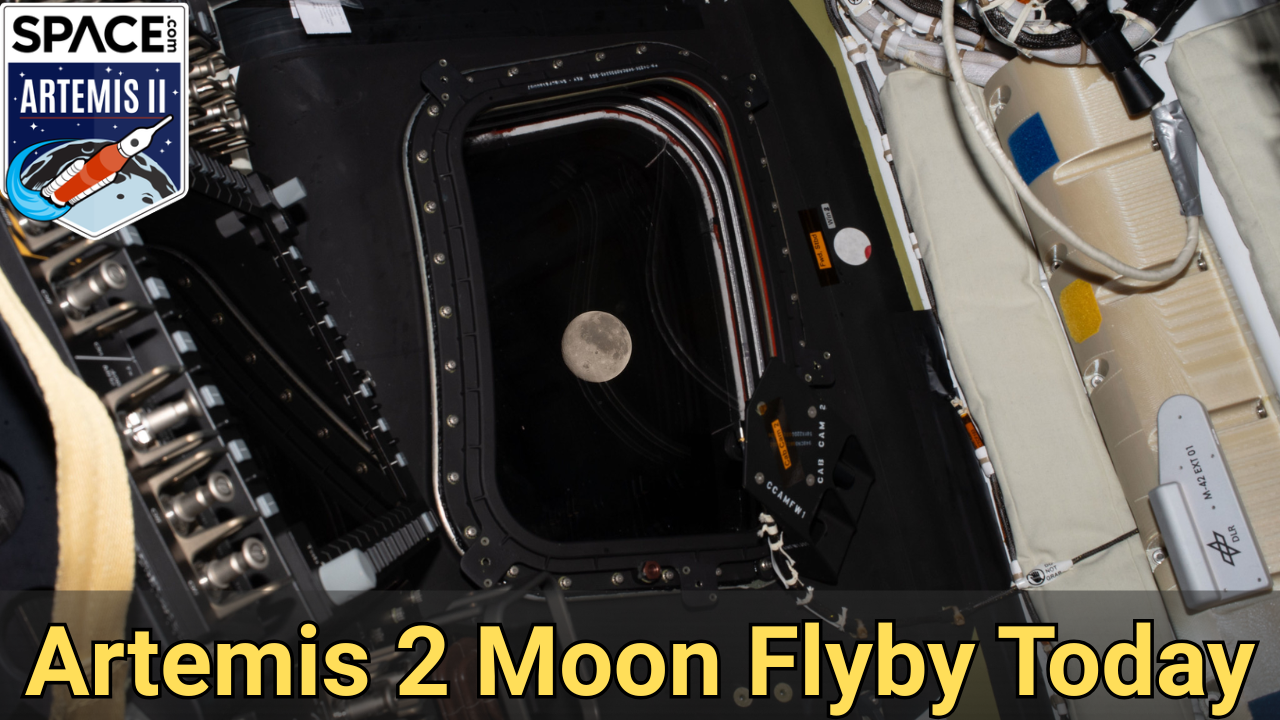
NASA’s Artemis 2 mission is entering its most closely watched phase yet, with the four-person crew preparing for a seven-hour flyby of the moon on April 6. The event marks the first close human encounter with the moon in more than half a century and gives the Artemis program a defining public milestone: a crewed return to lunar space before any attempt at a landing.
The flyby is scheduled to begin at 1:30 p.m. EDT, with live coverage expected online as the spacecraft moves through a sequence of views and maneuvers that few living people have ever witnessed firsthand. NASA’s crew has already spent days approaching the moon, capturing views out the windows of Orion and preparing for the observation period that will carry them around the lunar far side.
The mission’s emotional tone has been clear from the astronauts’ own words. Artemis 2 commander Reid Wiseman described the crew’s reaction to seeing the moon as childlike awe, saying the team could not get enough of what it was seeing. That sense of wonder is not incidental. Artemis is both a technical program and a public statement that the United States and its partners are serious about restoring human deep-space flight beyond low Earth orbit.
Why this flyby matters
Artemis 2 is not landing on the moon, but its importance should not be understated. The mission is a full-scale test of crewed operations in deep space, using the Orion spacecraft and the broader mission architecture that NASA intends to build on in later Artemis flights. A successful lunar pass demonstrates that the agency can safely send astronauts out to the moon and bring them back, which is the operational foundation the rest of the program depends on.
The mission also reconnects the present with a very old benchmark. No humans have flown this close to the moon since the Apollo era. That gap has shaped the symbolism of Artemis from the beginning. It is not simply another mission in a continuous line of lunar operations. It is the resumption of crewed lunar exploration after more than 50 years of absence.
The timeline adds to the significance. The crew is expected to spend hours with unique views of the moon before losing communications briefly behind the far side. That period combines the drama of real exploration with the discipline of spacecraft operations, including navigation, observation, and the careful execution of a trajectory that must remain exact over vast distances.
A mission measured in both distance and credibility
The flight is also notable for the distances involved. Reporting on the mission has emphasized that the crew will travel farther from Earth than any humans have before, edging past the record associated with Apollo 13. That is a reminder that Artemis 2 is not a symbolic lap. It is a deep-space mission that expands the modern record book while testing hardware, procedures, and human performance in a demanding environment.
For NASA, the credibility stakes are high. Artemis has carried heavy expectations, political attention, and inevitable scrutiny over timelines and readiness. A strong Artemis 2 flyby would not resolve every question surrounding the broader lunar program, but it would answer one of the biggest: whether the agency can conduct a high-visibility crewed lunar mission with the competence needed for more ambitious steps ahead.
The flyby also sets up a larger narrative for the next decade. Artemis is intended to be more than a commemorative return. NASA has framed it as the basis for a sustained presence around and eventually on the moon. Missions like Artemis 2 therefore matter twice: first as individual achievements, and second as credibility tests for everything that follows.
On April 6, that larger story becomes tangible. Four astronauts will round the moon, look back at Earth, and briefly pass out of contact on the far side before continuing homeward. It is a familiar arc in the history of exploration, but one that has been absent from human spaceflight for generations. Artemis 2 is bringing it back into view, hour by hour.
- Artemis 2 is scheduled for a seven-hour lunar flyby on April 6.
- The mission is the first close human encounter with the moon in more than 50 years.
- Its success would strengthen the operational case for later Artemis missions deeper into the program.
This article is based on reporting by Space.com. Read the original article.
Originally published on space.com