NASA shifts from a single moonshot to a long campaign
NASA is moving quickly to define what comes after Artemis 2, and the agency’s message is that the recent lunar flight was not a one-off demonstration. Speaking on April 14 at the 2026 Space Symposium in Colorado Springs, NASA chief Jared Isaacman described Artemis 2 as the “opening act” in a broader return-to-the-moon effort that is meant to extend beyond a single crewed flyby.
That framing matters. Artemis 2 already carried major symbolic weight as the first human mission to travel around the moon since 1972. But Isaacman’s remarks place the flight in a larger operational sequence: NASA wants Artemis 2 to be understood as the beginning of a relay rather than the destination itself.
The mission concluded with a safe splashdown on Friday, April 10, giving NASA a successful high-visibility milestone. With that outcome secured, the agency is now using the moment to reinforce the case for a sustained lunar architecture involving repeated missions, international partnerships, and infrastructure that can support people working near and eventually on the moon.
Why NASA is emphasizing continuity
For any exploration program, momentum is fragile. A mission can attract public attention, but unless it clearly leads to the next one, that attention fades into a commemorative achievement. Isaacman’s comments suggest NASA is trying to avoid exactly that trap. By calling Artemis 2 the first leg of a relay race, he tied the mission directly to later crewed landings and to the longer-term concept of a moon base.
That is a significant shift in tone from celebration to continuity. NASA is not only celebrating that astronauts returned from a lunar voyage safely. It is also arguing that the flight validated the path to more demanding missions ahead. In practice, that means using Artemis 2 as proof that the agency can execute human deep-space operations again after a gap of more than 50 years.
The agency’s public narrative now appears focused on three linked goals. First comes repeating human operations in lunar space. Second comes landing crews and building up a more persistent presence. Third comes using those efforts as a bridge toward future Mars missions. Isaacman’s comments explicitly connected the moon campaign to Mars, keeping the longer strategic objective in view even as NASA concentrates on near-term lunar steps.

The moon as destination and proving ground
NASA’s current approach treats the moon as more than a symbolic target. It is being positioned as both a place to work and a proving ground for exploration systems that would later be needed much farther from Earth. That helps explain why agency leaders are increasingly talking about infrastructure and presence rather than isolated visits.
A moon base remains an ambitious concept, and the source material does not provide a detailed timetable. But the fact that NASA’s chief is publicly presenting that idea as part of the agency’s arc is notable in itself. It signals that Artemis is being sold internally and externally as an enduring program with follow-on requirements, not simply a prestige project.
That also has implications for partners. Isaacman referred to NASA and its international collaborators, underscoring that the program is not framed as a solely domestic effort. International participation can spread costs, deepen diplomatic ties, and broaden technical contributions, but it also raises the importance of schedule coordination and stable planning. The more Artemis becomes a multinational buildout rather than a sequence of single missions, the more continuity matters.
What Artemis 2 changed
The immediate achievement of Artemis 2 was straightforward: it sent humans around the moon for the first time in the modern era and returned them safely. Yet missions like this change the conversation less by one dramatic moment than by reducing uncertainty. A successful crewed lunar flight narrows the list of unknowns that can only be answered by flying.
That does not mean NASA’s path ahead is simple. The leap from a successful flyby to regular lunar operations is substantial. Landing systems, habitation concepts, logistics, and long-duration support all raise separate challenges. Still, Artemis 2 gives NASA a credible recent success around which it can organize the next phase of planning and advocacy.
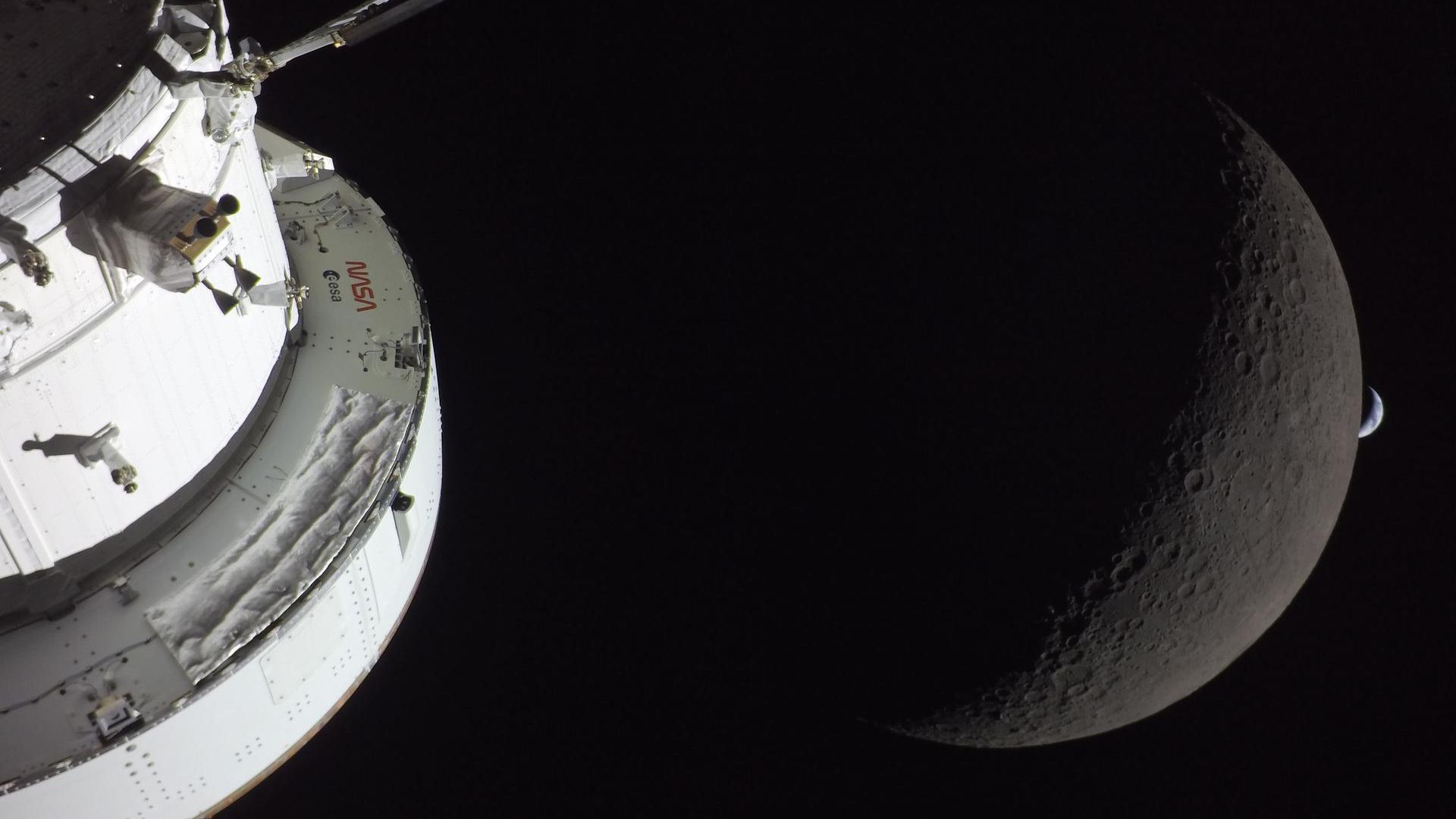
The agency is also likely to benefit from the imagery and public resonance of the mission. Space programs rely on technical performance, but they also rely on narrative. A stunning far-side view of the moon with Earth in the distance is not just a visual milestone; it is a political and cultural asset. NASA appears intent on turning that asset into support for a more durable campaign.
What to watch next
Isaacman’s message leaves little doubt about the direction NASA wants to project. The real test now is whether Artemis can sustain enough technical, financial, and political alignment to move from successful return flight to repeated lunar operations. Artemis 2 has given the program a strong public marker. The next challenge is converting that marker into sequence.
If NASA succeeds, Artemis 2 will likely be remembered less as a standalone moon mission than as the point when the United States restarted human operations beyond low Earth orbit in a sustained way. If momentum stalls, the mission may instead stand as an impressive but isolated achievement. NASA’s leadership is clearly trying to make the first outcome more likely by defining the narrative early and forcefully.
For now, the agency’s position is plain: the return to the moon is underway, Artemis 2 was only the beginning, and the moon is being cast as both a destination and a stepping stone to Mars.
This article is based on reporting by Space.com. Read the original article.
Originally published on space.com