NASA’s return to the Moon is moving from concept to countdown
For years, Artemis was discussed in the language of architecture, budgets, hardware schedules, and long-term ambitions. As the planned launch date for Artemis 2 draws near, that framing is changing. The mission now has a crew, a defined profile, and a commander who speaks about it with the concentration of someone preparing for a difficult operational assignment rather than a symbolic photo opportunity.
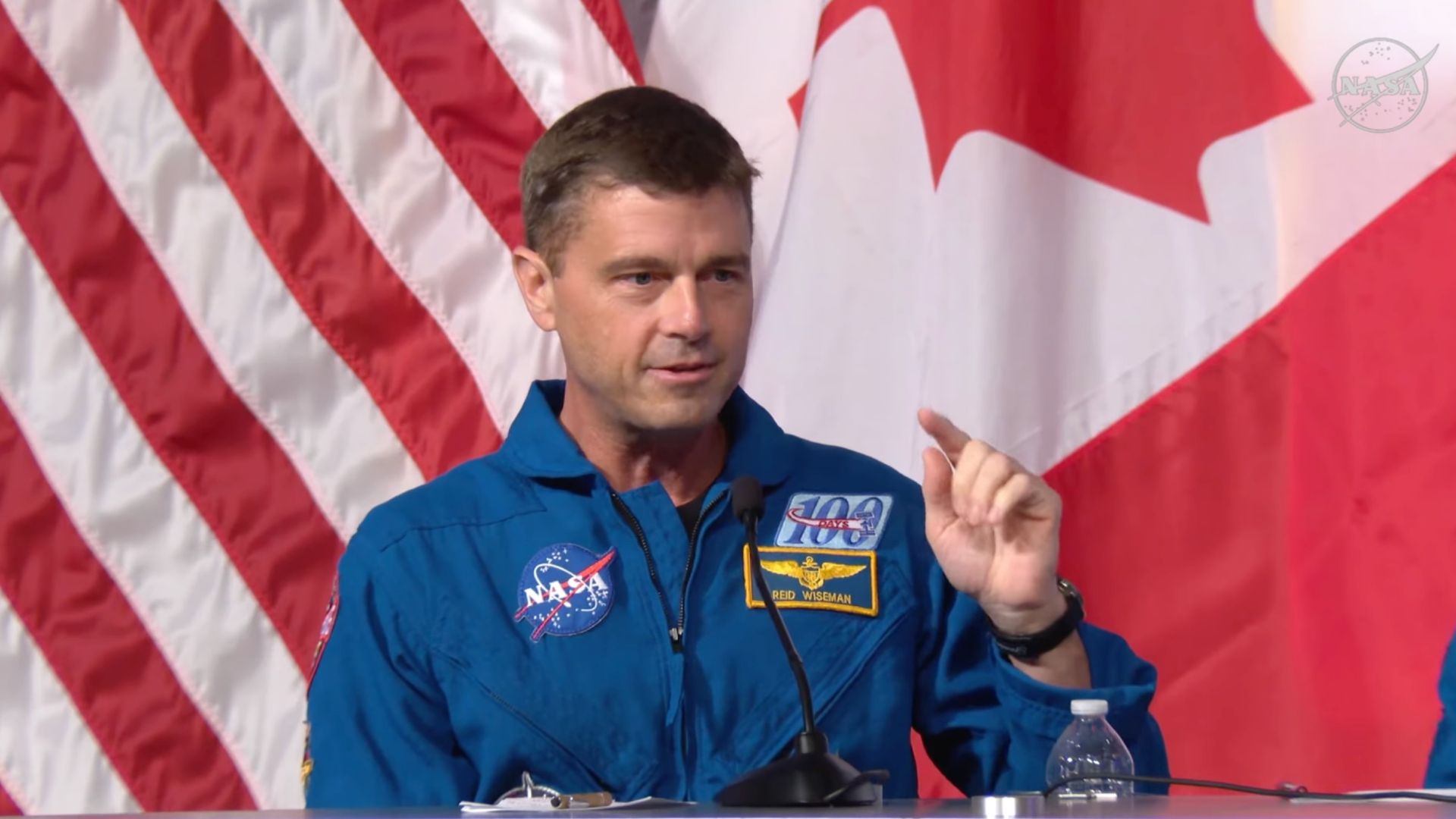
Reid Wiseman, the Artemis 2 commander, summed up that shift plainly: the moon is now what occupies his mind. That intensity matches the role he has taken on. Artemis 2 is scheduled to launch no earlier than April 1 on a roughly 10-day mission that will carry four astronauts around the moon and back. If it flies as planned, it will be the first human lunar mission since Apollo 17 in 1972.
That historical gap gives the flight obvious emotional weight, but Wiseman’s public comments suggest a different emphasis. He appears focused on execution. The task is to take a crew safely beyond low Earth orbit, operate through a demanding mission profile, and return with the kind of performance that validates the next phase of NASA’s lunar effort.
A commander shaped by military aviation and spaceflight
Wiseman’s background helps explain the tone. He is a retired Navy captain and aviator who deployed twice to the Middle East and later served as a test pilot at Naval Air Station Patuxent River in Maryland. That path points to a professional culture built around procedure, disciplined preparation, and risk management under pressure.
NASA selected him as an astronaut in 2009, and he is not new to long-duration human spaceflight. In 2014 he flew on Expedition 40 and 41 to the International Space Station, giving him firsthand experience with the demands of operating in orbit for an extended period. Artemis 2, however, is a different category of mission. Station expeditions operate within the routines of an established orbital outpost. A lunar flyby mission pushes a crew farther from Earth, farther from immediate help, and into a part of human spaceflight that has been dormant for more than five decades.
That is one reason Wiseman’s comments about knowing the risks carry weight. He is not speaking about abstract danger. He is describing the practical reality of preparing for a mission that revives deep-space crew operations after a generational pause.

Why Artemis 2 matters beyond symbolism
Artemis 2 will be widely described as historic, and that is accurate. But history alone is not the reason the mission matters. Its larger importance is that it is meant to prove the crewed version of NASA’s modern moon campaign in real operational conditions. The flight will test people, hardware, procedures, communications, and mission discipline at a level no uncrewed rehearsal can fully replicate.
The crew’s job is straightforward in concept and demanding in practice.
- Launch successfully on the planned trajectory.
- Operate the mission as a four-person crew beyond low Earth orbit.
- Loop around the moon and return safely to Earth.
- Generate the confidence needed for the missions that follow.
That makes Artemis 2 a bridge mission. It connects the promise of Artemis to the credibility of Artemis. If the mission succeeds, NASA will have moved from designing a return to the moon to demonstrating that humans can once again fly that path. If it struggles, the consequences will extend well beyond one crew rotation. They will affect timelines, confidence, and the political durability of the broader lunar program.
The pressure of leading the first crew back
There is a distinct burden on first-return missions. They carry expectation from inside the program, from the political system that funds it, and from a public that sees the mission as both a technical milestone and a cultural event. Wiseman has to manage that attention while keeping the crew centered on fundamentals.
His public posture suggests exactly that. Rather than dwell on prestige, he appears to be narrowing the mission down to what crews can control: preparation, teamwork, and professional accountability. That may be the most useful tone for a mission of this kind. Spaceflight history is full of examples where symbolism overwhelms judgment. Artemis 2 cannot afford that. It needs a crew mindset closer to flight test than pageantry.
There is also a broader leadership signal in Wiseman’s comments. NASA wants Artemis to stand not just for exploration, but for competence. The agency is asking the public and policymakers to invest in a sustained return to the moon. The strongest argument it can make is not rhetoric about inspiration. It is a clean, disciplined mission carried out by astronauts who understand both the opportunity and the hazard.
That is why Wiseman’s language matters. He is treating the moon not as a destination for nostalgia, but as a demanding assignment that requires total attention. In practical terms, that is probably the healthiest way to approach the first crewed lunar mission since 1972.
If Artemis 2 launches no earlier than April 1 as planned, the mission will mark a major turning point for NASA and for human spaceflight. But before it becomes a milestone in history books, it has to become a successful flight. Wiseman’s focus makes clear that this is the real threshold now. The era of talking about returning to the moon is ending. The era of proving it can be done safely is about to begin.
This article is based on reporting by Space.com. Read the original article.

Originally published on space.com