Apollo-era spectacle, digital-era detail
NASA’s Artemis 2 mission has produced the kind of lunar imagery spaceflight advocates hoped would define a return to deep-space crewed missions. During the crew’s April 6 flyby of the moon, astronauts Reid Wiseman, Victor Glover, Christina Koch, and Jeremy Hansen photographed the lunar surface, Earth rising and setting behind the moon, and a total eclipse from Orion.
The supplied reporting describes the images as the first high-resolution batch returned after Orion reestablished an optical link with Earth. That transmission step matters because it explains why the public view lagged the live mission commentary. The crew saw the scenes in real time, but the sharpest record of the encounter only arrived once bandwidth allowed the files to come home.
The images that define the mission
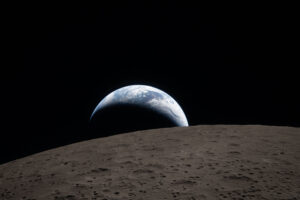
The most symbolic frame may be the new “Earthset” image, taken at 6:41 p.m. EDT on April 6, with a crescent Earth slipping behind the moon from the crew’s perspective. The scene is an intentional echo of Apollo 8’s “Earthrise,” but it also marks something distinct: a modern crewed spacecraft returning human observers to lunar distance with contemporary cameras and transmission systems.
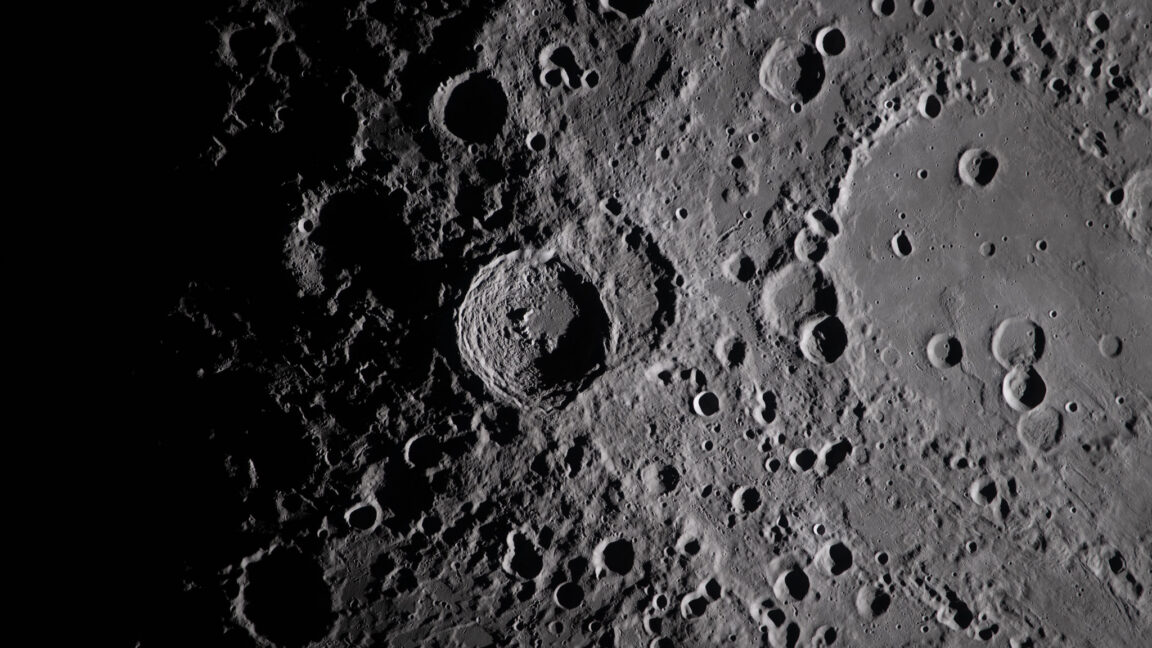
Other photographs show the moon’s scarred surface in sharp relief, including cratered terrain and views near the terminator where light and shadow emphasize topography. The reporting also notes a total eclipse sequence, with the crew wearing eclipse glasses during the initial phase. Together, the image set turns Artemis 2 from a procedural test flight into a vivid public event.
Why these pictures matter beyond aesthetics
NASA and outside observers are framing the photos as more than just beautiful records. According to the supplied source text, some of the images may help scientists better understand lunar geology and evolution. Even if the mission is not primarily a science campaign in the way a robotic orbiter might be, high-quality human-captured photography still has scientific and operational value.
There is also a strategic communications dimension. Artemis is not only a transportation program; it is a political and public project meant to reestablish sustained human exploration beyond low Earth orbit. Images have always been central to that effort. Apollo’s visual legacy helped justify the memory of the program long after the missions ended. Artemis is now generating its own iconic frames.
A reminder of what crewed lunar missions can do
One of the recurring criticisms of crewed spaceflight is that robotic missions often return more science for less money. That argument will not disappear, but Artemis 2 demonstrates a different strength: humans create moments of interpretation, storytelling, and observation that resonate immediately. The crew did not just gather data. They narrated the flyby, framed the moon as a lived environment, and captured images that connect technical achievement to public imagination.
The mission also underlines how long it has been since people last rounded the far side of the moon. According to the supplied reports, no humans had done so since Apollo 17 in 1972. Artemis 2 therefore compresses several meanings into a single event: a systems test, a geopolitical statement, a media milestone, and a cultural reminder that human lunar flight had been absent for more than half a century.
As NASA builds toward later Artemis missions, these images will likely endure as one of the program’s first unmistakable successes. Hardware tests can be abstract. Schedules can slip. Budgets can be argued over. But a sharp, human view of Earth disappearing behind the moon is something else entirely. It is the kind of evidence that a program is no longer theoretical.
This article is based on reporting by Ars Technica. Read the original article.

Originally published on arstechnica.com