Zombie Cells and the Body's Slowing Cleanup Crew
The immune system runs a kind of municipal sanitation service inside the body, identifying cells that are worn out, damaged or already dead and hauling them away before they can cause harm. That service is remarkably effective in youth. It also becomes steadily less efficient with age.
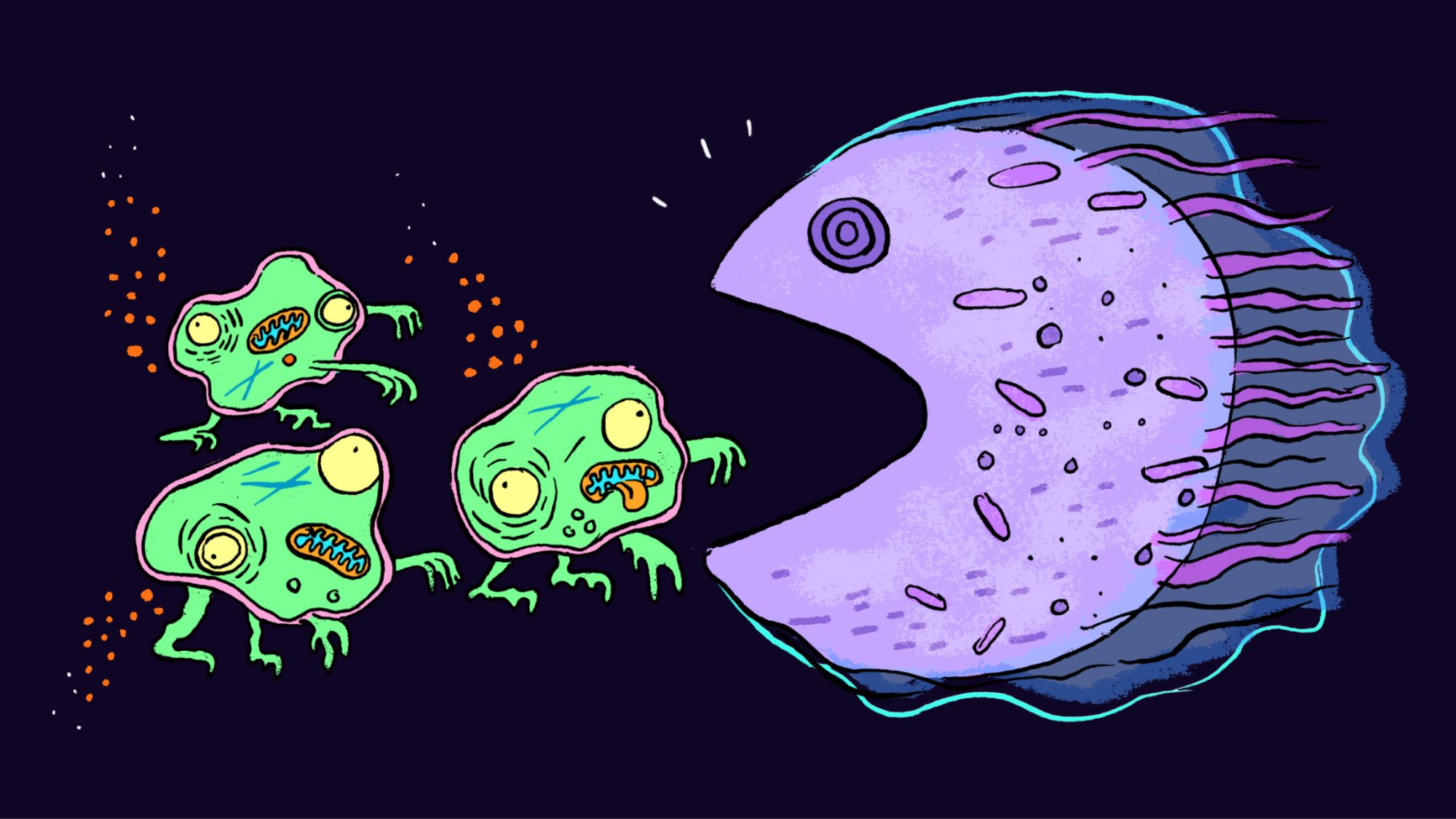
What accumulates in the gap is a population of cells researchers casually call "zombies." These are senescent cells: damaged cells that should have died on schedule but instead linger, leaking a mix of chemical signals that stoke inflammation and injure the tissue around them. Their numbers rise with age, and a growing body of work implicates them in the diseases that cluster in later life.
As Live Science reports, two broad strategies are now being pursued against them. One is to hunt the zombies down and kill them directly. The other takes a different angle — rather than doing the cleanup by hand, restore the body's own cleanup crew to working order.
How an Ordinary Cell Turns Into a Zombie
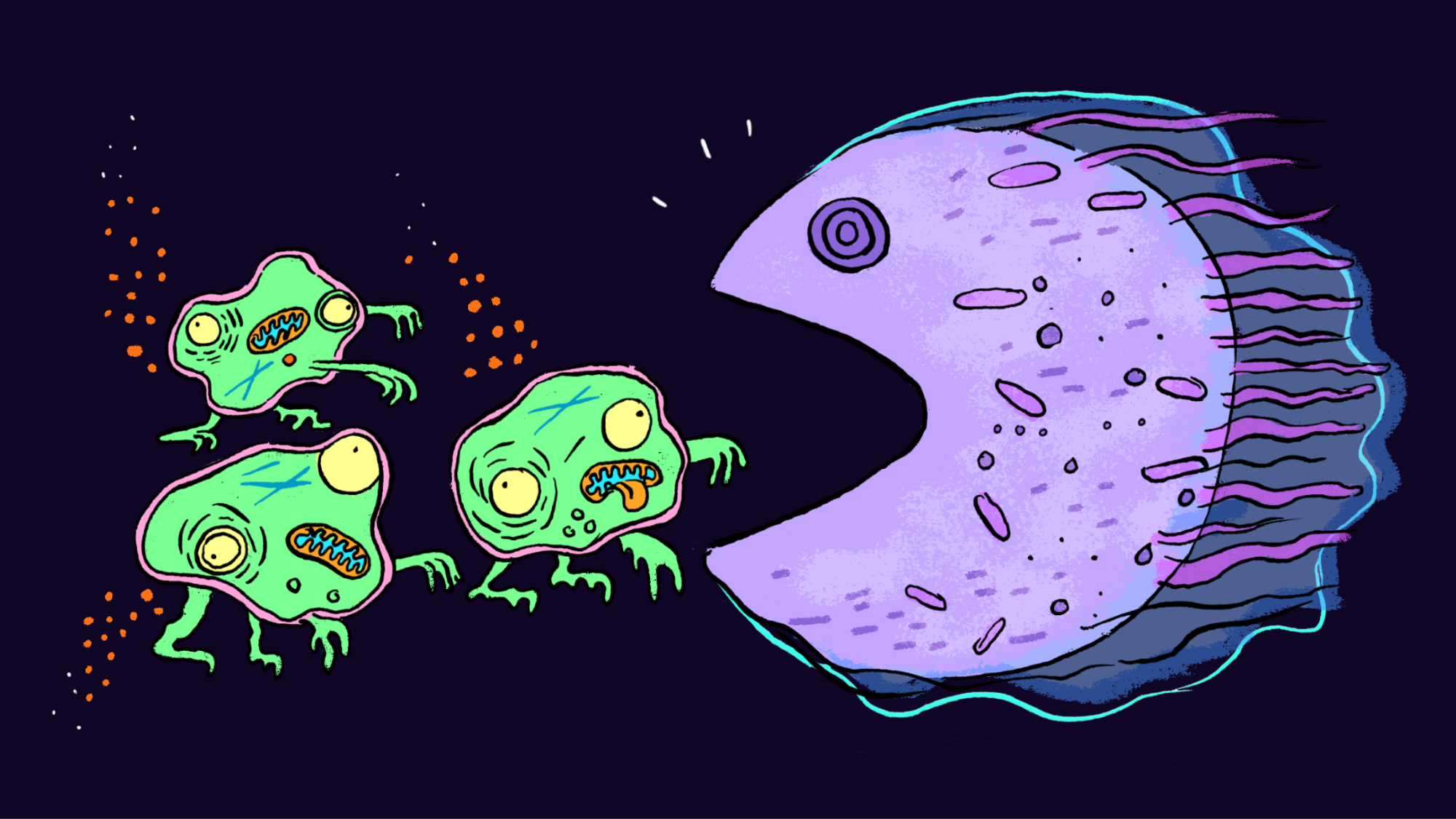
Normal cell death is not a silent event. A dying cell advertises itself, displaying proteins on its surface that act as "eat me" signals. Macrophages — the immune system's dedicated engulf-and-destroy specialists — read those signals and consume the cell, clearing space for healthy tissue to take over.
Senescence is what happens when that script breaks down. Some cells stop dividing but refuse to die. They can sit in tissues for years, and throughout that time they release inflammatory compounds that damage nearby cells and disrupt normal function.
What sets the process in motion
Several triggers can push a cell toward the senescent state, according to the reporting:
- Oxidative stress, the chemical wear that builds up as cells handle oxygen.
- Exposure to radiation.
- Ordinary, everyday cell division.
That last trigger is the least intuitive. Each time a cell copies its genome, it loses a small amount of DNA from the ends of its chromosomes. Cells carry elaborate machinery for deciding when continuing to divide has become "a bit too dangerous," as University of Oxford immunologist Roel de Maeyer described it. A cell that can no longer divide would ordinarily proceed into programmed cell death, the self-destruct sequence that prevents damaged material from piling up. Senescent cells skip that step entirely and simply persist.

Two Ways to Deal With the Zombies
Killing them outright
One research direction focuses on compounds that selectively destroy senescent cells while leaving healthy tissue alone. The underlying logic is straightforward: eliminate the source of the inflammatory signals, and the surrounding tissue gets a chance to recover. The broader ambition behind these efforts is to reverse or stall signs of aging in the body and, by doing so, cut the risk of age-related disease.
Rejuvenating the janitors instead
De Maeyer favors a complementary approach. If macrophages become sluggish as we age, then restoring their function could address more than one problem at once. "I think rejuvenating the immune system could rectify a lot of problems," he told Live Science. He pointed to a familiar pattern in hospitals: older patients are admitted for infections that younger people simply shake off at home.
That observation links two strands of aging research that are often treated separately — the biology of senescent cells and the gradual decline of immune function. A cleanup crew that cannot keep pace leaves zombies in place. Zombies, in turn, churn out inflammatory signals that put further strain on an already weakened immune system, turning a stalled cleanup into a self-reinforcing problem.
Healthspan, Not Just Lifespan
The framing matters here. The stated aim of these rejuvenating therapies is not simply to add years to life but to help people stay healthier for longer — compressing the stretch of frailty, infection and chronic disease that tends to dominate the final decades.
If that sounds like a modest goal, consider what it implies. A body that clears senescent cells efficiently and mounts robust immune responses would, in principle, be less vulnerable to the inflammatory backdrop that accompanies so many conditions of old age. Rather than treating each disease separately as it appears, the strategy targets a shared upstream contributor.
De Maeyer's version of this idea is deliberately practical. Hospitals, he noted, are filled with older people battling infections that would never bring a younger person through the doors. Reducing that vulnerability would reshape not only individual lives but also the demands placed on health systems.

Where the Two Strategies Meet
The kill-the-zombies camp and the rejuvenate-the-immune-system camp are not necessarily rivals. Senolytic approaches remove the inflammatory burden directly; immune rejuvenation restores the body's ability to manage that burden on its own. In theory, the two could be layered — clear the backlog of senescent cells first, then strengthen the machinery that prevents another backlog from forming.
What remains genuinely unresolved is which approach will prove safest and most durable, and whether the benefits seen in early work will hold up over years rather than months. Senescence is a deeply embedded feature of how cells respond to damage, and the immune system is a complex, interlocking network. Interventions that push either system in one direction are likely to have effects elsewhere.
The Questions Still Open
Several issues sit at the center of the field:
- How completely can the immune cleanup crew be restored, and for how long does any improvement last?
- Can senescent cells be removed selectively, without disturbing healthy tissue?
- Do zombies and immune decline reinforce each other strongly enough that treating only one will fall short?
- Will the endpoint be longer life, healthier life, or both?
None of these have settled answers. What is clear is that aging research has shifted its focus from the visible signs on the surface to the cellular housekeeping underneath — and increasingly, toward the possibility of restarting housekeeping that has stalled.

The Bottom Line
Senescent "zombie" cells accumulate as the immune system loses its ability to clear them, and they appear to contribute to age-related disease. Some scientists are designing treatments to destroy those cells directly. Others, including de Maeyer, argue that restoring the immune system's own clearance capacity may be the more fundamental fix, helping people remain healthy for longer rather than merely living longer. Both lines of work are aimed at the same target: the slow, quiet failure of the body's cleanup operation.
This article is based on reporting by Live Science. Read the original article.
Originally published on livescience.com