Tardigrades as a template for surviving the freeze
Tardigrades, the microscopic creatures often called water bears, have an outsized reputation for resilience. They can be frozen solid, dried out until almost all of their water is gone, and exposed to the vacuum of space, then revive once conditions improve. Researchers have even applied tiny tattoos to the animals, and they seemed untroubled by the procedure. That durability has turned tardigrades into a kind of biological catalogue of survival strategies, and scientists are now mining that catalogue for ways to protect human cells.
One of the most practical targets is red blood cell cryopreservation, the technique that allows blood banks to freeze and store rare blood types for long stretches until a patient needs them. The method works, but it carries a stubborn drawback that has shaped the field for decades.
The glycerol problem
Before blood cells are frozen, they are typically treated with glycerol. The compound acts as a cryoprotectant, disrupting the growth of ice crystals that would otherwise puncture and destroy cell membranes. Without such protection, freezing is lethal.
The complication arrives later. Glycerol cannot simply be transfused into a patient, so it has to be removed from the cells after they are thawed. That removal step is itself harmful, stressing the very cells the freezing process was meant to safeguard, and it adds handling, time and cost to a procedure that already demands precision.
What blood banks would prefer is a protection strategy that keeps cells intact through freezing and then exits cleanly, without a punishing wash step. That is where the tardigrade enters the picture.
How CAHS proteins work alongside sugar
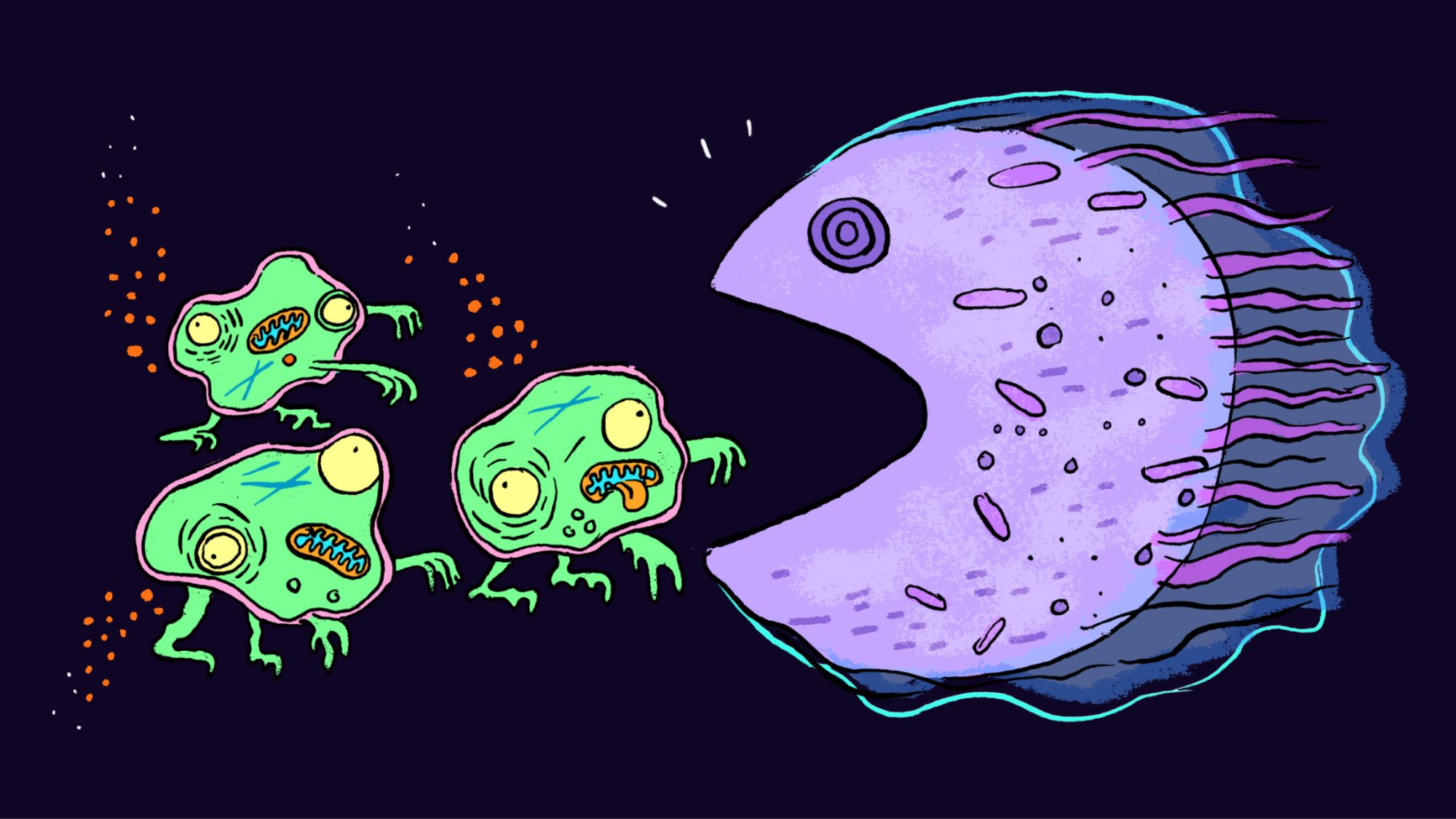
Tardigrades withstand extreme conditions with help from a class of molecules known as CAHS proteins, short for cytosolic abundant heat-soluble proteins. These proteins are notable not only for existing in an animal that can shrug off freezing and dehydration, but for the way they behave alongside trehalose, a sugar that stabilizes cell membranes and proteins. Trehalose is a familiar ingredient outside the lab as well: it is often used to limit freezer burn in frozen foods.
That partnership between a tardigrade protein and a membrane-stabilizing sugar is what drew the researchers' attention. Rather than treating the combination as a curiosity, they asked whether it could outperform the standard cryoprotectant used in blood banking.
Testing a fragment, not the whole protein
Hui Yang, Leming Sun and their colleagues wanted to know whether combining CAHS proteins with trehalose could protect red blood cells more effectively than glycerol used on its own. Their findings appeared in the journal ACS Applied Materials & Interfaces, published by the American Chemical Society (DOI: 10.1021/acsami.6c12445).
The team did not use the full-length CAHS protein. Instead, they determined that a specific section of it delivered the protective effect they were after, a simplification that could matter considerably if the approach is ever scaled up for routine use.

When that fragment was paired with trehalose at low temperature and the sample was then frozen in liquid nitrogen, the two ingredients changed the way ice formed and later melted. That altered ice behavior shielded the cells from damage. After thawing, the CAHS-trehalose combination could be washed away by centrifugation, a standard laboratory technique, rather than through the more punishing glycerol-removal process.

The recovery numbers
The performance comparison was encouraging. Up to 89% of the mouse red blood cells preserved with the new CAHS-trehalose method recovered fully, compared with roughly 82% of cells frozen using glycerol.
Sun, a corresponding author of the study, described the effort as an early-stage translation of biology into a practical method. "This study was our first attempt to translate a lesson from an extraordinarily resilient organism into a practical cell-preservation strategy," Sun said. "If further developed, it could make the process simpler after thawing, reduce concerns associated with residual glycerol and help preserve the quality of stored cells."
Reading the results with care
Several caveats matter here. The experiment used red blood cells from mice, not human cells, and it represents a first attempt rather than a finished protocol. The improvement over glycerol, while real in this setting, is a difference of several percentage points rather than a dramatic leap. Any eventual use in transfusion medicine would require substantial further development and validation before it could reach a blood bank fridge.
What the study does demonstrate is a proof of concept: a protein borrowed from one of the planet's hardiest animals, combined with a widely used sugar, can influence how ice behaves around cells and improve their survival through a freeze-thaw cycle. It also points toward a cryopreservation workflow in which the protective agent is easier to remove, which could reduce the toll that thawing and cleanup currently take on stored cells.
Key points from the research
- Tardigrades endure freezing, extreme dehydration and the vacuum of space, and have even tolerated being fitted with tiny tattoos.
- Conventional red blood cell storage relies on glycerol, which must be removed before transfusion and can damage cells during removal.
- Researchers combined trehalose, a membrane-stabilizing sugar, with a section of the tardigrade CAHS protein rather than the full-length protein.
- Frozen in liquid nitrogen, the mixture changed ice formation and melting in a way that protected cells.
- Up to 89% of mouse red blood cells preserved this way recovered fully, versus about 82% with glycerol.

Why it matters beyond the lab bench
Rare blood types present a logistical challenge for any health system. They are scarce by definition, they cannot be conjured on demand, and they must be kept usable for long periods so that they are available when a specific patient needs them. A preservation method that keeps more cells intact through the freeze-thaw cycle, and that is easier to clear away afterward, would give blood banks more room to maneuver.
The research also illustrates a broader idea taking hold across biotechnology: organisms that tolerate extremes are a source of chemical and material solutions to problems in medicine. The tardigrade's survival tricks evolved for environments that would kill most life, and adapting even a small piece of that toolkit, a protein fragment plus a sugar, could eventually change how cells are stored, shipped and recovered.
Trehalose itself is a good example of how unglamorous ingredients can do serious work. The same sugar that keeps frozen food from developing freezer burn is being tested as a stabilizer for living cells, and the CAHS fragment appears to make it more effective in that role. The mechanism is not magic so much as chemistry: by intervening in how ice nucleates and melts, the mixture lowers the physical punishment inflicted on fragile membranes.
For now, the work remains a first step, and the gap between a mouse cell experiment and a hospital transfusion is wide. But it does suggest that the distance between an animal that can survive the vacuum of space and a blood bank freezer may be narrower than it first appears.
This article is based on reporting by Phys.org. Read the original article.
Originally published on phys.org