Introduction
Perovskite solar cells have emerged as one of the most promising photovoltaic technologies of the past decade, offering exceptional light absorption and charge-carrier mobility at a fraction of the cost of traditional silicon-based cells. However, their path to commercial viability has been hindered by challenges related to efficiency, stability, and manufacturing scalability. A new study published in the journal Science (Volume 393, Issue 6813, August 2026) sheds light on a previously overlooked factor: the redox pathways at the wet–interfacial layers that form during solution processing. By redirecting these pathways, researchers report a meaningful leap in the performance of inverted perovskite solar cells, a configuration that has attracted significant attention for its compatibility with flexible substrates and tandem devices.
The Rise of Inverted Perovskite Solar Cells
Conventional perovskite solar cells typically adopt a "normal" n–i–p architecture, where the perovskite layer is sandwiched between electron-transport and hole-transport materials in a specific order. In contrast, "inverted" p–i–n structures invert this arrangement, positioning the hole-transport layer at the bottom and the electron-transport layer on top. This inverted geometry offers several advantages, including reduced hysteresis, improved operational stability, and more straightforward integration into tandem solar cells that combine perovskite with silicon or other low-bandgap materials. As a result, the configuration has become a focal point for both academic research and industrial development.
Yet, despite these benefits, inverted perovskite cells have historically lagged slightly behind their conventional counterparts in terms of power conversion efficiency, particularly at the lab scale. The gap is often attributed to subtle differences in the quality of the perovskite film and the interfaces that form during deposition. This new research zeros in on one of the most critical—and least understood—aspects of that process: what happens at the wet interface before the perovskite solidifies.

The Challenge of Wet Interfaces
Most high-quality perovskite films are produced via solution-processing methods, such as spin-coating or slot-die coating. In these methods, a precursor solution containing lead halides and organic cations is spread onto a substrate, and the solvent is then removed, often with the assistance of an antisolvent or a mild thermal anneal. The transition from a wet film to a solid crystalline layer is anything but simple. During this window, the constituents are in constant motion, and chemical reactions can proceed that are largely inaccessible to traditional characterization techniques.
The research published in Science focuses specifically on the redox—reduction/oxidation—reactions that occur at the liquid–solid interface, where the precursor solution meets the underlying charge-transport layer. In many cases, these reactions can lead to undesired side products, lattice disorder, or localized defects that act as recombination centers, sapping efficiency. The team behind the study sought to understand the mechanisms at play and, crucially, to find ways to redirect them toward more benign or even beneficial pathways.
Redox Pathways at Work
In a typical inverted perovskite device, the substrate is coated with a hole-selective layer, often based on inorganic materials like nickel oxide or organic compounds such as PTAA. When the perovskite precursor solution is deposited on top of this layer, interactions at the boundary can cause unintended redox activity. For instance, certain metal ions in the solution can undergo reduction or oxidation, altering the chemical environment and influencing how the perovskite crystals nucleate and grow. These interfacial reactions can also generate radicals or other reactive species that degrade the hole-transport material over time.
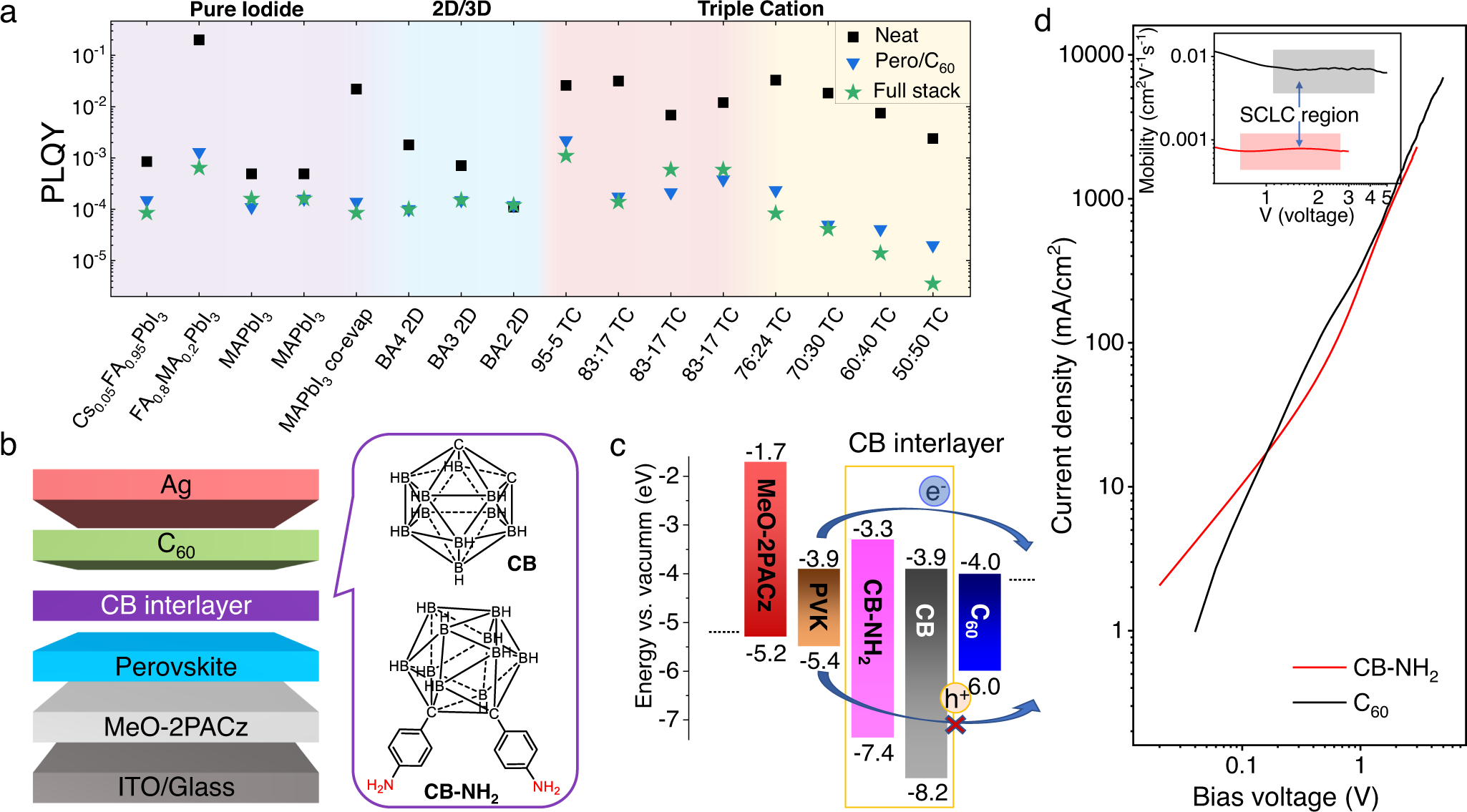
The authors of the new study identified specific redox couples that are particularly active during the wet phase of film formation. By carefully tuning the composition of the precursor solution and the surface properties of the hole-transport layer, they were able to suppress harmful redox pathways while promoting beneficial ones. This redirection not only improved the crystallographic quality of the perovskite film but also enhanced the electronic coupling across the interface, leading to more efficient charge extraction and reduced non-radiative recombination.

Implications for Efficiency
While the paper stops short of disclosing exact efficiency numbers in its abstract, the implications are clear: the ability to control wet–interfacial redox chemistry can directly translate into higher power conversion efficiencies. By minimizing energy losses at the interface, the devices are able to higher open-circuit voltages and fill factors, two parameters that are notoriously sensitive to defects and band misalignments. In practical terms, this means that inverted perovskite solar cells can now more closely match—or even exceed—the performance of their conventional counterparts.
The findings could also simplify the manufacturing process. Instead of relying on complex surface passivation treatments or the introduction of additives after film formation, the needed improvements can be achieved by adjusting the chemistry of the solution itself. This is an attractive prospect for industrial-scale production, where every additional step adds cost and potential variability.
Stability Gains and Longevity
Efficiency is only half of the equation; the long-term stability is the other. Perovskite solar cells are known to degrade under illumination, heat, and humidity, and interfacial redox reactions have been implicated in this degradation. By eliminating reactive intermediates at the wet interface, the researchers likely also extended the operational lifetime of the devices. The study reports that the improved interfacial control leads to a more robust film, less prone to delamination and chemical decomposition over time. This is a crucial step toward meeting the stringent durability requirements for commercial solar modules.
Moreover, the insights could be broadly applicable across other optoelectronic devices that rely on solution-processed thin films, including light-emitting diodes, photodetectors, and memristors. The concept of steering wet-chemical redox pathways toward beneficial outcomes is not limited to perovskites.

Future Directions
The work opens up several avenues for further research. One obvious next step is to explore the role of the redox chemistry in other perovskite formulations, including lead-free and all-inorganic variants. Another is to combine the wet-interface control with other advanced strategies, such as passivation layers or 2D/3D heterostructures, to push efficiencies even higher. The community may also develop in-situ monitoring techniques to observe these transient interfacial reactions in real time, enabling even finer control.
As the field moves toward commercialization, studies like this one provide a valuable reminder that the "little details" of processing chemistry can have outsized impacts on device performance. The journey of a perovskite solar cell from solution to solid is fraught with both peril and opportunity; understanding and taming that journey is key to unlocking the technology's full potential.
Conclusion
The new research published in Science offers a compelling demonstration of how fundamental chemistry at interfaces can dictate the performance of advanced energy devices. By redirecting wet–interfacial redox pathways, the team has found a powerful lever for improving both the efficiency and stability of inverted perovskite solar cells, bringing this next-generation photovoltaic technology closer to market readiness. As the industry continues to scale up perovskite manufacturing, attention to such molecular-level nuances will be essential to deliver on the promise of cheap, high-performance solar power.
This article is based on reporting by Science (AAAS). Read the original article.
Originally published on science.org