A New Frontier in Atomic-Scale Engineering
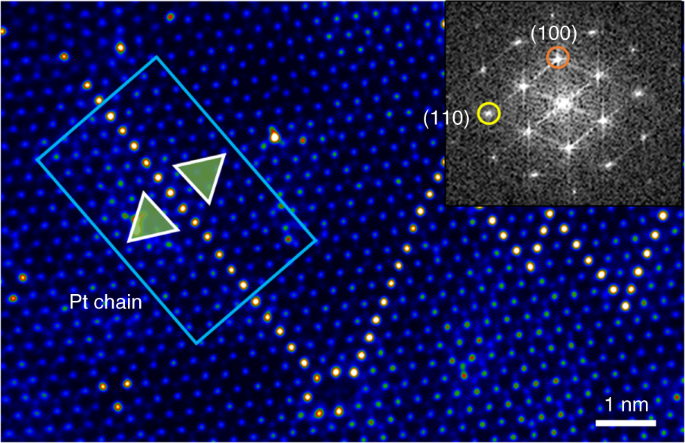
In a remarkable demonstration of materials science, researchers have successfully synthesized ultralong chains composed of single metal atoms, each encased in a protective sheath, using extreme high-pressure conditions. The work, published in the journal Science, represents a significant step forward in the ability to engineer matter at the atomic scale. While atomic chains have been theorized and even produced in tiny quantities before, the achievement of ultralong, stable, and sheathed structures opens up a host of practical possibilities that were previously out of reach.
The concept of single-atom chains has long fascinated scientists because of their unique quantum mechanical properties. When atoms are arranged in a one-dimensional line, electrons are confined to a single dimension, leading to behaviors that differ dramatically from bulk materials. These can include exotic electrical conductivity, magnetic anisotropy, and enhanced catalytic activity. However, creating such chains in a controlled and scalable manner has been a major challenge. The new work overcomes this by employing high-pressure synthesis, a technique that is already known to stabilize otherwise metastable structures.
The Promise of Atomic-Scale Wires
At the heart of this research is the creation of what could be described as the ultimate nanowire: a chain of individual metal atoms, each one a single point of contact. In theory, such wires would represent the absolute limit of miniaturization for electronic components. They could serve as interconnects in molecular-scale circuits, as the active elements in quantum computing devices, or as highly efficient catalysts for chemical reactions. The sheathing aspect is particularly important, as it arguably provides the stability required for these chains to exist outside the extreme conditions of their formation.
Without a protective sheath, bare atomic chains are highly reactive and tend to break apart or cluster into islands. The sheath, which likely consists of a different material or a ligand shell, acts as a barrier that isolates the metal atoms from the environment. This not only stabilizes the chains but also prevents them from interacting with each other, preserving their one-dimensional nature. The high-pressure synthesis likely enables the formation of these sheaths in a way that is not possible under ambient conditions, allowing the chains to grow to extraordinary lengths.
The Role of High Pressure
High-pressure techniques have become an essential tool in the search for new materials. By subjecting reactants to extreme pressures, often in a diamond anvil cell, scientists can force atoms into arrangements that are thermodynamically inaccessible at normal pressures. In the context of this study, high pressure may reduce the interatomic distances, facilitating the formation of metal-metal bonds and encouraging the linear arrangement of atoms. It could also compress the sheath material around the chain, creating a more uniform and robust coating.
This is not the first time high pressure has been used to synthesize unusual materials, but the creation of ultralong, isolated atomic chains is particularly notable. The fact that these chains can be synthesized in usable quantities, despite the demanding conditions, suggests that high pressure routes could be developed for scaling up. The challenge, of course, is that high-pressure synthesis is inherently difficult to scale, but the knowledge gained from such experiments often leads to alternative strategies for producing similar structures at ambient conditions.

Sheathing: A Protective Strategy
The concept of sheathing a single-atom chain is analogous to coating a wire with an insulator in conventional electronics. Just as modern electrical wires need insulation to prevent short circuits, atomic wires need a sheath to prevent electronic leakage and environmental degradation. In this case, the sheath is itself at a molecular scale, likely composed of a thin layer of another material that binds to the metal atoms without disrupting their linear arrangement.
This sheathing could also influence the electronic properties of the chain. By choosing the right sheath material, it might be possible to fine-tune the conductivity, spin polarization, or optical response of the chain. This would make the chains highly versatile components for future nanoscale devices. Additionally, the sheath provides a natural anchoring point for connecting the chains to larger structures, such as electrodes or substrates, which is essential for any practical application.
Potential Applications
The implications of this work are broad. In the field of molecular electronics, the ability to fabricate stable single-metal-atom wires could lead to the development of transistors, diodes, and other circuit elements at the atomic scale. These would be far smaller than current silicon-based components, potentially enabling further miniaturization of computers and other electronic devices.
In quantum computing, one-dimensional chains of magnetic atoms are of particular interest as potential qubits or as components of qubit interconnects. The sheathing would protect the quantum states from decoherence induced by the environment, a major hurdle in quantum technology. Moreover, the high-pressure synthesis might allow for the incorporation of a variety of metal atoms, meaning the properties of the chains could be customized for specific quantum operations.
Catalysis is another area that could see substantial benefits. Single-atom catalysts are already known to exhibit extremely high efficiency and selectivity because every atom serves as an active site. Ultralong chains of these atoms could provide a high surface area of active sites in a controlled geometry, potentially leading to industrial catalysts that are both more effective and more durable than current formulations.
Challenges and Future Directions
Despite the excitement surrounding this achievement, significant hurdles remain before these atomic chains can be integrated into any real-world technology. The synthesis itself requires extreme pressures, which are not currently feasible for large-scale production. Researchers will need to explore ways to create similar structures under milder conditions, perhaps using chemical templating or vapor deposition techniques informed by the high-pressure results.
Characterizing and manipulating these chains after synthesis is also challenging. Because they are so small, they require advanced tools such as scanning tunneling microscopy or transmission electron microscopy to even observe them. Integrating them into larger circuits will demand new nanofabrication methods that can precisely position these atomic-scale wires.
Conclusion
The synthesis of ultralong sheathed single-metal-atom chains under high pressure is a landmark achievement in nanoscience. It demonstrates that with the right conditions, materials can be engineered with atomic precision, unlocking new territories in conductivity, quantum behavior, and chemical reactivity. While practical applications may still be years away, this research provides a solid foundation for future breakthroughs. As scientists continue to refine these techniques and explore the possibilities of atomic-scale structures, we can expect to see more remarkable advances that push the boundaries of what is possible in materials engineering.
This article is based on reporting by Science (AAAS). Read the original article.

Originally published on science.org