A Hard-to-Study Era Comes Into Sharper Focus
A major new study is opening a rare window into Late Bronze Age life in Central Europe, using uncommon burials left untouched by cremation alongside cremated remains, ancient DNA, isotope analysis, and skeletal evidence. Published in Nature Communications, the research examines the Urnfield culture period, roughly 1300 to 800 BCE, when major social and cultural shifts reshaped the region.
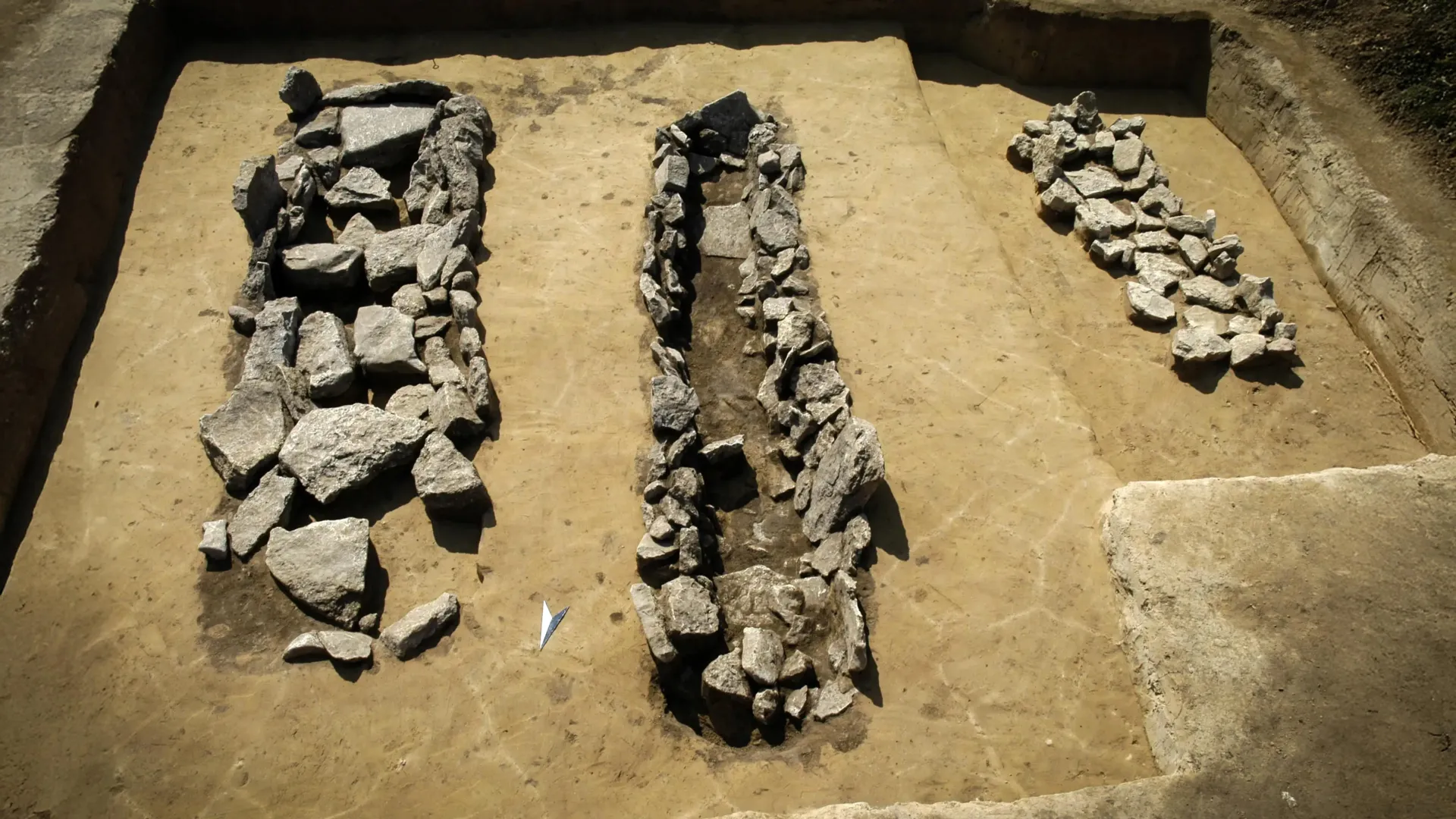
The work matters because this period has long been difficult to study in biological detail. Cremation became widespread during the Late Bronze Age, and that practice destroys much of the material researchers normally rely on for genetic and physiological reconstruction. To get around that obstacle, the team focused on rare non-cremated burials from Germany, Czechia, and Poland, while also analyzing cremated remains from Central German sites including Kuckenburg and Esperstedt.
What the Researchers Found
The study combined multiple methods to reconstruct how people lived, moved, ate, and buried their dead around 3,000 years ago. Researchers examined ancient DNA, stable oxygen and strontium isotopes, and skeletal remains, then compared the results with genetic data from nearby regions.
The central finding is that change appears to have been gradual and regionally varied rather than driven by sudden population replacement. In Central Germany, the source text says genetic shifts became clearly noticeable mainly in the later stages of the Late Bronze Age.
That supports a more nuanced picture of the era. Instead of a single disruptive event sweeping away one population and replacing it with another, the evidence points to communities adapting over time through local choices and selective connections with neighboring groups.

Resilient Communities, Local Roots
Lead author Eleftheria Orfanou describes the Late Bronze Age not as a single moment of transformation but as a sequence of decisions about food, burial, and social relationships. That framing is one of the most valuable aspects of the study because it shifts attention from dramatic migration narratives toward everyday human adaptation.
The source text says the findings reveal communities experimenting with new foods, burial rituals, and cultural connections while largely staying rooted in their local homelands. This combination of continuity and change is important. It suggests that cultural dynamism does not always require large-scale displacement. People can remain geographically anchored while still absorbing and reshaping influences from outside.
That is particularly relevant for the Urnfield world, which archaeologists have long associated with major cultural shifts. The new evidence indicates those shifts may have emerged through extended interaction and local adaptation rather than abrupt breaks.
Why the Method Matters as Much as the Result
The study is also a methodological advance. Because cremation usually limits what can be learned from human remains, Late Bronze Age population history has often been reconstructed with less biological resolution than earlier periods. By combining the rare non-cremated burials with evidence from cremated remains and multiple scientific techniques, the researchers show that this limitation can be partly overcome.
That opens the door to richer reconstructions of periods once considered poor candidates for ancient DNA and mobility studies. It also demonstrates how archaeology increasingly works by triangulation: genetics, isotopes, burial practice, and skeletal evidence each contribute pieces of the same social puzzle.
The result is not just a better chronology, but a fuller picture of how people negotiated change in everyday life. What they ate, how they buried their dead, whom they interacted with, and whether they moved or stayed put all become part of the same historical narrative.

Rethinking Change in Prehistoric Europe
The study’s broader importance lies in what it says about prehistoric social transformation. Major cultural changes are often narrated as either invasion, migration, or collapse. The evidence here favors a slower, more complex process, one shaped by communities that were both locally grounded and regionally connected.
That does not mean movement played no role. The genetic evidence shows shifts in ancestry over time. But those shifts appear uneven and incremental, not like a single population turnover. That distinction matters because it changes how archaeologists interpret cultural transitions across Europe’s past.
It also makes the Late Bronze Age feel more human. Rather than a faceless period bracketed by typologies and cremation urns, it becomes a world of people making practical and symbolic choices under changing conditions. New foods are adopted, burial practices evolve, social ties expand, but local belonging remains strong.
For a period once obscured by the very funerary customs that defined it, that is a substantial step forward. The rare graves in this study did more than preserve biological material. They preserved evidence of how societies can absorb change without losing continuity, a pattern that may prove as historically important as any dramatic rupture.
This article is based on reporting by Science Daily. Read the original article.
Originally published on sciencedaily.com


