Conservation Genetics Meets a Critically Endangered Marsupial
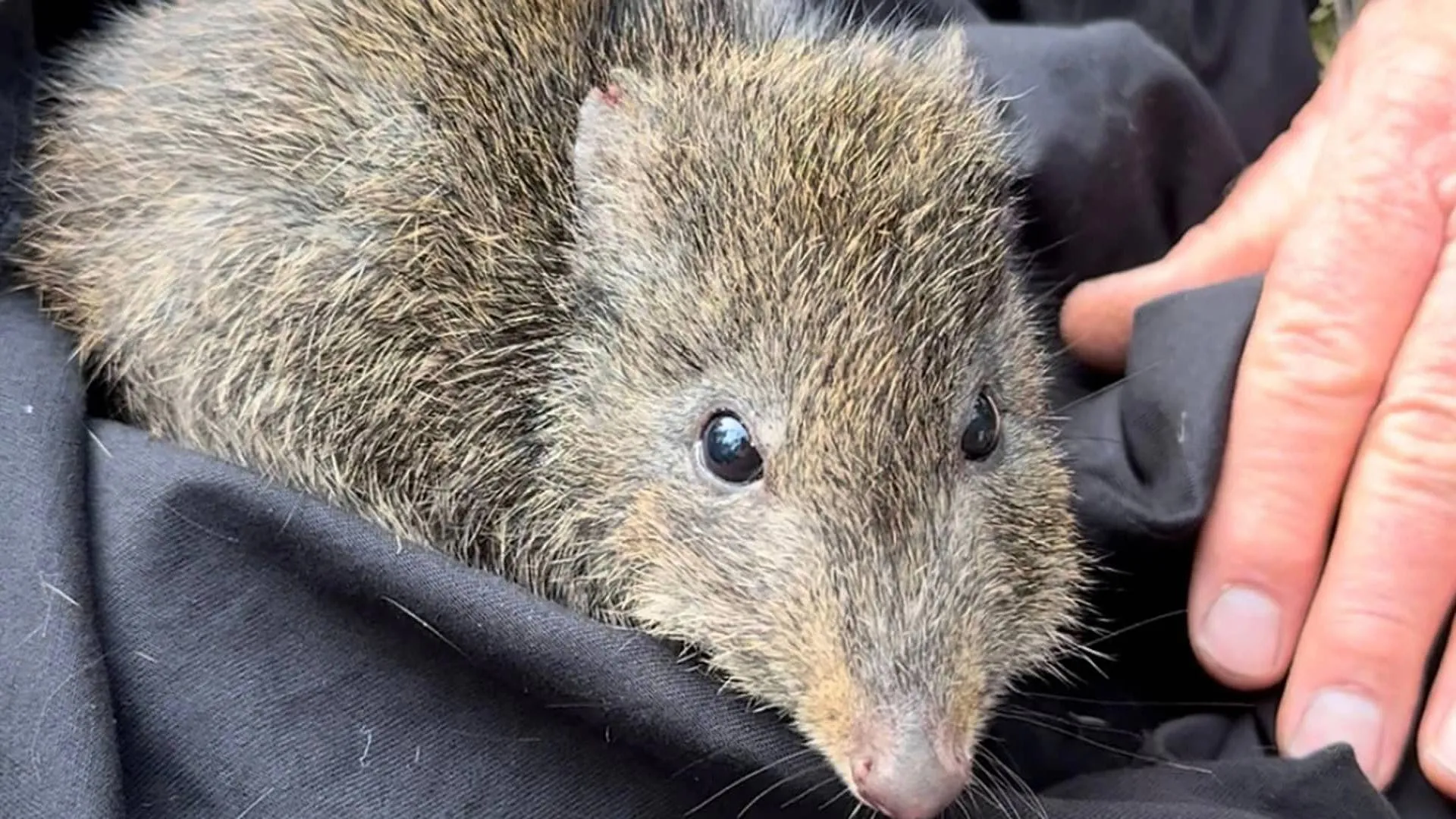
Scientists in Australia are using environmental DNA from scat to answer a deceptively basic conservation question: what does one of the world’s rarest marsupials actually eat, and where can those food sources be found? The target species is Gilbert’s potoroo, a critically endangered marsupial found only in Western Australia, with fewer than 150 individuals left in the wild.
That population size leaves little room for guesswork. Conservation teams want to build insurance populations through translocations, moving animals into additional habitats so a single bushfire or other disaster does not wipe out the species. But relocation only works if the destination can sustain the animal’s diet. For Gilbert’s potoroo, that is difficult because the species is mycophagous, meaning it eats fungi, and many of the fungi involved are poorly described.
New research from Edith Cowan University and the Department of Biodiversity, Conservation and Attractions offers a way through that problem. By analyzing tiny traces of DNA in fresh scat samples, researchers were able to identify dietary clues without disturbing the animals.
Using eDNA to Read a Hidden Diet
The method used in the study is eDNA metabarcoding, a molecular approach that can detect traces of organisms from environmental samples. In this case, the sample was faeces gathered from the field. Instead of relying only on visible undigested material in scat, which is especially challenging when studying fungal spores, the team used DNA analysis to work backward from the waste to the diet.
That matters because traditional diet studies can miss a large share of what an animal consumes, particularly when the food source is taxonomically complex and not well cataloged. Fungi pose exactly that problem. As the source text notes, many remain undescribed, making morphology-based identification difficult. eDNA offers a non-invasive and potentially far more sensitive route.
For endangered species work, the non-invasive element is especially important. Researchers can study diet without handling or stressing a very small and vulnerable wild population.

Why Diet Knowledge Matters for Translocations
The practical goal of the research is not simply to describe potoroo feeding habits. It is to help determine which habitats are suitable for establishing new populations. Gilbert’s potoroo is currently at high risk because its numbers are so low and its distribution is so restricted. Building additional populations in safer or more resilient locations is one of the clearest conservation tools available.
But a release site that looks appropriate in broad ecological terms may still fail if the underground fungal community the animals depend on is absent or sparse. That is why diet reconstruction becomes strategic. If researchers can identify which fungi the potoroos are eating, conservation planners can begin asking whether those fungi occur in candidate habitats and in what abundance.
This is the kind of conservation problem where modern genetics can shift action on the ground. Instead of moving animals and hoping a site is suitable, managers can make more informed decisions before a translocation begins.
Looking Beyond a Single Species
The team also examined whether the diets of more common fungi-eating mammals overlapped with that of Gilbert’s potoroo. According to the source text, researchers looked at scats from quokka, quenda, and bush rat, species that historically shared the same habitats.
That comparison could matter in two ways. First, it may help scientists identify whether other mammals can serve as ecological indicators for the presence of the fungi Gilbert’s potoroos need. Second, it may clarify whether potential release sites already support communities of fungal consumers whose diets suggest overlapping food resources.
The source text indicates that some overlap was found, though it does not provide a full breakdown of species-by-species dietary relationships. Even so, the approach expands the study from a narrow diet inventory into a broader ecological mapping exercise.

Why This Species Is So Hard to Save
Gilbert’s potoroo has long been one of Australia’s most precarious mammals. With fewer than 150 left in the wild, every management decision carries unusual weight. Small populations are vulnerable not only to habitat loss and predators, but also to fire, disease, and the randomness that can overwhelm a species when numbers fall too low.
The source text specifically points to disasters such as bushfires as a reason to establish backup populations. That is a reminder of how conservation priorities are shifting in an era of increasingly severe environmental shocks. Protecting the last known habitat is no longer enough if a single event can erase it.
Insurance populations are therefore not a secondary ambition. They are central to the species’ survival strategy. The difficulty is that reintroduction and translocation efforts often fail when dietary or habitat requirements are poorly understood. This research tries to remove one of the largest unknowns.
A Broader Model for Wildlife Research
The study also reflects a broader trend in ecology: using genetic tools to study animals without direct observation or capture. Scat-based eDNA work is becoming more common because it can reveal diet, presence, and ecological interactions while minimizing disturbance. For rare or elusive species, that is a major advantage.
In the case of Gilbert’s potoroo, the method is especially well suited because the animal’s feeding ecology is hard to study directly. Fungi are often hidden, seasonal, and taxonomically underdocumented. The animal itself is rare. Traditional approaches therefore stack uncertainty on top of uncertainty. DNA methods do not eliminate those challenges, but they can convert some of them into tractable laboratory questions.
That has implications beyond one marsupial. Other conservation programs dealing with specialized diets, cryptic food webs, or hard-to-observe species may be able to apply similar approaches when habitat selection becomes a bottleneck.
Science in Service of a Narrow Window
The appeal of this research lies in its specificity. It does not promise a sweeping conservation breakthrough or a universal new tool for saving biodiversity. Instead, it tackles a precise problem that has been slowing one rescue effort: identifying the food resources needed to move a species into safer ground.
That is often how meaningful conservation progress happens. A population is small, the habitat is fragile, and the species depends on ecological details that are easy to overlook until they become decisive. In this case, those details are fungal and hidden in the contents of scat. Yet they may help determine whether Gilbert’s potoroo remains confined to one perilous foothold or gains the backup populations needed to survive.
For a marsupial with fewer than 150 individuals left in the wild, that kind of practical knowledge is not academic. It is the difference between managing decline and planning recovery.
This article is based on reporting by Science Daily. Read the original article.
Originally published on sciencedaily.com