VR’s promise for behavioral science is colliding with a standards problem
Virtual reality has been discussed for years as a breakthrough tool for behavioral research, but a new paper in the Proceedings of the National Academy of Sciences argues that the technology’s scientific value will depend on something less glamorous than headsets or graphics. The authors say the field needs common protocols.
The paper, summarized by researchers involved in the Openverse collaboration, brings together 41 authors from around the world. Their core argument is straightforward: VR can create unusually precise, immersive, and repeatable experimental settings for behavioral science, but the absence of shared methods threatens to undermine that advantage. In other words, the technology may be advancing faster than the scientific conventions needed to make findings robust, comparable, and reusable.
That concern lands in a familiar place for modern research. Behavioral science has spent years grappling with reproducibility, with many results proving difficult to replicate across labs, populations, or methods. VR appears to offer a partial answer because it allows researchers to place participants in controlled, highly specified environments while still simulating situations that feel more realistic than conventional lab tasks. But the Openverse team says that promise could be diluted if every lab builds and reports VR studies differently.
Why VR looks so attractive to researchers
The appeal of VR in behavioral science is easy to see. Traditional experiments often force a tradeoff between control and realism. Highly controlled lab studies can feel artificial, while more naturalistic studies can be harder to standardize. VR, at least in principle, gives researchers a way to narrow that gap by immersing participants in environments that can be tuned in minute detail.
That means investigators can manipulate the same scenario repeatedly, keep key variables fixed, and expose different groups to tightly matched conditions. The source material describes VR as enabling researchers to immerse participants in hyperrealistic environments while controlling those environments down to the smallest details. For a field that often studies attention, perception, judgment, movement, stress, or social interaction, that is a powerful capability.
It is also becoming more accessible. The paper’s backers note that VR hardware is improving and prices are falling. Lower cost matters because it widens access beyond a small number of well-funded labs. But broader adoption brings another challenge: once more disciplines and institutions begin using similar tools in different ways, fragmentation can spread quickly.
The Openverse group warns that VR research risks turning into a methodological “Wild West,” with inconsistent protocols across fields. That phrase captures the central tension in the paper. Rapid growth can be good for experimentation, but bad for cumulative science if researchers cannot reliably compare one study with another.

The three problems the new protocols try to solve
The proposed framework focuses on three areas that the authors say are holding the field back: interoperability, procedural standardization, and reporting standards.
Interoperability
One recurring problem in VR research is lock-in. Studies can become tied to a specific hardware and software stack, making them difficult to reproduce elsewhere. If another lab uses different headsets, engines, or file formats, it may need to rebuild the experiment from scratch. That wastes effort and raises the risk that supposedly similar studies are not actually equivalent.
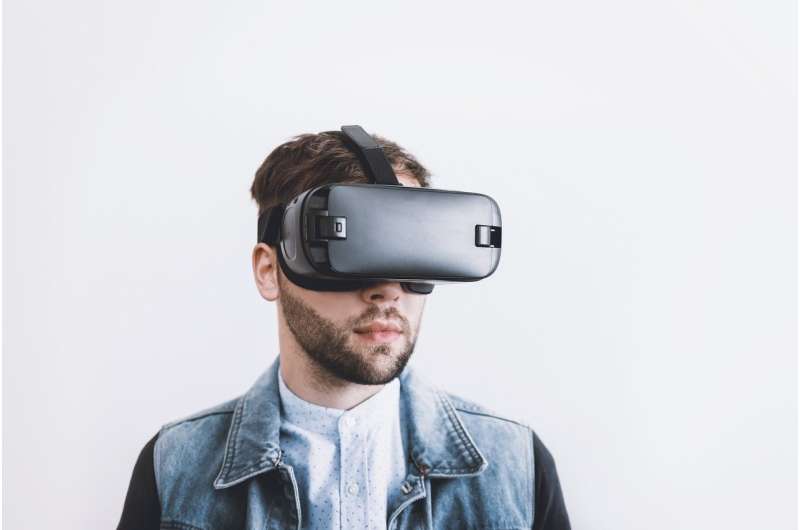
The new protocols push toward common engines, open standards, and clearer licensing. The goal is portability: simulations should move between labs and remain usable as technology changes. For a field that depends on both scientific continuity and fast-moving devices, that is a practical requirement rather than a nice-to-have.
Procedural standardization
Even when two labs use the same materials, they can still produce different results if the procedures differ. Researchers may brief participants in different ways, collect different measures, or handle the experimental environment inconsistently. In ordinary lab work, those differences matter. In VR, where immersion, interface friction, and participant comfort can shape outcomes, they may matter even more.
The checklist described in the source material tries to reduce that ambiguity by specifying a common set of practices. That includes standard measures such as VR presence and simulator sickness, both of which can affect how participants experience a study and therefore how results should be interpreted. If one study measures those factors and another does not, comparing outcomes becomes harder.
Reporting standards
The third problem is transparency. A paper may report an eye-catching result without fully documenting the headset, software version, locomotion method, calibration steps, or participant instructions behind it. In a technology-heavy field, those details are not peripheral. They are part of the method.
The Openverse team argues for clearer reporting so reviewers, editors, and future researchers can understand what was actually done. Their interactive checklist at vrprotocols.org is intended to function as a practical tool rather than a purely theoretical framework, giving researchers a current protocol reference they can apply when designing studies and writing them up.
A bid to give VR research a common language
Anand P. A. van Zelderen, identified in the source as the founder of Openverse and an assistant professor at SKEMA Business School, frames the issue bluntly. The limitation has not mainly been the technology itself, but the lack of shared standards. That distinction matters because it shifts the discussion away from whether VR is impressive and toward whether VR research can become cumulative science.
If the protocols gain traction, they could influence more than individual labs. A shared checklist gives journal editors and reviewers a way to judge whether a study has documented the basics needed for replication. It also gives newer researchers an entry point into a field where technical choices can otherwise feel opaque or improvised.
The paper does not claim that protocols alone will solve the reproducibility crisis in behavioral science. The source text is more measured than that. What it suggests is that VR could help if the field adopts open science practices and technological accessibility as core design principles rather than afterthoughts.
That is a notable shift in emphasis. For years, excitement around VR research has often centered on immersion, realism, and novelty. This paper instead argues that the next phase of maturity may depend on discipline: common standards, reusable systems, and complete reporting. If that happens, VR may become less of a showcase technology and more of a dependable scientific instrument. For behavioral science, that would likely be the more important milestone.
This article is based on reporting by Phys.org. Read the original article.

Originally published on phys.org