Grains That Predate Our Star
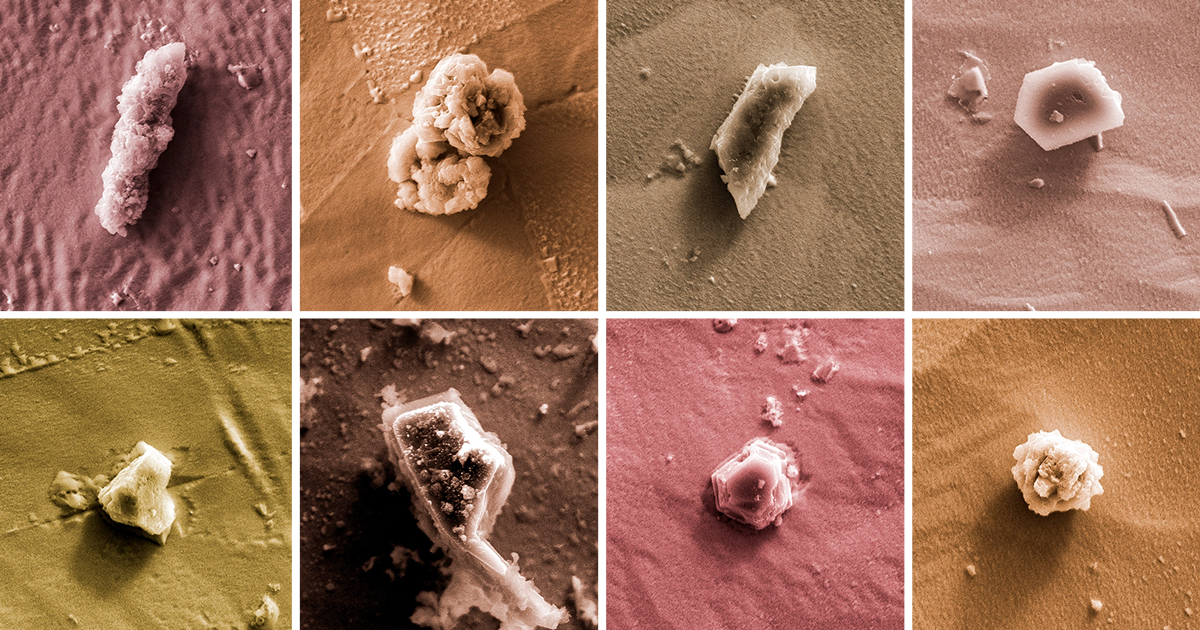
Deep within certain meteorites lie microscopic crystals that formed before the sun ignited — primordial grains forged in the atmospheres of dying stars billions of years before our solar system existed. Scientists are now extracting and analyzing these pre-solar grains with unprecedented precision, and their findings are reshaping our understanding of the conditions that gave birth to our corner of the Milky Way.
These ancient crystals, typically just a few micrometers across, survived the violent collapse of the gas cloud that formed our solar system roughly 4.6 billion years ago. Most of the material in that cloud was melted, vaporized, and reconstituted into the sun and planets, erasing its pre-solar identity. But a tiny fraction of the original stardust remained intact, preserved as inclusions within primitive meteorites called chondrites.
Isotopic Fingerprints of Dead Stars
What makes pre-solar grains scientifically invaluable is their isotopic composition. Every star produces elements through nuclear fusion, but the specific ratios of isotopes — atoms of the same element with different numbers of neutrons — vary depending on the star's mass, temperature, and evolutionary stage. By measuring isotope ratios in pre-solar grains, scientists can identify what type of star produced each grain and under what conditions.
The most common pre-solar minerals are silicon carbide and various oxides, including corundum and spinel. Silicon carbide grains have been particularly informative because they form in the carbon-rich outflows of asymptotic giant branch stars — red giants nearing the ends of their lives. Their isotopic signatures carry detailed records of the nucleosynthetic processes occurring in these stellar furnaces.
Settling the Supernova Debate
One of the central questions these grains are helping to answer concerns the trigger for our solar system's formation. The leading hypothesis holds that a nearby supernova explosion sent a shock wave through a molecular cloud, causing it to collapse and begin forming the sun and planets. This scenario is supported by the presence of short-lived radioactive isotopes, such as aluminum-26, found in the earliest solar system materials.
However, an alternative hypothesis suggests that the aluminum-26 could have come from the winds of a massive Wolf-Rayet star rather than a supernova. Pre-solar grain analysis is helping to distinguish between these scenarios by providing direct measurements of the isotopic environment in which the solar system formed.
Recent analyses of pre-solar grains have found isotopic signatures consistent with multiple stellar sources contributing to the solar nebula, including both supernovae and AGB stars. The emerging picture is one of a solar system born from a complex mixture of stellar debris, rather than material dominated by a single source.
Advanced Analytical Techniques
The analysis of pre-solar grains has been revolutionized by advances in nanoscale mass spectrometry, particularly the NanoSIMS instrument, which can measure isotope ratios in spots just a few hundred nanometers across. This capability allows researchers to analyze individual grains and even variations within single crystals, revealing internal structures that record changing conditions in their parent stars.
Atom probe tomography, which maps the three-dimensional positions of individual atoms within a sample, has also been applied to pre-solar grains. These measurements reveal the crystallographic structure and chemical zoning of grains at atomic resolution, providing constraints on the temperatures and pressures they experienced both in their birth stars and during the formation of the solar system.

What Comes Next
Future sample return missions, including material from asteroids Ryugu and Bennu already in laboratories on Earth, promise to deliver new collections of pristine pre-solar grains that have been protected from terrestrial contamination. These samples may contain grain types that are rare or absent in meteorites that have fallen to Earth, expanding the catalog of stellar sources that contributed to our solar system.
Each grain is a time capsule from a star that no longer exists, carrying information about stellar evolution, galactic chemical enrichment, and the specific conditions under which our planetary system took shape. As analytical techniques continue to improve, these tiny crystals may ultimately tell us not just where the solar system came from, but why it formed with the particular composition that made Earth — and life — possible.
This article is based on reporting by Quanta Magazine. Read the original article.
Originally published on quantamagazine.org