Water’s solid state is turning out to be far less simple than it looks
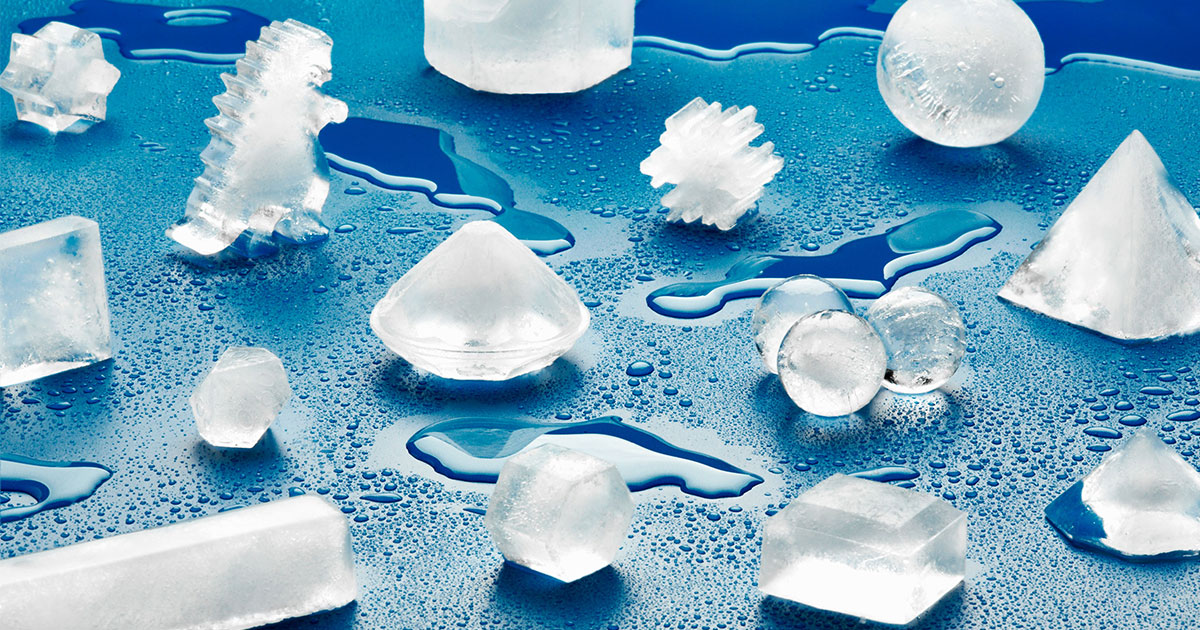
Ice may look familiar in a freezer tray or on a winter lake, but physicists are increasingly treating it as one of nature’s most surprising materials. According to a new Quanta Magazine report, scientists have identified three new kinds of ice in the past year alone, including two of the most complex ice phases ever observed. The discoveries add to a growing catalog that already includes more than 20 known phases of crystalline ice.
The story is not just that there are many kinds of ice. It is that water appears capable of assembling itself into an extraordinary range of solid structures under different conditions. Researchers now say computer simulations have predicted tens of thousands of possible ice forms. That does not mean all of them will be found in the lab or in nature. But it does suggest that scientists have been working with a much richer phase space than older assumptions allowed.
Why ice keeps surprising physicists
The reason lies in the geometry of water itself. Quanta describes each water molecule as an oxygen atom bonded to two hydrogen atoms, with two pairs of free electrons extending the molecule’s effective shape into something with four arms spread apart by electromagnetic forces. That structure gives water unusual flexibility in how it can organize into repeating crystalline arrangements.
In ordinary ice, those molecules form a roomy hexagonal structure. That open arrangement makes common ice less dense than liquid water, which is why ice floats and why lakes freeze from the top down. But under pressure, water can compress into very different patterns. Change the temperature, change the pressure, or change how quickly those conditions are applied, and the molecules can settle into new crystalline states.
Marius Millot of Lawrence Livermore National Laboratory told Quanta that even subtle changes in how water is compressed can reveal completely unexpected behavior. That comment helps explain why the field has accelerated. As researchers improve experimental techniques and abandon earlier assumptions, they are uncovering structures that were previously hidden by the difficulty of making or detecting them.

Three new forms in a year
The report says three new kinds of ice have been discovered in the past year. Two of them rank among the most complex phases yet seen. Chris Pickard of the University of Cambridge described the current period as remarkable, saying researchers are finding many more of these structures.
That pace matters because each new phase tests and refines theoretical predictions. Water has long been notorious for behaving oddly compared with simpler materials. As the list of verified ice forms grows, physicists gain a better way to check whether their simulations capture the true possibilities of molecular organization under extreme conditions.
The expanding inventory also shifts the tone of the field. Instead of treating unusual ice phases as rare curiosities, scientists are increasingly approaching them as part of a broader landscape that is still only partly charted. If simulations pointing to huge numbers of possible forms are even directionally right, current discoveries may represent an early stage rather than a conclusion.
Beyond Earth, exotic ice may be common
One reason these findings matter is that uncommon ice on Earth may not be uncommon elsewhere. Quanta notes that exotic ice could exist in environments ranging from cold, amorphous comet tails to the hot, crushing interiors of icy planets. In other words, the laboratory study of water’s extreme phases is also a way of thinking about planetary interiors and off-world conditions.
That expands the significance of what might otherwise sound like a niche materials-science story. Water is one of the most familiar substances in everyday life, but its behavior under alien conditions could help researchers understand places that are physically inaccessible. The more complete the map of possible ice phases becomes, the better equipped scientists may be to interpret what happens inside distant worlds where pressure and temperature combine in unusual ways.
The Quanta report’s phrase “space oddity” captures that crossover well. Ice is not just a household material or even just a geophysical one. It is increasingly a planetary material whose strange forms may be part of the architecture of the solar system.

A field opened by better methods
The story also underscores how much discovery depends on method. The report attributes recent progress to improved experimental techniques and a willingness to move past outdated assumptions. Water has always had the same molecular structure. What changed is scientists’ ability to push it into new regimes and identify what formed there.
That is often how mature scientific fields advance. A material everyone thinks they know becomes unfamiliar again once tools improve. In this case, researchers are finding that water under pressure does not merely behave differently in degree. It can organize differently in kind.
The discoveries therefore represent more than additions to a catalog. They mark a shift in how open-ended the physics of ice now appears to be. The image of ice as a single or mostly settled substance is giving way to one of a sprawling family of crystalline possibilities.
The bigger meaning of a simple substance
There is something scientifically useful and philosophically striking about the idea that one of the best-known molecules on Earth is still yielding basic surprises. Water remains central to chemistry, climate, biology, and planetary science. Yet its solid forms are still being uncovered at a pace that experts themselves find remarkable.
That is why the latest discoveries matter beyond their immediate technical details. They show that even in familiar materials, structure can hide in plain sight until the right conditions and instruments reveal it. With three new kinds of ice reported in the past year, and simulations suggesting far more may exist, physicists are not just refining the science of ice. They are reopening it.
This article is based on reporting by Quanta Magazine. Read the original article.

Originally published on quantamagazine.org