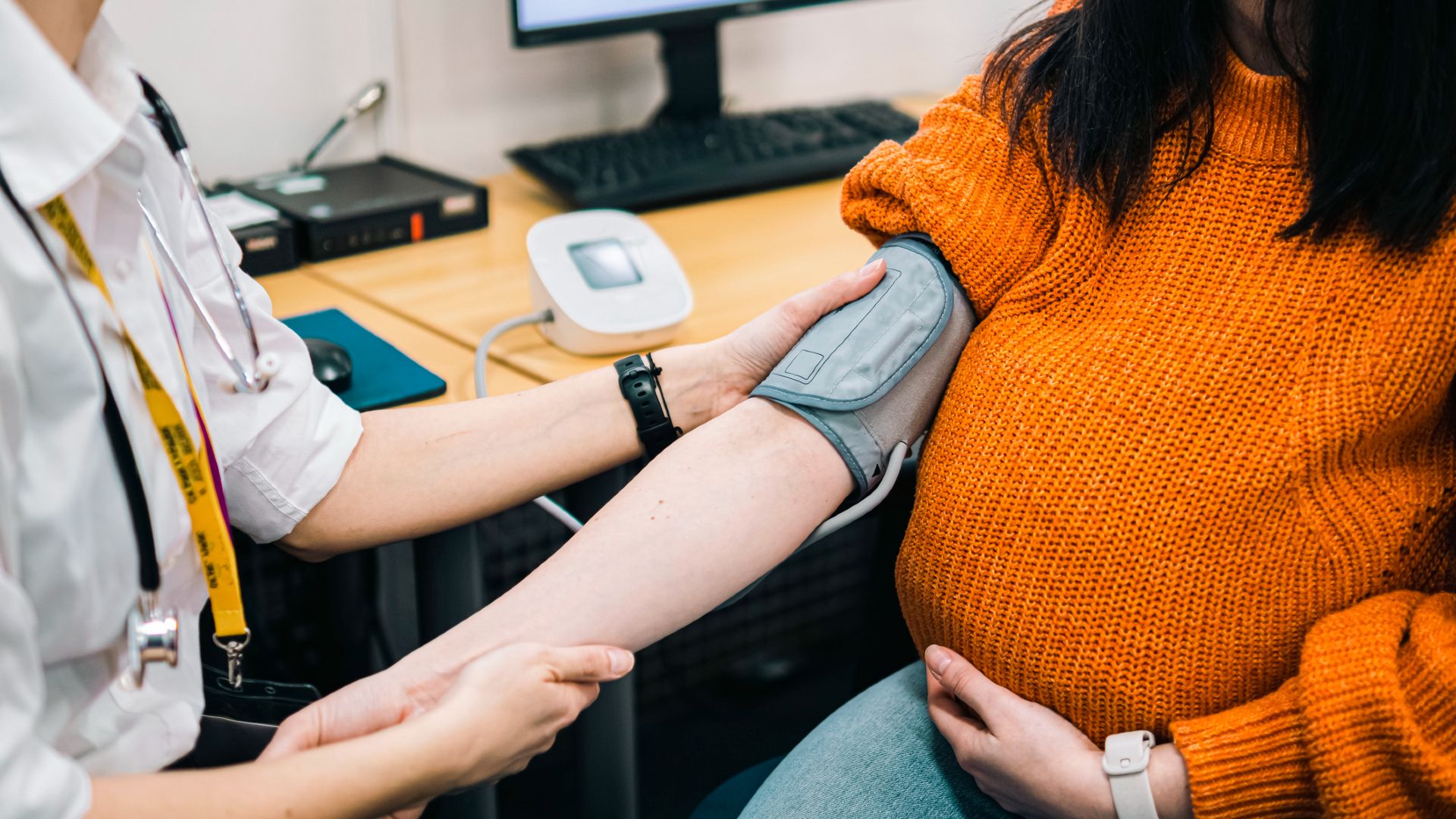
A pregnancy emergency with few treatment options
Preeclampsia remains one of the most dangerous complications in pregnancy, affecting up to 8% of pregnancies and putting both mothers and babies at risk. The condition is defined by high blood pressure and can escalate into damage to the liver, kidneys, heart, and other organs. In severe cases, it can progress to eclampsia, bringing seizures, coma, or death.
For decades, the central clinical reality has been stark: once preeclampsia is diagnosed, the only definitive way to end the condition is delivery. That creates a painful tradeoff. Physicians try to manage the disorder long enough to give the fetus more time to develop, but waiting can endanger the pregnant patient, while delivering early can expose the baby to the major risks of prematurity.
A new pilot study published April 27 in Nature Medicine offers an early look at a possible alternative. Researchers tested a blood-filtering therapy designed to lower levels of a placental protein associated with the disease. The initial result is not a cure, and it is not yet proof of efficacy, but it is a notable advance: the technique appeared safe for both the pregnant patients and their fetuses.
Why this matters
That safety signal alone is meaningful because the field has had very few ways to intervene once the disease is underway. Low-dose aspirin can lower risk in some patients who are already known to be vulnerable, but it does not solve the central problem of treatment after diagnosis. A therapy that directly targets the biology of preeclampsia would represent a major shift from supportive care toward disease modification.
The study’s early data also hinted that the treatment may reduce levels of the placental protein linked to preeclampsia. That matters because the condition is widely understood to be driven in part by abnormal placental signaling that destabilizes the mother’s blood vessels and organs. If researchers can consistently reduce one of the key factors in that cascade, the therapy could eventually buy time in pregnancies that would otherwise end early.
In practical terms, more time matters enormously. Full term is generally considered 37 weeks, but many pregnancies complicated by preeclampsia end before that point, sometimes far earlier. Babies delivered before 32 weeks can face breathing problems, developmental disabilities, and other serious complications tied to prematurity.

How the approach works
The concept behind the treatment is closer to a targeted filtration strategy than a conventional drug. Rather than adding another compound to the body, the therapy is intended to remove harmful material from the bloodstream. That is why researchers and clinicians have described it as a form of blood filtering.
The appeal of that design is obvious in pregnancy, where any intervention has to be judged not just on what it does for the mother but also on what it may do to the fetus. A treatment that can selectively lower a damaging factor without broadly altering fetal development would be valuable if it proves effective in larger studies.
The investigators are still at the beginning of that process. Pilot studies are meant to establish feasibility and look for early safety and biological signals, not to settle the question of standard-of-care adoption. Even so, the researchers involved described the results as a sign that a targeted therapy for preeclampsia may finally be within reach.
The limits of the current evidence
The most important caution is that the study is early. A promising pilot does not guarantee a successful treatment program. Future trials will need to answer the harder questions: how much the therapy lowers disease-linked proteins, whether it meaningfully delays delivery, which patients benefit most, and whether any advantages hold across different severities of disease.
Those studies will also need to clarify whether the treatment changes the outcomes that matter most to families and clinicians:
- How long pregnancy can be safely prolonged after diagnosis
- Whether maternal organ complications are reduced
- Whether rates of extremely preterm birth decline
- Whether newborn health measurably improves
Until those answers arrive, the blood-filtering approach should be viewed as a credible research advance rather than a ready-to-use medical solution.

A field that urgently needs progress
Preeclampsia has long resisted treatment innovation because it sits at the intersection of vascular disease, placental biology, and the unique constraints of pregnancy care. Therapies that might help one side of the equation can create unacceptable risks on the other. That is one reason obstetrics has often relied on monitoring and timing of delivery rather than targeted intervention.
This new study does not overturn that reality yet. What it does is show a plausible path beyond it. If larger trials confirm the early findings, clinicians may eventually gain a way to stabilize some patients, reduce disease-driving proteins, and keep pregnancies going longer when every extra day can matter.
For now, the result is best understood as a carefully limited but important step. In a field where treatment options after diagnosis have been almost nonexistent, even a safe proof of concept carries weight. It suggests that preeclampsia may no longer be a condition managed only by watching and waiting for the least dangerous moment to deliver, but one that can, at last, be directly treated.
This article is based on reporting by Live Science. Read the original article.
Originally published on livescience.com