Hurricane Polo made landfall on Mexico's Baja California peninsula on Tuesday as a Category 3 storm, cutting electricity to coastal towns, sending floodwater through streets and overwhelming sea defenses along the Pacific shoreline.
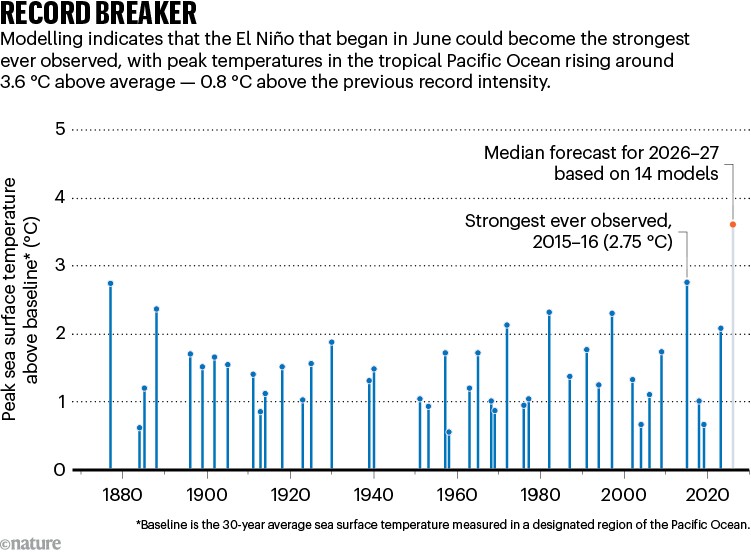
The hurricane arrived during a Pacific season that forecasters describe as far more punishing than usual, its intensity fed by a super El Niño — an extreme form of a recurring climate pattern that has driven unprecedented warming across the equatorial Pacific. The result has been a year of contradictions for the region, with historic droughts and destructive flooding unfolding in the same season.
Landfall Just South of Las Barrancas
According to the U.S. National Hurricane Center, the center of Polo came ashore just south of Las Barrancas, a small fishing village in Baja California Sur on Mexico's western flank. At the moment of landfall, the storm packed sustained winds of up to 175 kilometers (110 miles) per hour, a level of intensity consistent with its Category 3 rating.
The hurricane center cautioned that the most serious hazards would extend well beyond the immediate coastline, warning of life-threatening winds and flash flooding as the system pushed inland over the peninsula. Communities in the storm's path were told to expect dangerous conditions to persist well after the eye of the hurricane had passed.

Seawater Breaches Defenses at Puerto San Carlos
As Polo closed in, wind-driven waves pounded Puerto San Carlos, a fishing port of nearly 6,000 residents in Baja California Sur. Journalists from Agence France-Presse reported from the scene that the sea had already punched through several sections of a sand barrier, allowing water to pour directly into the town's streets.

Residents watched palm trees thrash violently in the strengthening gusts while the community lost its power supply entirely. Mexican authorities ordered people to take shelter as conditions deteriorated through the day.
One of those preparing to ride out the storm was Juan Manuel Sarabia, a 53-year-old guide who leads whale-watching and fishing trips from the port. He had boarded up the facade of his home and reinforced it with wooden beams before Polo arrived. "It's coming with full force," he told AFP.
Conditions Reported Along the Coast
- Power supply cut across Puerto San Carlos as the storm approached.
- Seawater pouring into streets after a sand barrier was breached in several places.
- Palm trees bending under violent wind gusts.
- Residents instructed by Mexican authorities to move into shelters.
- Homes boarded up and reinforced with wooden beams ahead of landfall.
A Season Turbocharged by El Niño
Polo is the latest major system in a Pacific hurricane season that has unfolded against a backdrop of extraordinary ocean warmth. El Niño, a cyclical weather phenomenon, has been present in an unusually strong form this year, producing what meteorologists describe as unprecedented heating of the equatorial Pacific.
That warmth has helped fuel storms while simultaneously contributing to severe drought and flooding in different parts of the region. The dual pressures — too much water in some places, far too little in others — have shaped how communities along the peninsula prepared for Polo's arrival.
The hurricane's landfall adds another chapter to a season that has repeatedly tested coastal infrastructure, emergency planning and the resilience of small fishing and tourism communities whose economies depend on the sea that now threatens them.

Warnings Extend Into Ten U.S. States
The storm's influence is not expected to stop at the Mexican border. Meteorologists issued Polo-related warnings for heavy rain and flooding across parts of ten U.S. states, including Arizona, New Mexico, Texas and Colorado.

Several of those states are currently in drought, a factor that can complicate the picture considerably. Parched ground absorbs water slowly and can shed rainfall quickly, raising the risk of sudden runoff and flash flooding even in areas that have gone months without meaningful precipitation. Moisture drawn northward from a decaying tropical system is a well-known trigger for exactly this kind of dangerous mismatch.
Shelters Open as Officials Warn of Severe Damage
Authorities in Baja California Sur opened 169 shelters across the state to house residents fleeing low-lying and exposed areas. The scale of the shelter operation reflects both the size of the threatened population and the expectation that conditions would remain unsafe for an extended period.
Fabian Vazquez, who heads Mexico's meteorological service, said storm surges and heavy rainfall could cause "very severe" damage. The warning highlighted the compound nature of the threat: a hurricane of Polo's strength brings not only destructive winds but also the risk of flooding from both the sea and the sky, each capable of inflicting harm independently.
In Puerto San Carlos, a member of the Mexican Navy stood watch near a flooded area as the hurricane battered the region, a visible presence amid the rising water and failing power. The image captures the broader reality facing the peninsula: a storm that arrived with the force its forecasters had warned about, testing defenses that in some places simply gave way.
With Polo now moving inland, attention shifts to the aftermath — to the water still rising in coastal streets, the households without electricity, and the long process of assessing how much the peninsula lost in a season that has already delivered far more than its share of extremes.
This article is based on reporting by Phys.org. Read the original article.

Originally published on phys.org