Halley’s Comet Leaves a Brief May Sky Show
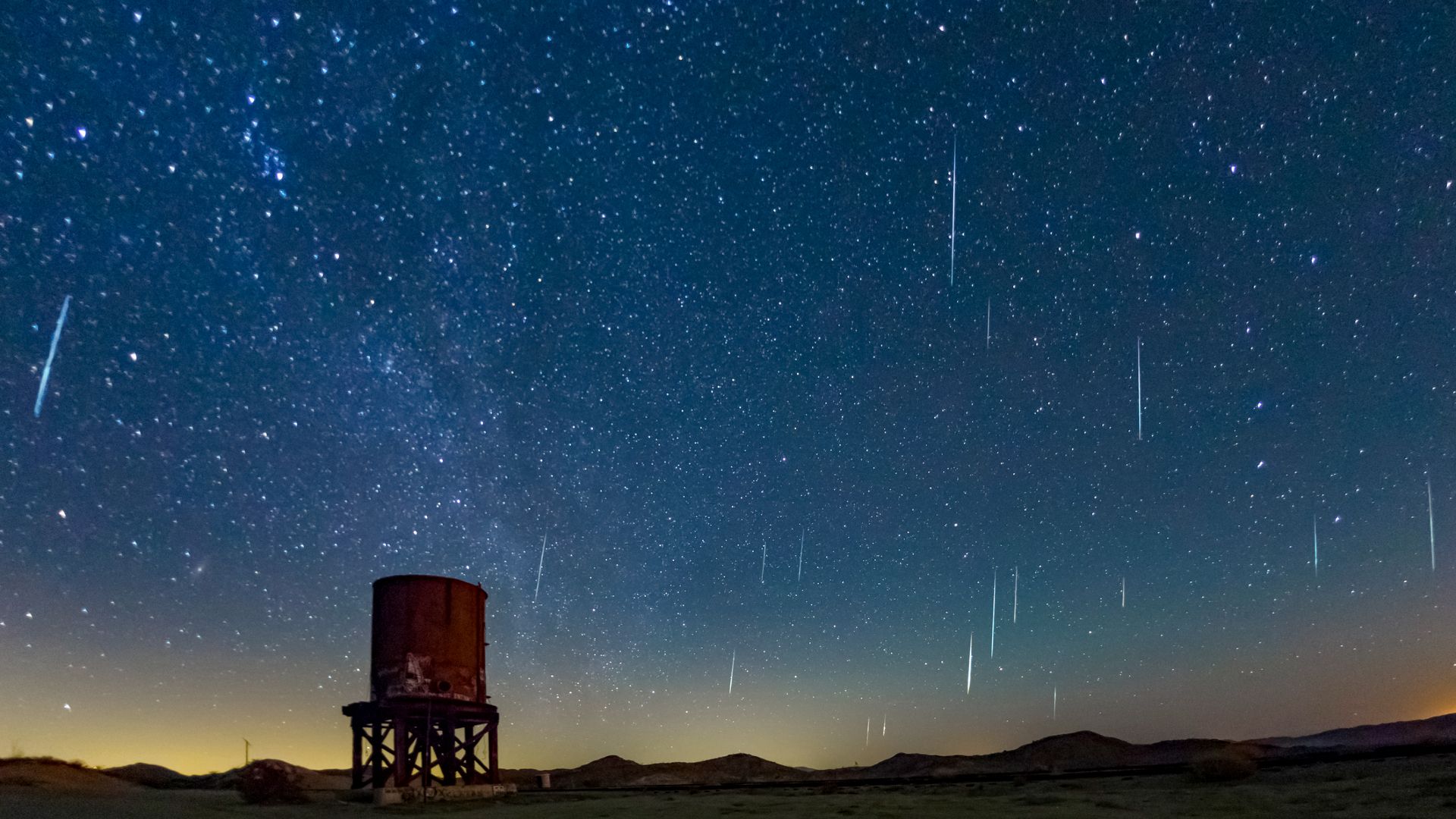
Skywatchers are approaching the peak of the Eta Aquariid meteor shower, one of two annual meteor displays linked to Halley’s Comet. According to the source material, the shower is expected to peak overnight from May 5 to May 6, 2026, when Earth moves through debris left behind by the comet. The result is a burst of fast-moving meteors that can produce the familiar effect often described as shooting stars.
The annual shower is active from April 19 through May 28, with the peak delivering the strongest activity over a relatively narrow window. The source text describes the Eta Aquariids as meteors that appear to radiate from Aquarius, near the star Eta Aquarii. That star is visible to the naked eye, but the article notes that it is not the cause of the shower. The real source is comet debris intersecting Earth’s atmosphere at high speed.
Halley’s Comet remains one of the most recognizable objects in astronomy, and the Eta Aquariids are one reason it stays relevant even when the comet itself is far from view. The source notes that Halley’s Comet takes about 76 years to orbit the sun, last entered the inner solar system in 1986, and is expected to return in 2061. For most of the years between those appearances, observers experience the comet indirectly through the dust and small particles it left behind on earlier passes.
What Makes the Eta Aquariids Distinct
The meteors in this shower are fast. The source text says particles enter Earth’s atmosphere at about 40.7 miles per second, or 65.4 kilometers per second. At those speeds, even tiny bits of comet debris can flare brightly as they burn up, leaving swift streaks and sometimes persistent glowing trails. Bright fireballs are possible, though the source describes them as rare.
That speed also shapes the character of the shower. Compared with slower meteor displays, the Eta Aquariids are known for rapid, energetic streaks. For observers in the Northern Hemisphere, the source says the radiant stays relatively low on the eastern horizon, which limits the hourly rate. Even so, viewers may still see long meteors that skim across the sky at shallow angles. These so-called Earthgrazers can be visually striking because they appear to travel farther across the observer’s field of view.
The source estimates that Northern Hemisphere observers typically see medium rates of about 10 to 30 meteors per hour under favorable conditions. That number is lower than what can be seen from more southerly latitudes, where the radiant climbs higher and the geometry is more favorable. In practice, that means the shower has a stronger reputation in the Southern tropics, but remains worth watching farther north for those willing to accept lower rates.

Moonlight Will Complicate Viewing
This year’s peak comes with a significant limitation: bright moonlight. The source says the meteors may be harder to see because a bright moon can wash out fainter streaks, leaving only the brighter meteors visible. That does not cancel the event, but it changes expectations. Instead of a dark-sky showcase with a steady run of visible meteors, many viewers may experience a more selective display in which patience matters more.
That tradeoff is familiar in meteor observing. Showers depend not only on the number of particles reaching the atmosphere, but also on viewing conditions on the ground. A strong radiant and fast meteors can still produce memorable sightings, yet moonlight reduces contrast and makes the faintest activity disappear first. The practical effect is that the shower may feel more intermittent even if the atmospheric activity remains robust.
The source material also notes that the strongest activity is concentrated in roughly a week centered on the peak. That matters because observers are not limited to a single moment. While the peak remains the best chance to see the shower at full strength, adjacent nights can still provide sightings, particularly for people dealing with weather, poor horizon views, or local light pollution.
Why This Shower Matters Beyond a Single Night
The Eta Aquariids are part of a larger annual pattern tied to Halley’s Comet. The source explains that Earth crosses the comet’s debris trail twice each year, producing the Eta Aquariids in April and May and the Orionids in October and November. Together, those showers turn a distant and currently invisible comet into a recurring event in the night sky.
That recurrence gives the shower an educational value as well as an observational one. A meteor shower can look spontaneous from the ground, but the source makes clear that this is a predictable consequence of orbital mechanics. Halley’s Comet is currently beyond Neptune, yet the material it shed in earlier eras still intersects Earth’s path. What people see as brief flashes in the atmosphere are signs of a much larger solar system structure persisting over time.
For casual observers, the Eta Aquariids also offer a reminder that not every sky event requires specialized equipment. The shower is fundamentally a naked-eye event, and the source emphasizes visibility rather than telescopic observation. That makes the barrier to participation low, even if results vary depending on location and sky brightness.

What to Expect on Peak Night
The most realistic expectation for viewers in northern latitudes is not a constant storm of meteors, but a watch period punctuated by a handful of fast, sometimes dramatic streaks. According to the source, the radiant is low from the Northern Hemisphere, which reduces rates, but the geometry can also produce long meteors near the horizon. In favorable moments, those can be the most memorable part of the display.
The shower’s connection to Halley’s Comet gives it an added narrative pull. Even when the comet itself is decades away from returning, its material continues to interact with Earth in a measurable and visible way. That makes the Eta Aquariids more than a seasonal spectacle. They are an annual encounter with one of the solar system’s best-known visitors, translated into a few seconds of light at a time.
For 2026, the limiting factor appears to be brightness in the sky rather than a lack of activity in space. The meteors are still expected to arrive. The question is how many of them will outshine the moon enough to be seen. For those who do look up on May 5-6, the reward will be a chance to watch Earth pass through a comet’s long-lived wake.
This article is based on reporting by Live Science. Read the original article.
Originally published on livescience.com