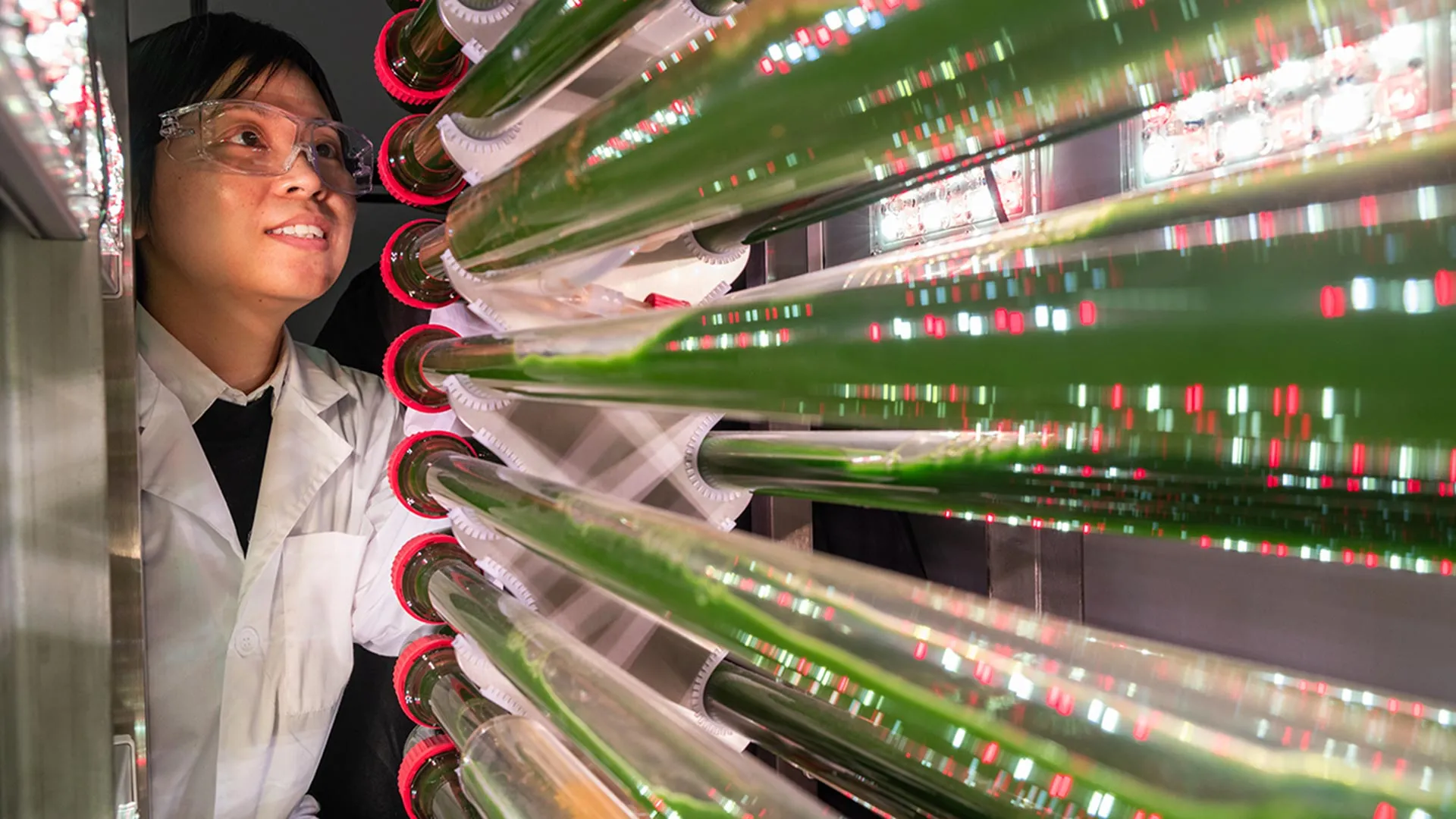
A Biological Approach to a Persistent Pollution Problem
Researchers at the University of Missouri are developing an unusual tool for one of the most stubborn forms of contamination in modern water systems: microplastics. According to a study highlighted by ScienceDaily, the team engineered algae that can attract and bind to tiny plastic particles in water, causing them to clump together and sink into a removable biomass layer.
The concept is notable because microplastics are difficult to capture with conventional wastewater treatment. Large plastic fragments can often be filtered out, but microscopic particles can slip through treatment plants and continue into waterways and, ultimately, drinking water systems. A low-energy biological method that helps gather those particles into denser, collectable masses could be a meaningful addition to existing cleanup strategies.
Why These Algae Stick to Plastic
The research centers on a modified algae strain that produces limonene, a natural oil associated with the scent of oranges. In the study summary, researchers said the limonene changes the algae’s surface properties, making it repel water. Because microplastics are also water repellent, the particles naturally adhere to the algae when they meet in water.
That interaction produces clumps large enough to settle to the bottom, where they create a biomass layer that can be collected more easily. The basic logic is simple: instead of trying to sieve out every microscopic particle directly, use a living system to gather them into larger, more manageable aggregates.
Susie Dai, the University of Missouri researcher leading the work, said current wastewater treatment systems are much better at removing larger plastic particles than microplastics. That gap is what gives the algae-based approach its potential relevance. If the biology can do part of the sorting work, treatment facilities may gain another route for handling contaminants that now evade capture.

More Than One Function in the Same System
A second feature of the work is that the algae can grow in wastewater itself. According to the source text, the modified strain absorbs excess nutrients while helping clean the water during growth. That makes the method more interesting than a single-purpose filtration aid.
Dai said the longer-term goal is to tackle three problems at once: remove microplastics, clean wastewater and eventually use recovered plastic to create bioplastic products, including composite plastic films. That ambition remains early-stage, but it points to a circular model rather than a purely disposal-based one. In principle, a treatment process could both reduce contamination and create a feedstock for new materials.
The attraction of that model is practical. Water treatment systems are more likely to adopt new processes if they solve multiple operational problems rather than adding a narrow extra burden. If an algae-based system can fit into existing infrastructure, remove hard-to-catch plastic, help with nutrient cleanup and offer downstream material recovery, it may be easier to justify at plant scale.
Promise, Limits and the Road Ahead
The study summary is explicit that the work is still in early stages. That caution matters. Lab success does not automatically translate into city-scale deployment, and wastewater environments can be far messier than controlled experiments. Questions remain about efficiency, operating cost, collection logistics and how consistently the algae perform across different contamination conditions.
There are also broader implementation questions that the summary does not answer, including how modified organisms would be managed in treatment settings and what safeguards would be required for real-world use. Those are the kinds of issues that typically determine whether a promising environmental biotechnology becomes a niche curiosity or a deployable system.
Even so, the project stands out because it addresses microplastics through material science, biology and infrastructure at the same time. Most public discussion of plastic pollution focuses on consumer behavior, bans or cleanup after contamination has spread. This approach targets the treatment stage instead, where intervention may be more scalable if the engineering holds up.
The broader significance is not that algae have suddenly solved microplastics. They have not. It is that researchers are beginning to design living systems that interact with pollutants in useful, selective ways. In a field where many contaminants are too small, too diffuse or too expensive to remove efficiently, that could become an important direction for water technology.
This article is based on reporting by Science Daily. Read the original article.

Originally published on sciencedaily.com


