A Fossil Reinterpretation With Big Evolutionary Stakes
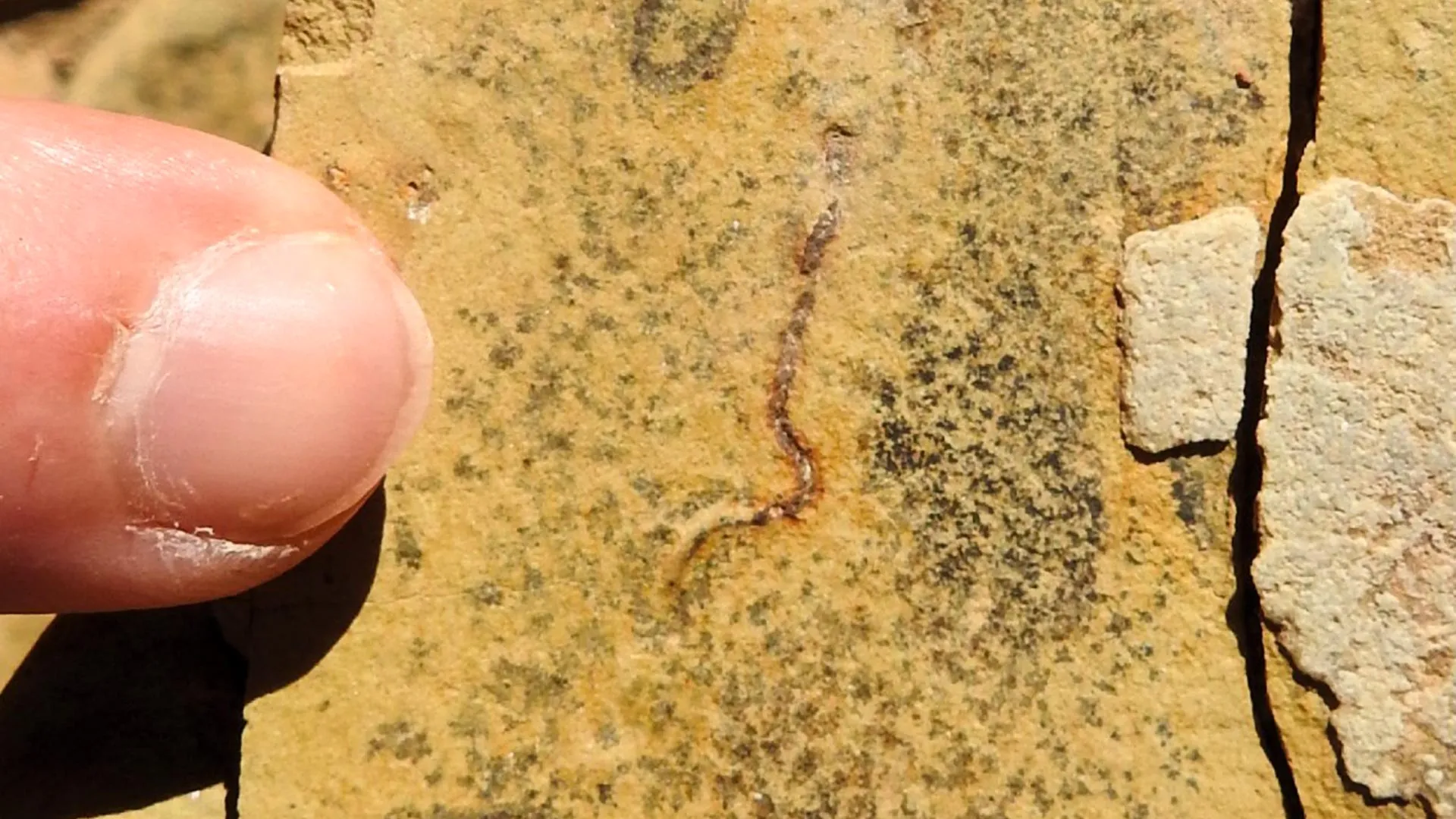
Scientists studying 540-million-year-old microfossils from Brazil say some structures once thought to record the movements of tiny early animals were probably not animal traces at all. According to a study highlighted by ScienceDaily, the marks are now being interpreted as fossilized communities of bacteria or algae, in some cases with preserved cellular structures and organic material.
That may sound like a narrow taxonomic correction, but the implications are larger. Earlier interpretations suggested the rocks could preserve evidence of meiofauna, tiny invertebrates less than a millimeter long, living in the Ediacaran period before the Cambrian explosion. If that interpretation had held, it would have pushed back part of the fossil record for small animals. The new analysis instead pulls that claim into question.
What Researchers Found in the Reanalysis
The work focused on fossils from what is now Mato Grosso do Sul in Brazil. Previous studies had treated the marks as signs of wormlike creatures or other small marine animals moving through seafloor sediment late in the Ediacaran. In the new study, researchers used microtomography and spectroscopy to inspect the fossils in greater detail.
According to first author Bruno Becker-Kerber, those methods revealed cellular structures, and in some cases preserved organic material, that are consistent with bacteria or algae from that period rather than traces left behind by passing animals. In other words, the structures appear to be the organisms themselves, not evidence of animal behavior.
That distinction is fundamental in paleontology. Trace fossils can be used to infer the presence of mobile organisms even when the organisms are not preserved directly. But if a putative trace turns out to be microbial in origin, then one of the key lines of evidence for early animal activity disappears.

The Ediacaran Question
The Ediacaran period sits just before the Cambrian explosion, the interval best known for the rapid diversification of complex animal life in the fossil record. Because of that timing, Ediacaran fossils are closely scrutinized for clues about how early animals evolved and how environmental conditions shaped that transition.
The reanalysis reported here touches directly on one of those environmental questions: whether ancient oceans around 540 million years ago had enough oxygen to support certain forms of small animal life in the settings represented by these rocks. If the structures are microbial rather than animal in origin, then one argument for early meiofauna in this environment becomes weaker, and low-oxygen interpretations gain support.
This does not mean animals were absent from the Ediacaran world. It means that one specific set of candidate evidence may have been misread. In fields that work with fragmentary traces and deep time, those corrections matter. A single reinterpretation can change how scientists calibrate the timing, ecology and geography of key evolutionary steps.
Why This Kind of Revision Matters
Science often advances through dramatic discoveries, but it also advances through careful re-reading of older evidence. This study is a reminder that major evolutionary narratives can hinge on whether ambiguous structures are classified correctly. Improved imaging and chemical analysis can sometimes overturn claims that seemed settled when they were based mainly on shape and context.
That is part of what makes the Brazilian fossils so valuable. They offer a case study in how new analytical tools can revisit old material and change its meaning. Instead of a record of some of Earth’s earliest tiny animals moving through sediment, the fossils may preserve ancient microbial communities hiding in plain sight.
If that interpretation holds, the result is not a smaller story but a different one. Rather than extending the reach of early animal evidence, the fossils deepen the picture of late Ediacaran microbial life and sharpen the debate over when certain animals truly appeared. In the study of life’s earliest complex chapters, removing a mistaken clue can be as important as finding a new one.
This article is based on reporting by Science Daily. Read the original article.

Originally published on sciencedaily.com


