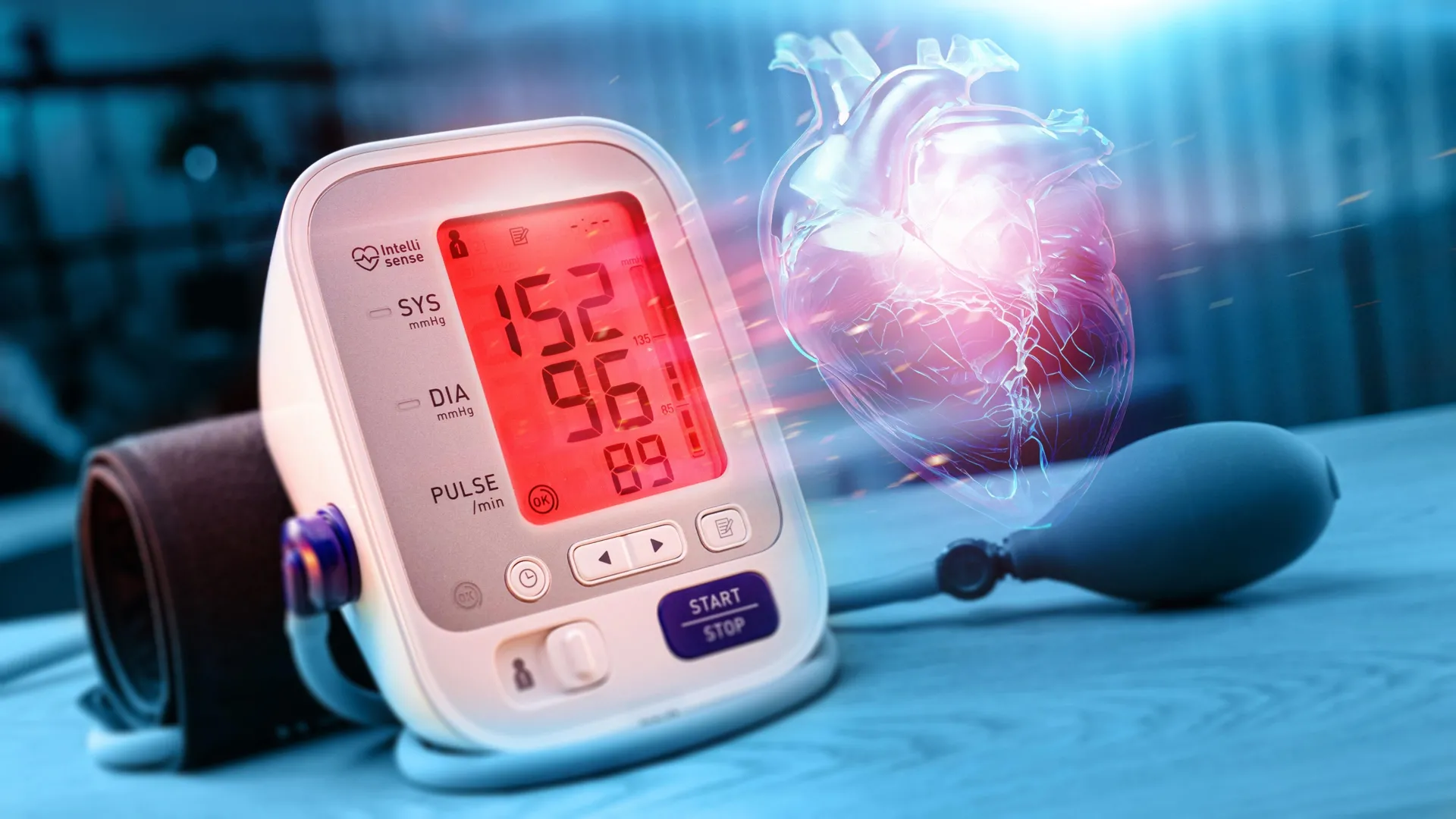
Blood pressure may be more than a single number
Blood pressure is commonly judged by its average reading. The new research highlighted by the University of Virginia School of Medicine points to another part of the picture: how sharply blood pressure rises and falls during ordinary changes in activity.
Those fluctuations can occur while people sleep, wake, stand or exercise. According to the report, rapid or excessive swings may independently raise the risk of heart disease, stroke and brain injury, including in people whose average blood pressure is within the range usually considered normal.
The researchers identified a small population of nerve cells in the brainstem that appears to help keep pressure steady from moment to moment. The brainstem governs essential involuntary functions, making it a plausible location for a mechanism that continually adjusts circulation as the body moves through changing conditions.
A small cell population with a large effect
Stephen Abbott, the University of Virginia investigator quoted in the report, said that losing only a few hundred of these nerve cells produced unstable blood pressure while mean blood pressure remained normal. That distinction is central to the finding. A conventional reading could suggest that overall pressure is acceptable, while the system responsible for damping short-term changes is no longer working as it should.
The work does not mean a standard cuff measurement is unhelpful. Average blood pressure remains an important clinical measure. Instead, it adds support to the idea that average pressure and pressure stability are related but distinct features of cardiovascular health.
In practical terms, an average cannot show every change that occurred across a day. Two people could have similar average readings while experiencing very different patterns of variation. The research draws attention to the biological controls behind those patterns and to the possibility that instability itself deserves closer scientific scrutiny.

A connection to multiple system atrophy
The same brain cells had previously been found to be damaged or absent in people with multiple system atrophy, a rare and fatal neurological disorder related to Parkinson's disease. Severe trouble regulating blood pressure is often associated with that condition.
The new findings therefore offer a potential mechanism for part of that problem: impairment of a brainstem cell population that normally limits swings in blood pressure. The report also raises the possibility that disruption involving these cells could matter in other conditions where blood-pressure regulation is unstable but conventional averages do not immediately reveal the issue.
That is an important distinction between a mechanistic research result and a ready-to-use medical test. The supplied report describes a newly studied control system and its possible relevance; it does not establish a new diagnostic standard, name a treatment, or show that all people with normal average readings have hidden risk. Further work will be needed to determine how broadly the mechanism applies and how it might be assessed in people.
Why stability could matter
Circulation must adapt continuously. Standing changes the effect of gravity on blood flow. Exercise changes demand across muscles and the cardiovascular system. Sleep and waking bring other shifts in physiology. The newly described brainstem cells appear to be part of the machinery that keeps those adjustments from becoming excessive.
If that damping function is weakened, the problem may not necessarily show up as persistently high or low pressure. It may instead appear as instability across changing states. The report frames this as a potentially hidden source of cardiovascular risk, because a single or average measurement may not capture the amplitude and timing of the swings.
For researchers, the finding creates a more specific target for investigating how the nervous system supports cardiovascular regulation. For clinicians, it reinforces the broader idea that blood-pressure assessment can involve more than lowering a number. As Abbott put it, the goal is also to keep blood pressure stable from moment to moment.

What comes next
The reported work could eventually inform efforts to protect the heart and brain by reducing harmful variability. Before that happens, researchers will need to clarify how this cell group works, how its function changes in disease, and whether interventions can safely restore or compensate for its stabilizing role.
For now, the study offers a focused explanation for why normal-looking averages may sometimes fail to tell the whole story. It shifts attention from blood pressure as a static score toward a dynamic system, one that relies on a small set of brainstem cells to manage continual change.
This article is based on reporting by Science Daily. Read the original article.
Originally published on sciencedaily.com