A burial that reframes human-animal relationships in ancient Australia
A dingo buried about 950 years ago in western New South Wales is offering archaeologists a rare view into how deeply some ancient communities valued animals. According to researchers working with Barkindji Elders, the burial is the first clear archaeological evidence anywhere in the world of people ritually “feeding” a grave over a long period of time.
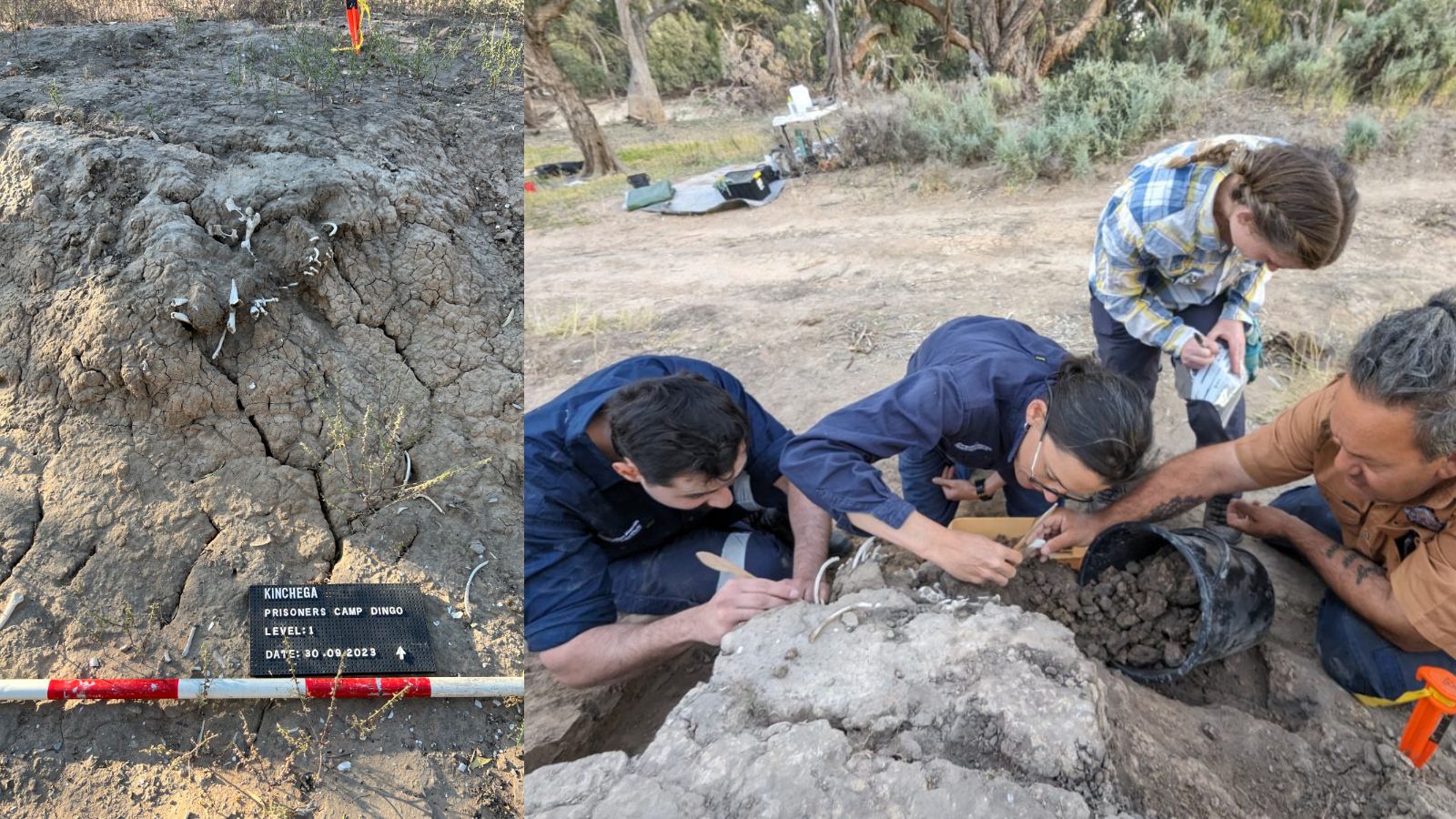
The burial was found on Barkindji Country near the Darling River, or Baaka, in a shell midden made up largely of river mussels. Archaeologists say the dingo had been placed carefully on its left side and then covered in a mound of shells. What makes the site especially striking is what happened after the burial. Radiocarbon dating showed that mussel shells continued to be added to the grave for roughly 500 years, indicating repeated acts of remembrance rather than a single burial event.
Researchers involved in the work say the finding matters not just because of its age, but because of the continuity of care it represents. In the interpretation supplied by Barkindji Elders, the later additions of mussel shells were not incidental dumping or ordinary midden accumulation. They were offerings: a form of symbolic feeding that kept the relationship with the animal alive across generations.
An Aboriginal perspective changed the interpretation
The scientific importance of the discovery rests in part on that cultural interpretation. Archaeologists have long known that dingoes were buried in Australia and that they could serve as companions and hunting helpers. What had been less clear was whether repeated additions to burial sites reflected ritual action. In this case, researchers say Barkindji knowledge was essential. It supplied a reason for why shells kept appearing at the site long after the dingo had died.
That perspective shifts the site from an unusual animal burial to evidence of long-term ceremonial practice. It suggests the animal was not treated as expendable or merely useful, but as an individual whose grave deserved continued attention. Study authors described the relationship as strong enough to be retained and reenacted through time, more like the care shown to human ancestors or revered community members than to an ordinary domestic animal.
The dingo itself appears to have been old. Researchers reported worn teeth, possible arthritis and signs of healed injuries, all of which point to an animal that lived a difficult but sustained life. Those healed injuries also imply care before death. The broader picture is of an elderly working or companion animal that was both supported in life and honored in death.

A wider map of dingo traditions
The location of the burial adds another layer of significance. Researchers noted that this example lies farther north and west than other known dingo burials, extending the geographic range of practices associated with close human-dingo relationships. That matters because it suggests such traditions may have been more widespread than outside researchers had previously appreciated.
The site was not excavated casually. The bones were first noticed eroding from a road cut, and concerns that further erosion would destroy the remains helped prompt the excavation. Archaeologists worked alongside Barkindji Elders and local custodians, making the project an example of collaborative interpretation rather than a one-sided extraction of data. That collaboration is central to the story because the ritual meaning of the site could not have been reconstructed from bone and shell alone.
In practical terms, the discovery also shows how middens can hold more complex social histories than food waste alone. A shell mound may record meals, environmental conditions and settlement patterns, but in this case it also recorded grief, memory and repeated acts of ceremonial return. The same material that once looked mundane became evidence of emotional continuity once the site was read through Indigenous knowledge.
Why the discovery resonates beyond archaeology
The grave speaks to a broader question that appears often in archaeology and anthropology: how do ancient people define kinship, belonging and obligation? This burial suggests that for the ancestors of today’s Barkindji people, dingoes could occupy a place in social life close enough to warrant ritual treatment usually reserved for beings of enduring importance.
That interpretation does not depend on romanticizing the past. The evidence is concrete. The animal was deliberately buried. Shells were added later. The additions continued across centuries. The result is a durable archaeological signal of memory in action. Whether understood as feeding, honoring or maintaining a relationship with the dead, it marks a behavior pattern that persisted beyond the lifetime of any one mourner.
For archaeology, that makes the site unusually powerful. It shows how ritual can survive not in monumental architecture or elite graves, but in a modest shell mound around a single animal. For cultural history, it reinforces the value of Indigenous custodianship in explaining what artifacts and landscapes actually meant. And for anyone interested in the long history of human-animal bonds, it provides evidence that companionship and ceremonial care were tightly linked nearly a millennium ago.
The excavation does not just recover a dingo. It recovers a social relationship, maintained across generations, and preserved in shells beside a river.
This article is based on reporting by Live Science. Read the original article.

Originally published on livescience.com