A Long-Standing Archaeological Mystery Gets Stronger Evidence
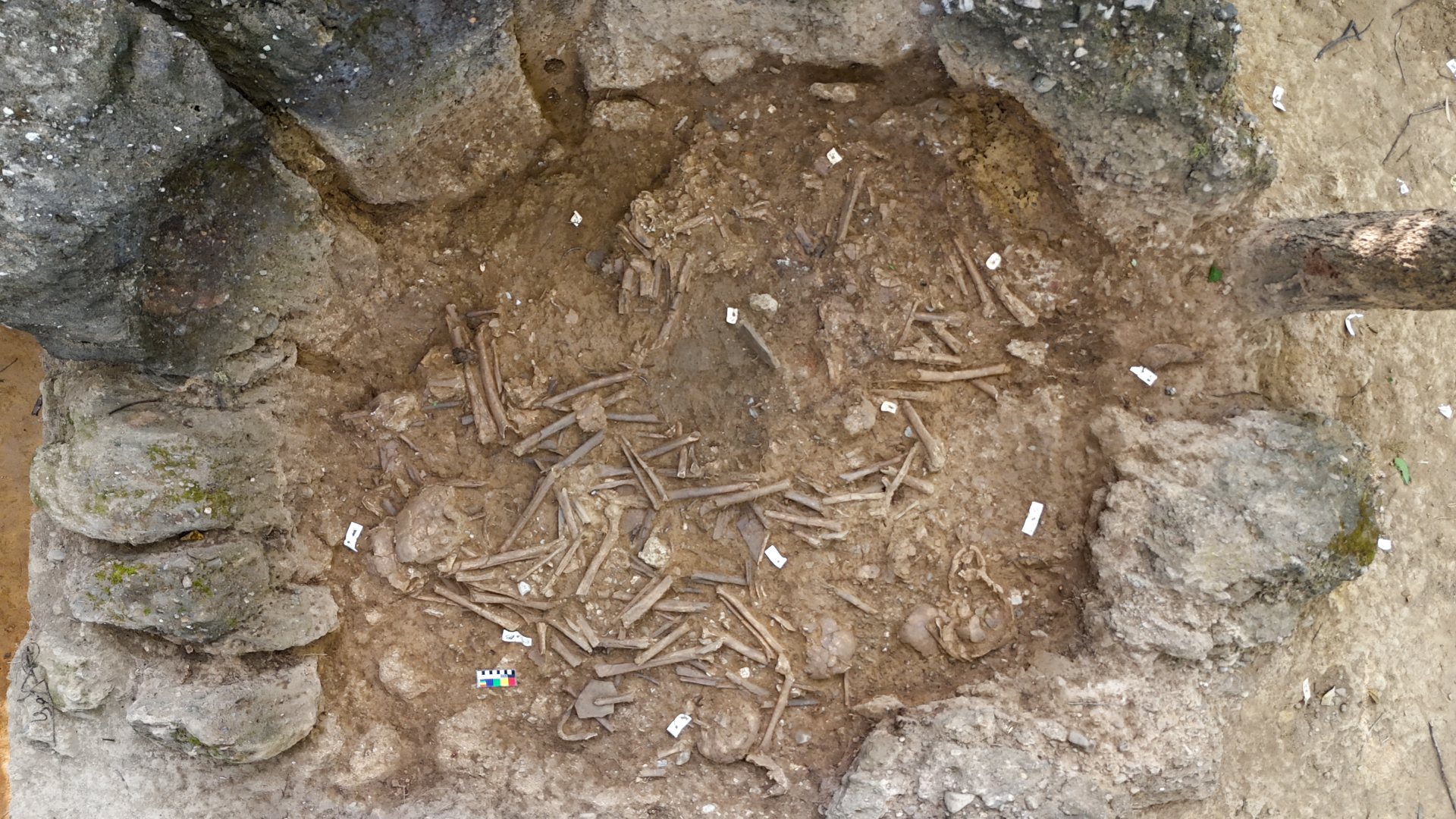
Archaeologists working at the Plain of Jars in northern Laos say they have recovered the first recorded undisturbed human remains from inside one of the region’s giant stone vessels, offering the clearest direct evidence yet that the jars were used in mortuary practices. The excavation centers on a large vessel known as Jar 1 at Site 75, where researchers found an extraordinary quantity of human bones dating to around 1,200 years ago.
The discovery matters because the Plain of Jars has challenged archaeologists for decades. More than 2,000 hollowed-out stone jars are scattered across the Xieng Khouang Plateau, and researchers have long suspected they played a role in burial rituals. But until now, firm proof was missing. The new study, published in the journal Antiquity according to the source, provides the strongest evidence to date that at least some of the jars were directly involved in handling the dead.
Rather than resolving every question, the find sharpens them. It suggests the jars were not simply symbolic monuments or storage features, but part of a structured funerary system whose full social and religious meaning remains unclear.
What Researchers Found Inside Jar 1
Jar 1 stands out even within an already unusual archaeological landscape. The source describes it as one of the largest jars currently known in Laos, with especially thick walls, a broad base and a bowl-like shape. It measures about 6.7 feet, or 2.05 meters, across. During excavation, researchers were struck by both the number of bones and the condition of the deposit.
According to co-author Nicholas Skopal of James Cook University, Jar 1 appears distinct from other jars excavated in Laos not only because of its form but because of the quantity of human remains inside it. The bones indicate that multiple generations of people were placed in the vessel. That detail is important because it implies reuse over time rather than a single burial event.
The team also argues that the jar was probably not the final resting place of the deceased. Instead, it may have served as one stage in a more complex mortuary sequence. In that interpretation, bodies or partly decomposed remains were placed in the vessel during an intermediate process before later treatment or burial elsewhere.

Rethinking The Mortuary Role Of The Plain Of Jars
The idea that the jars were linked to burial is not new. Archaeologists have suspected such a function for years, partly because of associated human remains and the broader ritual context of the sites. What has been missing is decisive, in situ proof from within a jar itself. That is what makes Jar 1 so significant.
If the researchers are right, the find supports a picture of funerary customs that were extended, communal and possibly multi-stage. The presence of remains from several generations suggests continuity of ritual behavior, not an isolated practice. The jar may have operated as a temporary repository or transformation space, where the dead underwent a period of decomposition before a later ceremonial step.
Such practices are known in different forms across the ancient world, where burial was not always a one-time event. In some societies, death rituals unfolded over months or years and involved repeated handling of remains. The Laos evidence now gives that broader anthropological pattern a more concrete foothold at the Plain of Jars.
An Archaeological Landscape Still Full Of Unknowns
Even with this discovery, the civilization that made the jars remains poorly understood. The vessels were built along trade routes heavily used between 500 B.C. and A.D. 500, according to the source, but their exact makers and the full chronology of their use remain uncertain. The jars themselves range from roughly 3.3 to 10 feet tall and have been part of a ritual landscape used over at least a millennium.
That scale raises several unresolved questions. Why were the jars made in such large numbers? Why did some sites emphasize certain forms and sizes? How were the massive stones quarried, transported and positioned across difficult terrain? And how did jar use connect to wider political or trade networks moving through mainland Southeast Asia?
Jar 1 does not answer all of that, but it changes the evidentiary baseline. Researchers no longer have to infer a funerary role from circumstantial clues alone. They can point to a jar containing undisturbed remains and build outward from there.

Why This Find Is Likely To Shape Future Excavations
The discovery will probably influence how archaeologists prioritize future work across the Plain of Jars. If one vessel preserved undisturbed remains, other jars may also contain intact evidence that can clarify sequence, dating and ritual variation between sites. Excavation strategy may increasingly focus on identifying vessels with unusual structural traits, since Jar 1’s shape and construction appear to set it apart.
It may also push researchers to think of the Plain of Jars less as a single mystery with one answer and more as a mortuary system with local differences, changing practices and long-term reuse. A landscape that once seemed enigmatic in a general sense can now be approached through more specific questions: which jars held remains, for how long, and under what ritual conditions?
For archaeology, that is real progress. Great mysteries are often solved not by one dramatic revelation but by a decisive piece of context that forces better questions. Jar 1 may be exactly that kind of turning point for one of Southeast Asia’s most unusual ancient sites.
This article is based on reporting by Live Science. Read the original article.
Originally published on livescience.com