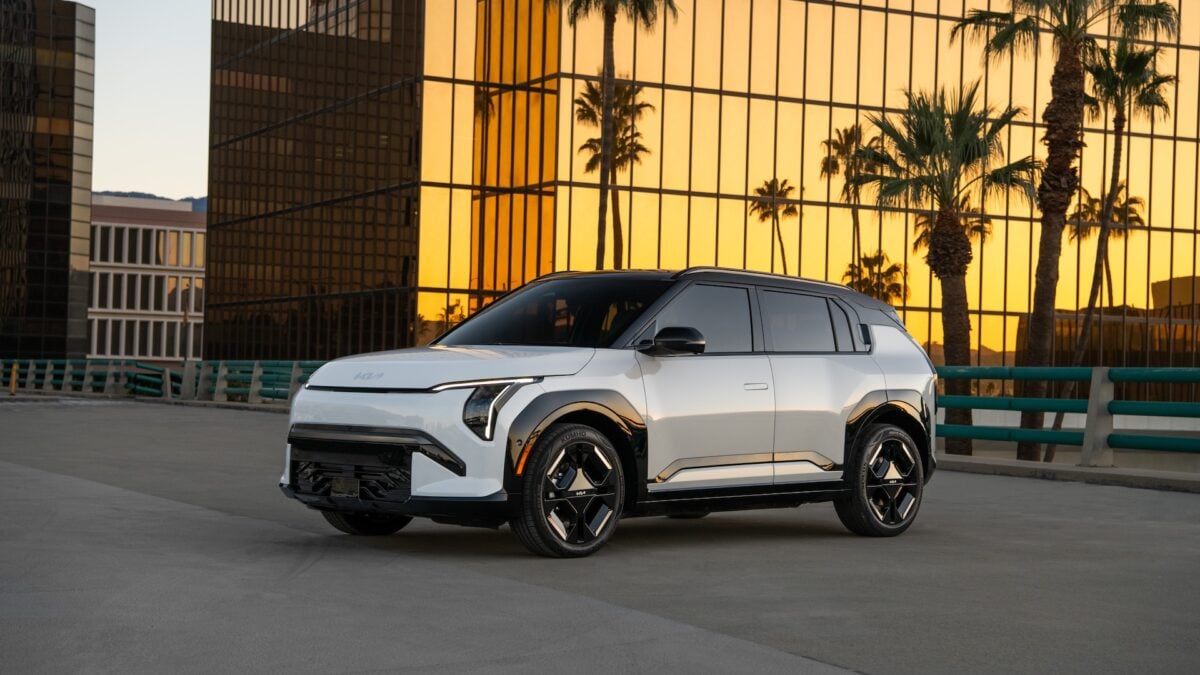
Kia adds a compact EV to a thinner U.S. field
Kia says its EV3 is finally heading to the United States, with sales planned by the end of 2026. That makes the announcement more important than it may first appear. The American market has spent years promising a broad wave of affordable electric vehicles, yet the actual list of small battery-electric options has remained limited. By bringing a compact model already established in other countries into the U.S., Kia is stepping into a gap that many automakers have acknowledged but only a few have seriously tried to fill.
The EV3 arrives with two battery choices. Kia said the base Light model will use a 58.3 kWh pack, while the rest of the lineup will get an 81.4 kWh battery. The most efficient versions with the larger pack are targeting an EPA rating of 320 miles, while the smaller-battery version is aiming for roughly 220 miles. Those numbers matter because compact EV buyers tend to be unusually sensitive to the tradeoff between price and usable range. A product in this class does not need luxury-car performance. It needs to feel practical enough to replace a gasoline commuter without asking the owner to reorganize daily life around charging stops.
Features aimed at mainstream adoption
Kia is also leaning on utility rather than treating the EV3 as a stripped-down entry point. The company said all EV3 models will use a native NACS charge port, a meaningful specification in a market increasingly standardizing around that connector. It is the kind of choice that may matter more in daily ownership than in launch-day headlines because charging convenience can determine whether a vehicle feels mature or compromised.
The company is also promoting vehicle-to-load and vehicle-to-home capability. In simple terms, that means the EV3 is being positioned not only as transportation but as a movable energy asset. Outdoors, that can mean powering devices and equipment. At home, Kia says the vehicle can help supply electricity during outages. Those features have become more salient as buyers think about resilience alongside mobility. In an era of expensive power, unstable weather, and broader interest in household energy systems, the line between car and backup appliance is starting to blur.
Charging speed remains competitive enough for the segment even without the larger 800-volt architecture used in the EV6 and EV9. Kia says the EV3 can charge from 10% to 80% in about 30 minutes. That will not end debate over charging standards, but it signals that Kia is trying to avoid the usual small-EV compromise in which a lower entry price is offset by a noticeably worse ownership experience.

A new entrant in an unsettled market
The EV3 will compete with models including the Nissan Leaf and Chevrolet Bolt, both named in the supplied report. That comparison is useful because it shows how competitive pressure has shifted. The compact EV is no longer just a compliance car or a technology showcase. It has become a value argument. Buyers want credible range, decent cargo space, practical charging, and enough trim variation to avoid feeling pushed into a single configuration.
Kia is planning a broad spread of versions, including a 288-horsepower dual-motor EV3 GT. That helps the company cover both budget-minded buyers and shoppers who still want performance. Inside, the model gets two 12.3-inch displays handling driver information and infotainment. Kia also said its app store now supports Netflix and YouTube, a feature aimed squarely at the charging-stop use case. It is not essential to mobility, but it reflects how automakers increasingly treat stationary charging time as product time that needs to be managed.
One major missing detail is price. The report says Kia did not announce it at the New York Auto Show. Earlier estimates cited in the piece had placed the EV3 around $35,000 when the model was first announced in Korea in 2024, but that figure is not a launch confirmation for the U.S. market. It is also arriving after the elimination of the $7,500 federal tax credit that had been important to many entry-level EV purchases, which means price discipline will matter even more.
That is the core of the EV3 story. Kia is not introducing a halo car. It is making a targeted bet that there is still room in the U.S. for a small electric vehicle with respectable range, modern charging support, and enough extra utility to feel useful beyond commuting. If it lands near the right price, the EV3 could do something many EV launches fail to do: make the market feel broader, not just more crowded.
This article is based on reporting by Gizmodo. Read the original article.
Originally published on gizmodo.com
