Dell brings back a familiar laptop brand with a different pitch
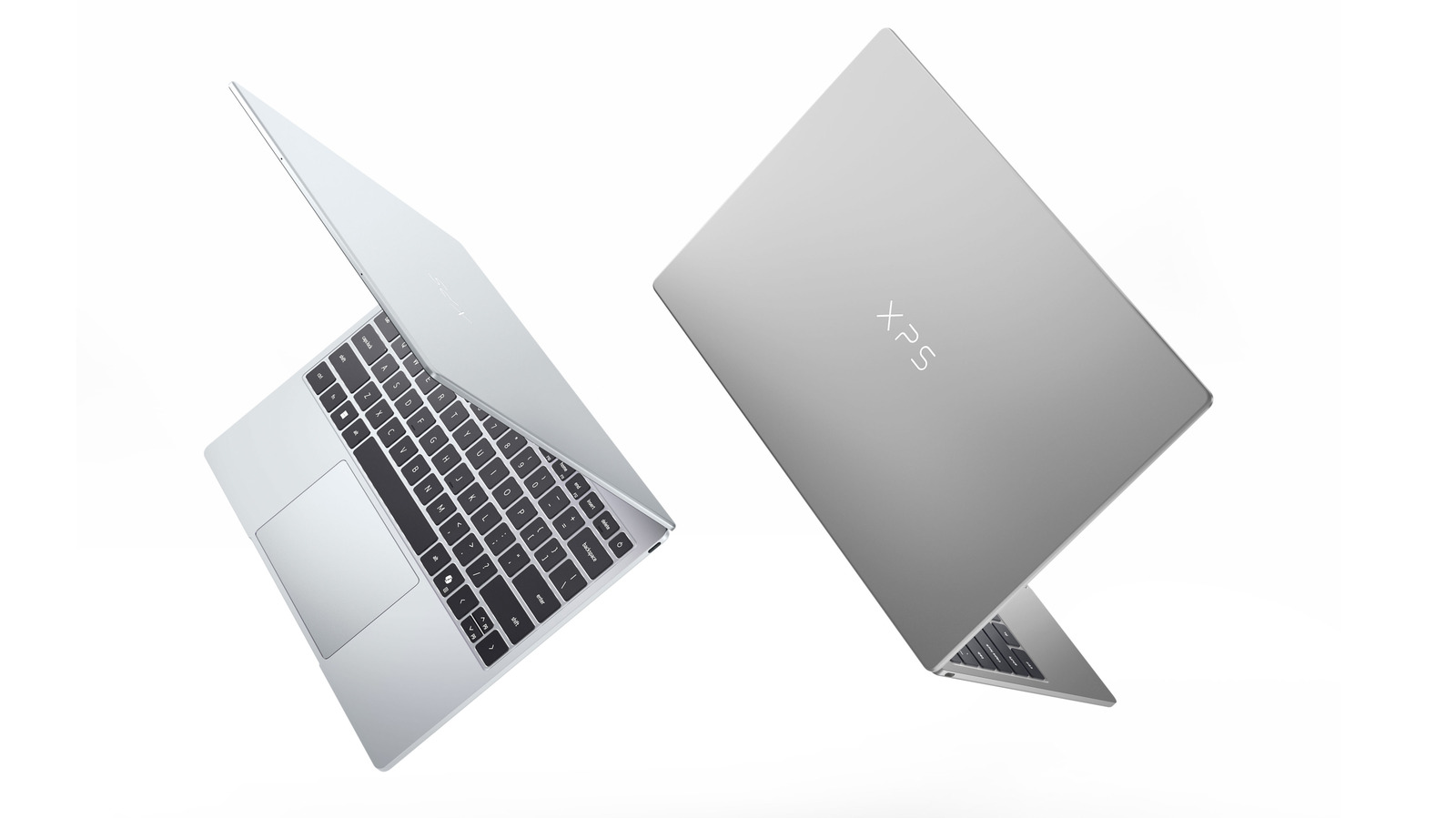
Dell is reviving the XPS 13 name, but the new machine arrives with a markedly different market position from the ultraportable line that defined the brand for years. Instead of leading with flagship pricing, Dell is pitching the new XPS 13 as a more affordable premium Windows laptop, with a starting price of $599 for students and $699 for general buyers.
That pricing shift is central to the product’s significance. For much of its history, the XPS 13 was Dell’s best-known premium notebook, competing on design and polish rather than on value. The latest version keeps many of the hardware cues associated with that identity, including a CNC aluminum chassis, while moving closer to a mainstream price band.
The company’s message is clear: thin-and-light Windows laptops do not have to abandon premium materials and display quality to hit a lower entry point. Whether the market accepts that argument will depend on the balance Dell has struck between cost, portability, and component choices.
What Dell is offering
According to the source report, the new XPS 13 is 12.7 mm thick and weighs 2.2 pounds. Dell says it is the thinnest and lightest XPS 13 the company has made and also smaller and lighter than the MacBook Neo model it is being compared against.
The laptop includes a 2.5K IPS touchscreen with a 120 Hz refresh rate, quad speakers, Wi-Fi 7 support, a fully backlit keyboard, and a webcam with Windows Hello support. Buyers will also get two USB-C ports specified as USB 3.2 Gen 2.
Those specifications show where Dell chose to preserve the XPS identity. Even at a lower price, the company is not presenting the system as a stripped-down commodity notebook. High refresh rate support, wide color coverage at 100% DCI-P3, and the aluminum chassis all signal that Dell wants this product to feel premium despite its lower cost of entry.
That positioning is reinforced by the size and weight claims. In an ultraportable category, a few millimeters and a few ounces still matter, especially for students and mobile professionals who carry a laptop all day.

Entry pricing and configuration choices
The base student configuration uses an Intel Core Series 3 CPU with 8 GB of RAM and 256 GB of storage. Higher-end versions can be configured with Intel Core Ultra Series 3 chips, up to 32 GB of RAM, and up to 1 TB of storage.
The student pricing is not universal. The report says the $599 entry price applies to high school students over 16 and to people attending degree-granting colleges, while the regular starting price is $699. That distinction matters because Dell is trying to broaden the XPS 13 audience without fully collapsing the product into budget-laptop territory.
At the same time, the configuration ladder gives Dell room to protect margins and keep the XPS label associated with better-equipped systems. Buyers attracted by the low headline price may still trade up for more memory, storage, or a stronger processor, especially if they expect to keep the machine for several years.
The color options listed in the source are storm and sky, small touches that suggest Dell is trying to give the relaunched product a slightly fresher consumer identity rather than treating it as a purely conservative business notebook.
The competitive angle
The report explicitly frames the new XPS 13 as Dell’s answer to Apple’s MacBook Neo. That comparison is about more than industrial design. It is also about what consumers now expect from lower-priced premium laptops.
Dell’s argument appears to rest on feature contrast. The XPS 13’s display refreshes at 120 Hz rather than 60 Hz, covers the full DCI-P3 color space, and supports touch input. For buyers who care about smoother scrolling, pen-free touch interaction, or richer color reproduction, those are concrete differentiators.
There is, however, at least one tradeoff noted in the source. While the MacBook Neo reportedly uses a fanless design, Dell’s XPS 13 relies on dual fans. For some users, fanless operation is attractive because it reduces noise and mechanical complexity. Dell’s counterpoint is implicit rather than stated as a benchmark claim: active cooling can help when the machine is working hard or sitting in hotter conditions.
The product also omits a built-in 3.5 mm headphone jack, and the report notes uncertainty about whether an adapter will be included in the box. That kind of omission is rarely decisive on its own, but it is the sort of detail that can shape perception when a laptop is trying to reintroduce itself to a broad audience.

Why the relaunch matters
Bringing back XPS as a lower-cost premium line is a strategic move as much as a hardware announcement. Dell briefly moved away from the XPS branding, and returning to it signals that the name still carries recognition the company values. The difference is that recognition is now being used to compete more directly on accessibility.
This is a challenging segment. Buyers want laptops that feel premium in hand, but they also want those systems to be reasonably priced, especially as electronics costs remain a pressure point. Dell is trying to answer that demand with a machine that keeps enough of the old XPS formula to look aspirational while cutting the barrier to entry well below classic flagship levels.
If successful, the strategy could help Dell rebuild XPS as a volume brand rather than a niche halo product. If unsuccessful, the company risks blurring what the XPS badge means. That is the core tension behind this launch: the value of a prestigious product name depends on both reach and restraint.
Availability and market timing
The source report says the base version of the XPS 13, including the $599 student model, is scheduled to arrive in June, with additional configurations following later. That timing positions the machine for buyers preparing for the next academic cycle and for consumers looking to replace older pandemic-era laptops.
In practical terms, the new XPS 13 looks like Dell’s attempt to reset expectations in a category where price inflation has made premium portable computers feel increasingly out of reach. The company is not trying to win by offering the most extreme specifications. It is trying to offer enough design quality and enough modern features that the laptop still feels desirable at a lower price.
That makes this launch important even beyond Dell’s own lineup. It is a test of whether a long-established premium Windows brand can stretch downward without losing its identity. For buyers, the question is straightforward: can the XPS name still stand for refinement if the product is also supposed to be affordable? Dell is betting that the answer is yes.
This article is based on reporting by Engadget. Read the original article.

Originally published on engadget.com


