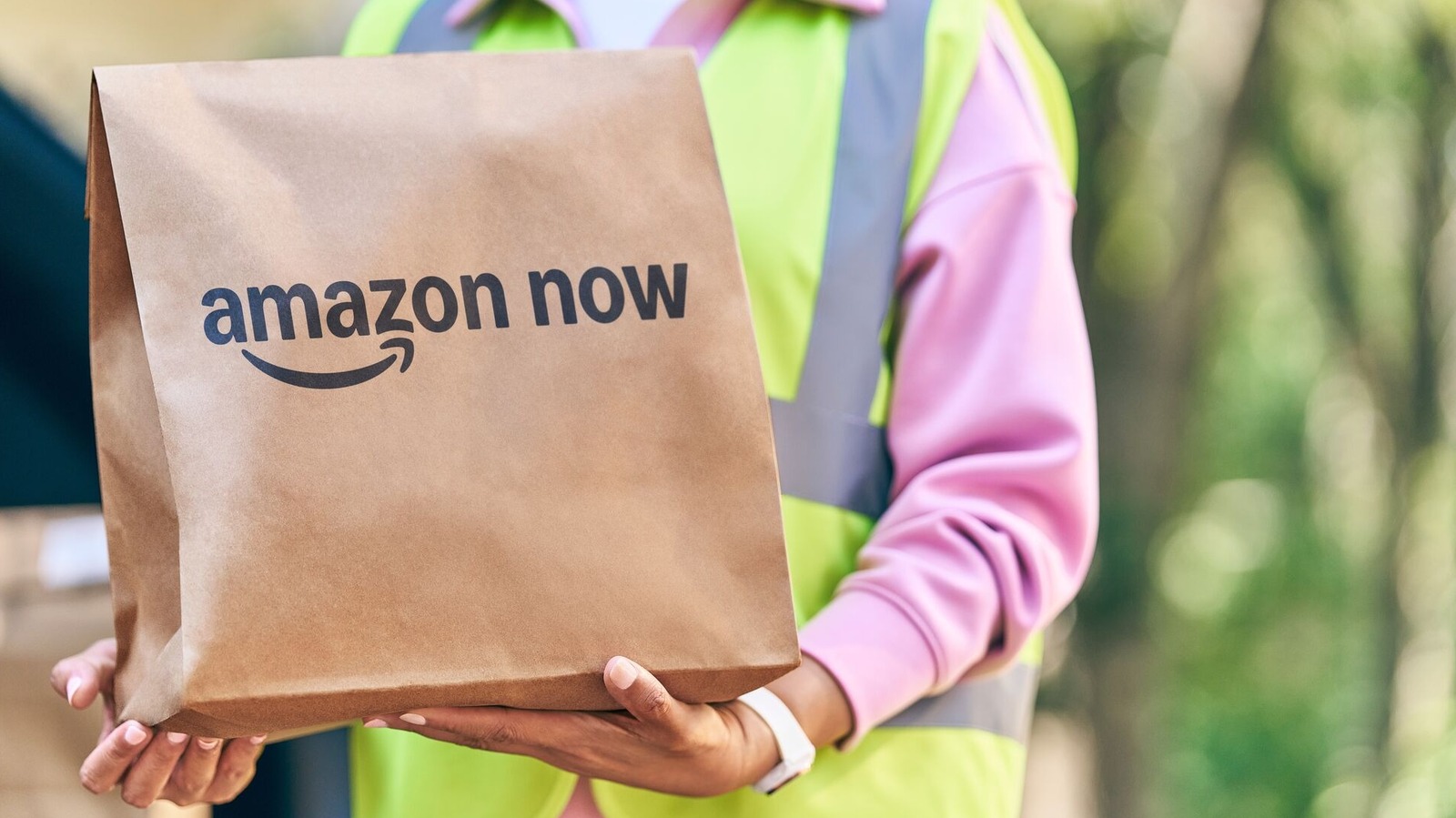
Amazon is pushing faster into the instant-delivery market
Amazon has begun rolling out its 30-minute delivery service, Amazon Now, to a wider set of U.S. cities, deepening its push into ultra-fast retail fulfillment. According to Engadget, the service soft-launched in Seattle and Philadelphia at the end of 2025, expanded to London earlier in 2026, and is now widely available in Atlanta and Dallas-Fort Worth. The company also says it will expand into Austin, Houston, Minneapolis, Orlando, Phoenix, Denver, Oklahoma City, and other locations through the rest of 2026.
The move matters because it extends Amazon’s long-running delivery arms race into a new speed tier. Same-day shipping has already become common across much of the company’s network, and one-hour services exist for select items and locations. Amazon Now aims to narrow that promise further by targeting groceries, household essentials, and some electronics with a delivery window of 30 minutes or less.
What Amazon Now offers
The source report says customers who have access to the service will see a 30-minute delivery option in the Amazon app or on the web homepage. Products eligible for Amazon Now are also highlighted while browsing, and shoppers can search by category. Eligible items include basics such as eggs, dairy, and laundry detergent, along with select electronics.
The service is reported to operate 24 hours a day in most places, which is a key operational detail. It positions Amazon Now less as a premium convenience layer for daytime errands and more as an always-on response system for urgent household needs.

The economics are visible
Amazon is not pretending this level of speed is free. Prime members pay $4 per order, while non-members pay $14. Orders below $15 carry an additional small-order fee of $2 for Prime members or $4 for non-members. Those prices show how the company is balancing convenience, membership value, and the cost of maintaining a rapid-response fulfillment network.
The pricing is also revealing from a competitive standpoint. Charging Prime members a relatively modest fee preserves the value proposition of subscription loyalty while still monetizing urgency. The much higher non-member fee creates a clear incentive to stay inside the Prime ecosystem.
A different kind of fulfillment network
The report says Amazon Now relies on smaller fulfillment locations placed strategically near where customers live and work. That localized infrastructure is what allows the company to promise 30-minute delivery while reducing the distance delivery partners must travel.
This is important because the service is not just a software feature. It depends on a physical network optimized for short-radius execution. As that network expands, it could influence how Amazon allocates inventory, where it leases urban or suburban space, and which product categories are worth positioning closest to demand.

The competitive context
The instant-delivery contest is getting more crowded. Engadget notes that Amazon faces competition from Walmart, which is growing its drone delivery program with Wing. Earlier in 2026, Wing expanded its automated drone delivery service to the San Francisco Bay Area. Amazon also already offers one-hour drone deliveries in nine U.S. locations, according to the report.
That means Amazon Now is not a standalone experiment. It sits inside a broader portfolio of speed-based fulfillment models that now includes drones, one-hour services, multi-hour windows, same-day delivery, and now a growing 30-minute urban and suburban option. The company appears to be segmenting urgency more precisely, then charging for it accordingly.
Why this is a meaningful retail story
Fast delivery is no longer just a logistics upgrade. It is becoming part of the product itself. When eggs, detergent, or a small electronic accessory can arrive in half an hour, the service changes how consumers think about planning, stockpiling, and last-minute shopping. Retail increasingly competes not only on price and selection, but on how little foresight the buyer needs to have.
That has consequences for rivals. Matching a 30-minute promise requires dense local infrastructure, sophisticated demand forecasting, and labor or partner capacity that can absorb spikes without breaking service levels. Not every retailer can build that economically.

The takeaway
Amazon Now’s expansion suggests the company believes ultra-fast delivery can become a durable consumer habit rather than an edge-case convenience. By spreading the service to more cities and keeping the member price relatively low, Amazon is testing whether urgency can be normalized at scale.
If the answer is yes, the practical definition of everyday retail will shift again. The distance between ordering and owning is getting shorter, and Amazon is betting that customers will reorganize their expectations around that fact.
This article is based on reporting by Engadget. Read the original article.
Originally published on engadget.com


