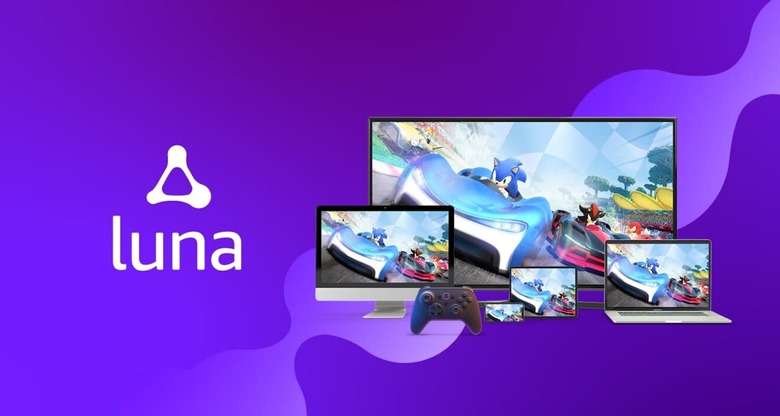
Luna narrows its model instead of expanding it
Amazon is scaling back one of the more open parts of its Luna cloud gaming service, ending support for several third-party subscriptions, purchases and library integrations. The move marks a notable strategic retrenchment for a platform that had tried to make cloud gaming more flexible by letting users buy access from outside services and stream games they already owned through connected storefronts.
The immediate effect is that customers can no longer buy Ubisoft+ and Jackbox Games subscriptions or standalone games through Luna. Amazon will also cancel active subscriptions purchased through Luna at the end of users’ next billing cycles. For players who subscribed directly to Ubisoft+, access through Luna will continue only until June 10. The broader Bring Your Own Library feature is also being shut down, meaning users will lose the ability to stream qualifying games they own on storefronts such as EA, GOG and Ubisoft through Luna after June 3.
That is a meaningful change in what Luna is. Instead of functioning as a cloud layer that can sit across multiple game ecosystems, the service is moving toward a more controlled package centered on Amazon’s own subscription tiers and selected content deals. Users who bought games outright on Luna will still be able to play them there until June 10, but Amazon is not offering refunds. The company’s position is that those titles remain available through the linked third-party platforms associated with the user’s account.
For some customers, that distinction may be technically correct but commercially weak. If a player depended on Luna precisely because they lacked hardware capable of running demanding PC games locally, continued ownership on an external platform does not fully replace the lost value of cloud access. A license that remains valid elsewhere is not the same as continued usability in the context the customer actually paid for.
What this says about the economics of cloud gaming
The decision exposes a persistent tension in cloud gaming: flexibility is attractive to users, but it can be hard for platform operators to sustain. Allowing customers to bring in subscriptions, link outside libraries and stream previously purchased games lowers friction and makes a service look more consumer-friendly. It also complicates revenue sharing, licensing, customer support and product positioning.
In Luna’s case, the rollback suggests Amazon sees more value in tightening the offering around models it controls directly. The company says it is “doubling down” on a broad range of gaming experiences, including third-party titles delivered in more accessible ways and newer formats such as GameNight party games that can be played with a smartphone. That language points to a shift away from Luna as a universal cloud-access layer and toward Luna as a curated Amazon gaming destination.
This is not the same as shutting the service down. Prime subscribers will still be able to claim PC games and stream titles on the Luna Standard tier at no added cost, while Luna Premium remains available as a paid subscription with a broader catalog. But the rollback makes the platform less interoperable and narrows one of the clearest ways it differentiated itself from standard subscription bundles.
It also highlights the unresolved question facing cloud gaming more broadly: whether users want access to a platform’s catalog, or whether they want the freedom to run the games they already own wherever they are. Google’s Stadia struggled in part because it asked customers to buy into a separate ecosystem. Services such as NVIDIA GeForce Now have leaned harder into the existing-library model. Luna had attempted something in between. By cutting back those integrations, Amazon is signaling that the middle ground may not have worked well enough.

A smaller platform with clearer boundaries
For the industry, the announcement is less dramatic than a shutdown but still instructive. The cloud gaming market has repeatedly demonstrated that technical feasibility does not guarantee business durability. Streaming high-end games at scale is expensive, licensing arrangements are messy and consumer expectations are shaped by a history of ownership, subscriptions and hardware-based access that do not map neatly onto the cloud.
Amazon’s latest move suggests that even a company with major cloud infrastructure and consumer reach is still refining what cloud gaming should be commercially. Rather than maximizing openness, Luna is being reshaped into a simpler proposition: a service where Amazon more tightly defines the content, billing relationships and user journey.
That may reduce operational complexity, but it also reduces optionality for players. For customers who had come to rely on Luna as a way to stream games bought elsewhere, the platform is becoming less of a bridge and more of a walled offering. The lack of refunds for outright purchases made through Luna will likely sharpen that perception, even if the underlying licenses remain tied to third-party accounts.
At the same time, the shift may reveal where Amazon believes real demand exists. Party-style gaming, lightweight access across devices and bundled entertainment perks may prove more sustainable than trying to replicate a full PC storefront in the cloud. If so, Luna’s future may depend less on being the everything service for gamers and more on being good enough, cheap enough and convenient enough for narrower use cases.
The reset does not settle the cloud gaming debate, but it does add another data point. The most durable services in this category may not be the ones that promise maximum flexibility. They may be the ones that set tighter boundaries and build around a specific customer behavior they can support consistently. Amazon appears to be betting that this smaller target is the more realistic one.
This article is based on reporting by Engadget. Read the original article.
Originally published on engadget.com


